
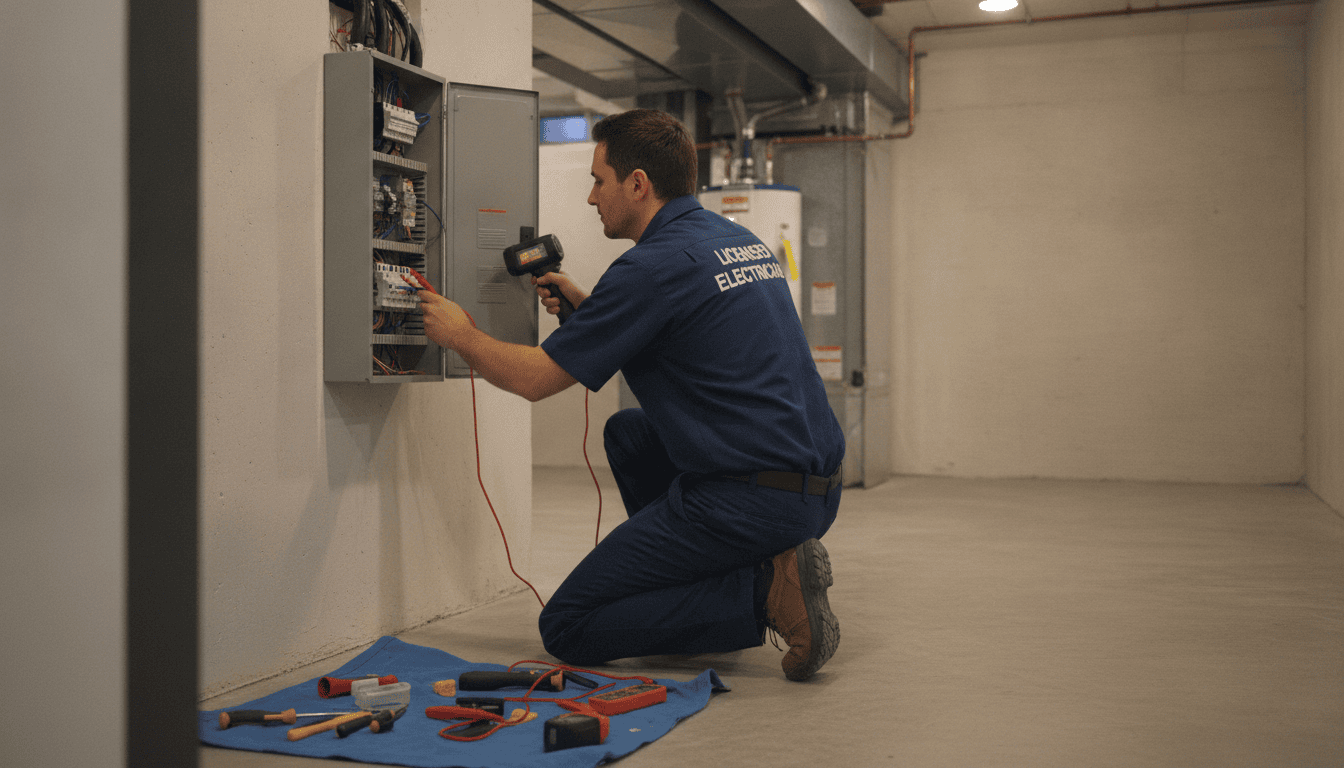
A home electrical safety inspection in Aurora starts with the one system you almost never think about — the wiring, panel, and breakers quietly running your entire house until the moment something goes wrong. A tripped breaker at 10 pm. Flickering lights mid-movie. An outlet that buzzes when you plug something in. These aren’t just inconveniences. They’re your home warning you that its electrical system can’t keep up.
- Only ESA-permitted work is legally recognized in Ontario — any electrical job beyond simple device swaps requires a notification filed by a licensed electrician, and skipping it voids your home insurance.
- A licensed electrician’s safety assessment costs $350–$575+ HST in the Ontario market — the ESA notification fee starts at $88 and is typically included in your electrician’s overall quote.
- Knob-and-tube and aluminum wiring are red flags — homes built before the 1980s are prime candidates for a safety assessment before renovations, appliance upgrades, or EV charger installation.
- Flickering lights, frequent breaker trips, and buzzing outlets are warning signs your panel or wiring can’t keep up with modern power demands — an inspection finds the root cause.
- A Certificate of Acceptance from the ESA documents code-compliant work, protecting your insurance coverage and future resale paperwork.
- ESA fees increased 1.9% as of April 1, 2026 — booking your inspection and permit now avoids the next scheduled increase.
- Padi Electric’s ESA-certified team serves Aurora, Richmond Hill, Newmarket, Vaughan, and the wider GTA — free quote with a 30-minute preliminary estimate.
Read on for the full breakdown: what inspectors check, when Ontario law requires an inspection, and exactly what it costs.
Why a Home Electrical Safety Inspection in Aurora Protects More Than Your Wiring
Your home’s electrical system is the one infrastructure you almost never think about — until something goes wrong.
A tripped breaker at 10 pm. Flickering lights mid-movie. An outlet that buzzes when you plug something in.
These aren’t just inconveniences. They’re your home warning you that its electrical system can’t keep up.
In Aurora and the surrounding GTA, homes range from new builds wired for 200A smart-home loads to 1970s bungalows still running on 60A panels and aluminum wiring. The gap between those two realities is a safety — and insurance — liability.
A professional electrical safety inspection by a licensed, ESA-certified electrician closes that gap before it becomes a fire, a claim denial, or a failed real estate transaction.
This guide covers everything Aurora-area homeowners need to know:
- What a home electrical inspection actually involves
- The specific warning signs that make one urgent
- When Ontario law requires a formal ESA notification
- What it costs — and what’s included
- How to read your Certificate of Acceptance
Whether you’re planning a renovation, buying or selling, or just want peace of mind about the panel your family relies on every day — this is where to start.
What Is a Home Electrical Safety Inspection?
An electrical safety inspection is a thorough assessment of your home’s wiring, panel, outlets, and protection devices by a licensed electrician.
It’s not the same as a general home inspection.
How It Differs from a Standard Home Inspection
A home inspector scans for visible surface issues and provides a general pass/flag report.
A licensed electrician:
- Opens the panel and tests individual circuits
- Identifies code violations invisible to the untrained eye
- Uses professional diagnostic tools (including thermal imaging)
- Verifies compliance with the Ontario Electrical Safety Code (OESC)
- Provides a specific repair and upgrade plan
A licensed electrician’s inspection is diagnostic, not just observational. It’s the difference between knowing your electrical system looks fine and knowing it actually is fine.
The ESA’s Role in Ontario
The Electrical Safety Authority (ESA) is Ontario’s independent regulator of electrical safety — responsible for the province-wide enforcement of electrical safety standards.
When significant electrical work is completed, the licensed contractor files an ESA notification (commonly called a permit). An ESA inspector then reviews the completed work and, if it meets code, issues a Certificate of Acceptance.
Think of the licensed electrician as the diagnosing and fixing — the ESA inspector is the independent quality check.
| Scenario | What Happens |
| Safety assessment | A licensed electrician inspects your existing system, identifies hazards, advises on upgrades — no permit required |
| Post-work ESA inspection | After permitted electrical work is complete, an ESA inspector verifies code compliance and issues a Certificate of Acceptance |
For routine peace of mind — checking an older home before buying, or assessing your panel before a renovation — the licensed electrician’s safety assessment is the starting point.
Warning Signs Your Aurora Home Needs an Inspection
Some problems announce themselves loudly. Others are slow-burning hazards you only discover during a sale or an insurance claim.
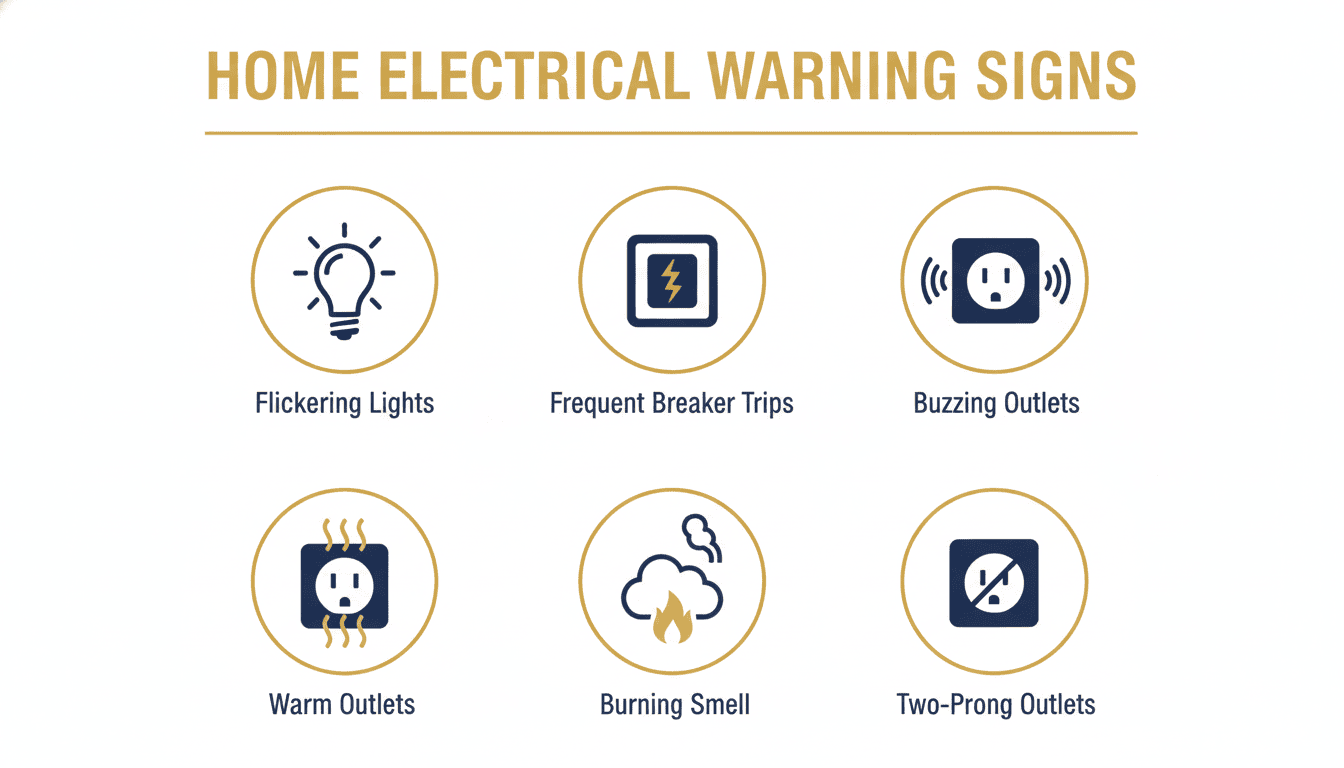
The Red Flags You Can Hear and See
These symptoms mean your electrical system is under stress:
- Flickering or dimming lights — especially when appliances start, signalling voltage fluctuation
- Frequent breaker trips — a breaker that trips regularly isn’t faulty; it’s protecting you from an overloaded circuit
- Buzzing outlets or switches — loose wiring or arcing behind the wall
- Outlets that feel warm to the touch — a direct fire risk
- A burning smell near the panel or outlets — stop using that circuit and call a licensed electrician immediately
- Two-prong outlets throughout the home — older ungrounded wiring, no shock protection
When the Home’s Age Is the Warning Sign
Aurora and the surrounding GTA include a significant stock of homes built in the 1960s, 70s, and 80s — before modern electrical safety standards.
Homes 40+ years old are the highest-risk category for outdated systems.
Common legacy issues in older Ontario homes:
- Knob-and-tube wiring — cloth-insulated, no ground conductor; a hard stop for most Ontario insurers
- Aluminum wiring — common in homes built 1965–1975; connections can loosen over time, creating arcing and fire risk
- 60A or 100A panels — undersized for modern homes running HVAC, EV chargers, and multiple smart-home systems simultaneously
If your home has any of these characteristics, an electrical safety inspection isn’t optional — it’s overdue.
When Ontario Law Requires an ESA Inspection
Not every electrical inspection is voluntary. Ontario’s Electricity Act and the Ontario Electrical Safety Code define specific scenarios where ESA notification and inspection are mandatory.
Any Significant Electrical Work
Most electrical work beyond simple device replacements — swapping outlets, changing light fixtures — legally requires a licensed electrician to file an ESA notification before work begins.
This covers:
- Panel upgrades and service entrance changes
- Adding circuits for renovations, new rooms, or finished basements
- EV charger installation (Level 2 chargers are a 240V dedicated circuit)
- Rewiring after knob-and-tube or aluminum wiring removal
- Electrical rough-ins for new construction or major additions
Skipping the permit is an Ontario code violation and voids your home insurance — meaning a fire caused by uninspected work leaves you financially responsible.
Your licensed electrician handles the ESA notification on your behalf — you don’t manage any paperwork yourself.
Real Estate Transactions
Buyers increasingly request an electrical inspection as part of due diligence — especially for pre-1980 homes in Aurora and the surrounding GTA.
Sellers who hold a Certificate of Acceptance for recent work gain a measurable advantage: they demonstrate code-compliant electrical systems without negotiating credits for unknown issues.
Before High-Draw Appliance Installations
Hot tubs, EV chargers, electric ranges replacing gas, whole-home generators — any appliance drawing 30A or more on a dedicated circuit warrants a panel assessment first.
Before Padi Electric installs an EV charger or any high-draw appliance, the team assesses whether your existing panel has the capacity — or whether a panel upgrade is the smarter first step.
What a Licensed Electrician Checks During Your Inspection
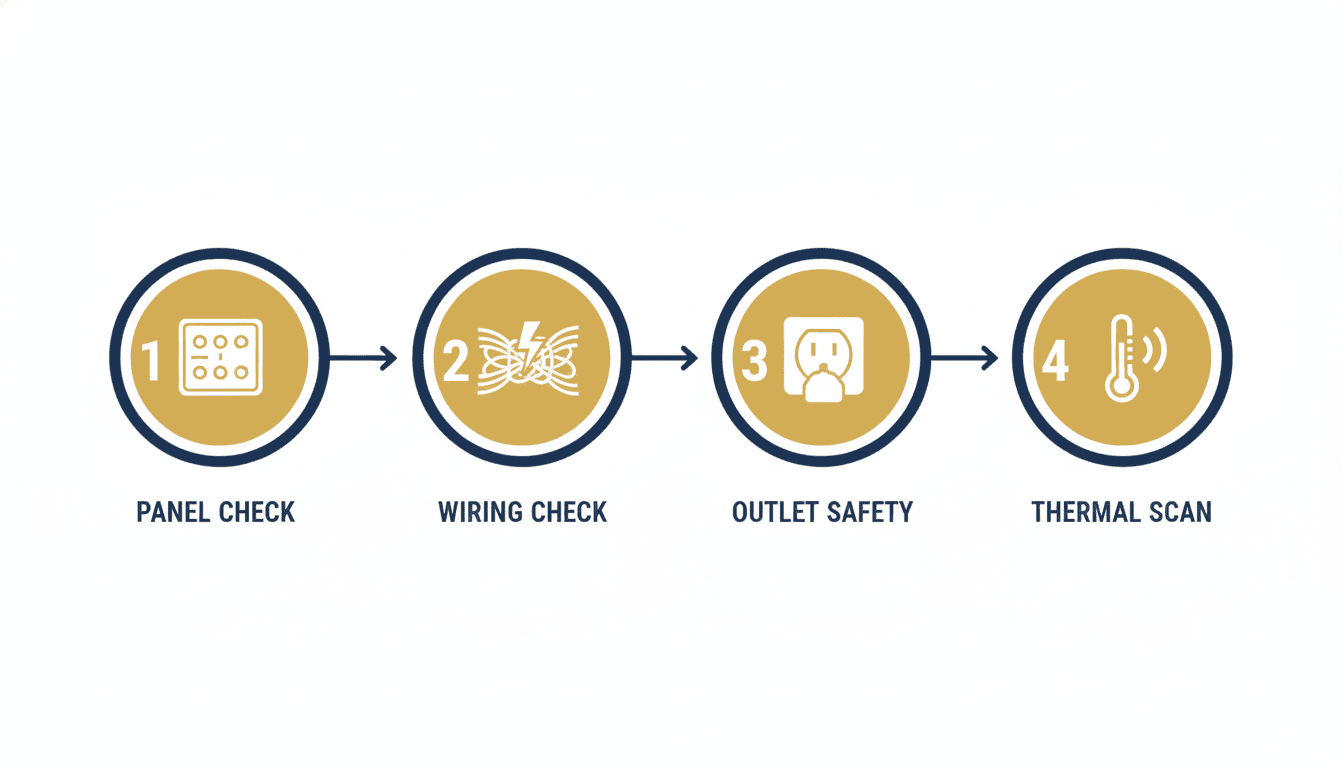
A thorough electrical safety inspection of a single-family Aurora-area home typically takes 1.5–3 hours, depending on age and size.
Electrical Panel and Service Assessment
The panel is the centrepiece of every inspection.
Your electrician checks:
- Service size — 60A, 100A, or 200A, and whether it matches your home’s actual load
- Breaker condition — double-tapped breakers, outdated fuse boxes, breakers that won’t reset properly
- Wire gauge match — breakers and wire gauges must match to prevent overheating
- Panel labelling — unlabelled breakers are a safety and emergency-response hazard
Wiring, Grounding, Outlets, and Code Protection
Beyond the panel, a licensed electrician inspects:
- Visible wiring condition in the basement, attic, and accessible wall cavities
- Knob-and-tube and aluminum wiring identification — locations and extent
- Grounding and bonding continuity
- Outlet testing for proper grounding and polarity
- GFCI protection in kitchens, bathrooms, garages, and outdoor locations (required by Ontario code)
- AFCI breaker coverage in bedrooms and living areas (Ontario Electrical Safety Code requirement)
- Smoke alarm placement on every storey and within 5 metres of sleeping areas (Ontario Fire Code)
Thermal Imaging: What Most Inspectors Miss
Padi Electric’s team uses thermal imaging diagnostics to identify hot spots in wiring, panels, and breakers before they become failures.
A thermal scan can reveal a breaker running 40°C hotter than its neighbours — invisible to the naked eye, but a clear pre-failure signal.
This is a diagnostic capability most general home inspectors don’t offer. It’s part of how 50+ years of combined field experience translates into work that protects your home long after the inspection ends.
Cost of a Home Electrical Inspection in Aurora, ON
Electrical inspection costs in Ontario involve two billing lines: the licensed electrician’s time and the ESA notification fee.
Electrician Fee vs. ESA Notification Fee
| Service | Typical Range |
| Licensed electrician safety assessment | $350 – $575+ HST |
| ESA notification (permit) fee — residential minimum | $88 – $300+ |
| Thermal imaging diagnostics (Padi Electric) | Included |
Estimates for single-family residential homes in Aurora, ON and surrounding GTA. Actual cost depends on home size, age, and scope. Request a free quote — preliminary estimate within 30 minutes at padielectric.ca/book.
When your electrician pulls an ESA permit for follow-on work, that notification fee is typically included in the quoted project price — transparent pricing, no hidden fees.
What Affects the Final Price
- Home size and age — larger or older homes take more time; pre-1980 homes require more thorough panel and wiring assessment
- Permit scope — ESA fees scale with the complexity and value of the permitted work
- Additional diagnostics — thermal imaging adds depth without adding cost when you book with Padi Electric
- Follow-on work — if the inspection identifies a panel upgrade or rewiring need, that’s quoted separately with full upfront pricing
Note: ESA fees increased 1.9% on April 1, 2026. If you’re planning electrical work this year, getting your assessment and permit filed now avoids the next scheduled increase.
What Happens After the Inspection
When No Work Is Needed
Your electrician provides a written report documenting the home’s current condition — confirming what’s working correctly, flagging code concerns, and recommending a priority timeline for any repairs.
Keep this report. It’s documentation for your insurer and for buyers if you sell.
When Repairs or Upgrades Are Required
Your electrician quotes the work with transparent pricing upfront — no surprise charges at the end.
Common follow-on work identified during Aurora-area inspections:
- Panel upgrade (100A → 200A): approximately $2,500 – $4,500
- Aluminum wiring remediation: cost depends on extent and access
- GFCI/AFCI breaker additions: $150 – $300 per location
- Knob-and-tube removal and rewire: varies by scope, typically quoted per circuit or zone
Once work is complete, your electrician files the ESA notification, an ESA inspector verifies the work meets code, and you receive a Certificate of Acceptance.
The Certificate of Acceptance
This document confirms electrical work on your property meets the Ontario Electrical Safety Code.
File it with your home’s permanent records.
It matters for:
- Home insurance claims — uninspected work gives insurers grounds for denial
- Real estate transactions — buyers’ lawyers and home inspectors ask for it
- Future renovations — establishes the verified baseline state of your electrical system
Conclusion
An electrical inspection is one of the highest-return safety investments an Aurora homeowner can make.
For a few hundred dollars and a couple of hours, you get clarity on the one system in your home that — if it fails — doesn’t just inconvenience you. It endangers your family and your property.
The most important steps to take right now:
- If your home is 40+ years old, schedule a safety assessment — don’t wait for a breaker trip to start the conversation
- If you’re planning a renovation, EV charger installation, or panel upgrade, your licensed electrician should pull the ESA notification before any work starts
- If you’re seeing flickering lights, warm outlets, or frequent breaker trips, call a licensed electrician today — not next week
Padi Electric’s ESA-certified team has served Aurora, Richmond Hill, Newmarket, Vaughan, and the GTA for over 10 years — transparent pricing, no hidden fees, and a 30-minute preliminary estimate when you book online.
Quality. Safety. Reliability. Every time.
Get a Free Quote → padielectric.ca/book or call (416) 900-6667 for same-day and 24/7 emergency electrical service.
Frequently Asked Questions
Do I need a permit for every electrical job?
No. Simple device replacements — swapping outlets, changing light fixtures — generally don’t require a permit. But any work involving new circuits, panel changes, or dedicated appliance circuits does. Your licensed electrician files the ESA notification before work begins; you don’t manage any paperwork yourself.
How often should I get an electrical inspection?
For most homes, every 10 years is a reasonable baseline. Key triggers regardless of schedule: buying or selling a home, planning a major renovation, adding an EV charger or high-draw appliance, or noticing any of the warning signs above.
Can I do an electrical inspection myself?
For a basic visual check — outlets, visible wiring, panel labelling — yes. For identifying real hazards like knob-and-tube, aluminum wiring issues, overloaded circuits, or thermal anomalies, professional tools and training are required. ESA-notified work must be done by a licensed electrician.
Will my insurance cover damage if I don’t have an ESA permit?
Typically not. Ontario insurers regularly deny fire or damage claims involving unpermitted electrical work. An ESA notification and Certificate of Acceptance is the documentation your claim depends on.
How long does an electrical inspection take?
A safety assessment for a typical Aurora-area home runs 1.5–3 hours. Older homes, finished basements, and larger square footage extend the timeline.
Does Padi Electric serve areas outside Aurora?
Yes — Padi Electric serves Aurora, Richmond Hill, Newmarket, Vaughan, and surrounding GTA communities. Call (416) 900-6667 or book at padielectric.ca/book for service availability at your address.

Written by Roozbeh Nahreini
Roozbeh Nahreini is the founder and owner of Padi Electric Inc., an ESA-certified electrical contractor serving Aurora and the Greater Toronto Area. With 10+ years of hands-on electrical expertise and a team combining 50+ years of field experience, Roozbeh specializes in residential and commercial electrical solutions—from panel upgrades and EV charger installation to smart home integration and advanced diagnostics. His commitment to transparent pricing, code-compliant workmanship, and 24/7 emergency response has established Padi Electric as a trusted neighborhood contractor across Aurora, Richmond Hill, Newmarket, Vaughan, and the GTA.