
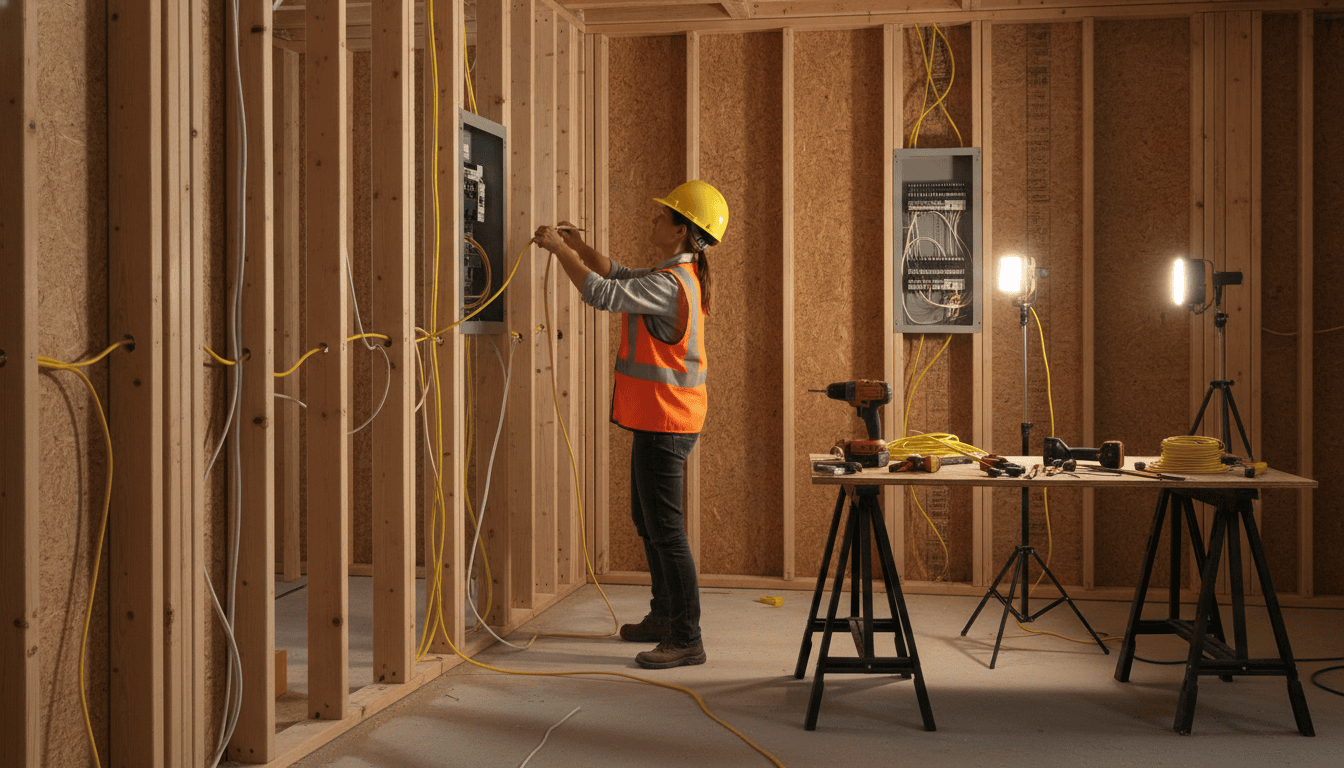
Planning to finish your basement in Aurora, ON? Basement electrical wiring is the most code-regulated part of the entire renovation — here’s what every homeowner needs to know before a single nail goes in.
- Basement wiring in Ontario requires an ESA permit — any new circuits, pot lights, or receptacles in a finished basement need an ESA notification filed before work begins; skipping it voids your home insurance.
- A panel assessment is the first step, not an afterthought — many Aurora homes built before the 1990s run on 100A service, which may not support a finished basement with a home office, bathroom, and entertainment system.
- Basement wiring happens in two phases — Rough-In (before drywall) and Finish (after drywall) — with an ESA inspection required between phases; close the walls early and they come back down.
- GFCI protection is required near any sink, bathroom, or laundry area in a finished basement under Ontario’s 2024 Electrical Safety Code.
- AFCI (arc fault) breakers are now required for all finished living spaces under the 2024 OESC — budget $200–$500 more than standard breakers for a typical basement circuit count.
- Basement wiring in Aurora typically costs $2,000–$7,000 depending on scope — approximately $6–$8 per square foot for wiring alone, with a panel upgrade quoted separately if needed.
- A Certificate of Acceptance from the ESA is the document that protects your home insurance, proves code compliance to buyers, and closes the permit — it’s the one piece of paper worth keeping for the life of the property.
Read on for the full guide: panel assessments, circuit planning, cost breakdowns, the two-phase inspection process, and how to hire the right licensed electrician for your Aurora basement.
Introduction
Your basement has more square footage than you’re using right now.
Maybe it’s storage. Maybe it’s unfinished concrete and exposed joists. Maybe it’s partly framed but never properly wired.
Finishing that basement is one of the highest-ROI renovations an Aurora homeowner can make — adding livable square footage, a home office, a rental suite, or an entertainment room without touching the home’s footprint.
But here’s what most homeowners discover only after they’ve already signed a general contractor: basement electrical wiring is the most code-intensive phase of the entire project.
Not because it’s complicated for a licensed electrician. But because basements in Ontario carry specific requirements around permits, inspections, circuit protection, and panel capacity that don’t apply the same way to above-grade rooms.
Get the electrical right, and every other trade falls into sequence. Get it wrong — or skip the permit — and you’re looking at a failed inspection, an insurance gap, and potentially reopening finished walls.
This guide covers what Aurora homeowners need to know before starting:
- What to check before your electrician shows up
- The two-phase wiring process — and why both ESA inspections matter
- Which circuits Ontario’s 2024 code requires for finished basements
- What it actually costs in Aurora in 2026
- The one document to keep for the rest of the time you own your home
Why Basement Wiring in Aurora Is Different from Other Rooms
Moisture, Concrete, and Code Scrutiny
Above-grade rooms are relatively forgiving.
Basements aren’t.
Concrete conducts electricity. Basements are naturally prone to moisture from ground infiltration, HVAC condensation, and water heater proximity. That combination means improperly protected wiring in a basement is both a shock hazard and a fire risk — which is why Ontario’s Electrical Safety Code applies stricter requirements here than in most other parts of the home.
Even unfinished basements in Ontario are already regulated: any receptacles must be GFCI-protected.
When you finish the space — adding drywall, pot lights, dedicated outlets, and potentially a bathroom or kitchenette — the requirements scale up significantly.
What “Finishing” Your Basement Means Electrically
A finished basement isn’t just drywall and flooring.
From an electrical standpoint, finishing means:
- New circuits run from the main panel or a subpanel
- Rough-in wiring for lights, outlets, switches, and any dedicated appliances
- Proper cable routing, securing, and protection through framing
- GFCI and AFCI protection where Ontario’s 2024 code requires it
- Two ESA inspections — rough-in and final — before and after walls close
Every one of these steps requires a licensed electrician and an ESA permit under the Ontario Electrical Safety Code.
Homeowners can legally do their own electrical work on their principal residence in Ontario — but they’re still required to file an ESA notification and pass the same inspections as a licensed electrician. For most basement projects, the complexity of multiple circuits, code requirements, and two rounds of inspection makes a licensed electrician the straightforward choice.
Step 1: Assess Your Electrical Panel Before Any Wiring Starts
Does Your Current Panel Have Capacity?
Before running a single cable, your electrician performs a load calculation.
This determines whether your existing main panel can handle the additional electrical demand of a finished basement.
Many Aurora homes built before 1990 run on 100A service — designed for a simpler era before home offices, EV chargers, electric fireplaces, and multi-zone HVAC. A finished basement can add 20–40 amps of new load depending on what’s going in.
If the panel is at or near capacity, you have two options:
- Panel upgrade: Upgrade from 100A to 200A service (approximately $2,500–$4,500 in Aurora, including ESA permit and labour) — the permanent solution for a home that’s grown into its electrical demands
- Subpanel installation: A smaller secondary panel dedicated to the basement, drawing from available capacity in the main panel
When a Panel Upgrade or Subpanel Is the Right Call
A full panel upgrade makes sense when:
- Your main panel is already maxed out or running outdated fuse-style protection
- You’re adding an EV charger, electric fireplace, or other high-draw appliance to the basement
- The home has knob-and-tube or aluminum wiring that should be addressed at the same time
A subpanel is a practical middle ground when:
- The main panel has capacity but routing multiple individual circuits to the basement is inefficient
- You’re adding 4+ new circuits and want a clean, organized system for future expansion
Padi Electric assesses your existing panel before quoting any basement project — so you’re never surprised by a panel upgrade requirement mid-renovation. Transparent pricing, upfront, before work starts.
The Two-Phase Wiring Process: Rough-In and Finish
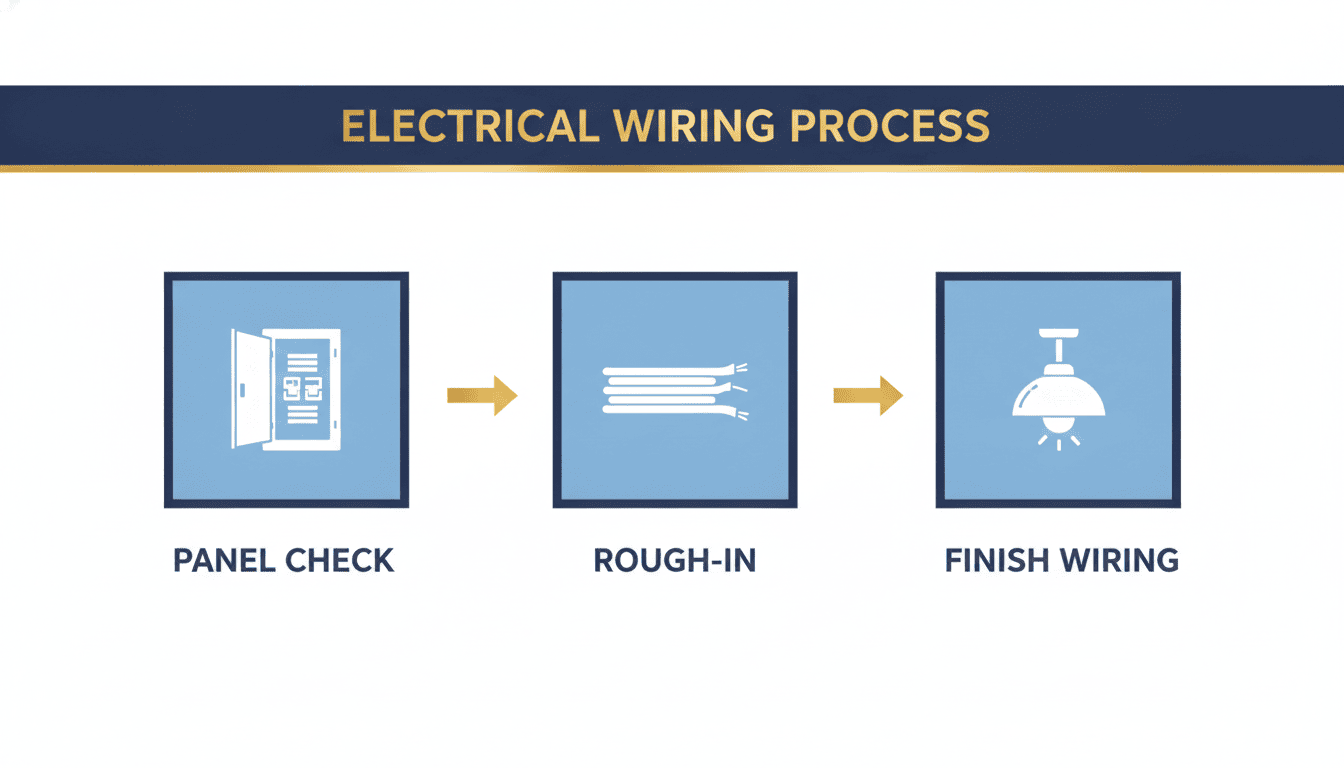
Phase 1: Rough-In Wiring (Before Drywall)
Once framing is complete, your electrician begins the rough-in phase — all the foundational work happens before a single sheet of drywall goes up.
During rough-in, your licensed electrician:
- Runs cable through framing for all circuits
- Installs electrical boxes for outlets, switches, and light fixtures
- Connects circuits back to the panel or subpanel
- Labels every circuit clearly for the ESA inspector and future reference
- Ensures all wiring is properly secured and protected per OESC specifications
Nothing gets covered until the rough-in inspection passes. This is not a formality — the ESA inspector needs to see the wiring before walls close.
The Rough-In Inspection
After rough-in wiring is complete, your electrician notifies the ESA for an interim inspection.
An ESA inspector visits — typically within 5–10 business days — to verify:
- Correct wire gauge and circuit breaker pairing
- Proper box fill and cable protection
- GFCI and AFCI placement per current code
- Grounding and bonding continuity
Once the inspection passes, walls can close.
Don’t close the walls early. If an ESA inspector finds wiring has been covered before inspection, the drywall must come down — a cost no homeowner wants to absorb mid-project.
Phase 2: Finish Wiring (After Drywall)
After drywall, insulation, and any painting is done, your electrician returns for the finish phase.
This includes:
- Installing all devices: outlets, switches, light fixtures, fan boxes
- Connecting receptacles and switches in their boxes
- Installing pot lights, bathroom fans, and any specialty fixtures
- Final circuit connections and breaker labelling at the panel
- Walk-through with you to test every circuit
A final ESA inspection follows — confirming the completed installation meets OESC requirements. Once it passes, you receive your Certificate of Acceptance.
What Circuits Does a Finished Basement Actually Need?
General Lighting and Receptacle Circuits
A finished basement typically requires a minimum of two general circuits:
- Lighting circuit: Controls pot lights, ceiling fixtures, and switched outlets
- Receptacle circuit: Powers general-use wall outlets (Ontario code requires a receptacle every 12 feet along finished walls)
For most basements in the 800–1,200 sq ft range, two general circuits plus dedicated circuits for specific uses is the standard starting point.
Dedicated Circuits for High-Draw Uses
Some uses require their own dedicated circuit — one circuit, one appliance or zone:
- Electric fireplace: 15A or 20A dedicated circuit
- Mini-kitchen or wet bar with refrigerator: Dedicated 20A circuit for the refrigerator; separate circuit for countertop outlets
- Home office with multiple monitors or workstations: 20A circuit recommended
- Bathroom exhaust fan: On the bathroom lighting circuit or its own circuit, depending on CFM rating
- Baseboard or electric heaters: Typically require a dedicated 240V circuit
The number of circuits drives both the project cost and the panel capacity conversation. Building in the circuits now costs less than reopening finished walls later to add them.
GFCI and AFCI Protection: Where Ontario’s 2024 Code Applies
Ontario now enforces the 28th Edition of the Canadian Electrical Code (OESC 2024). For finished basements:
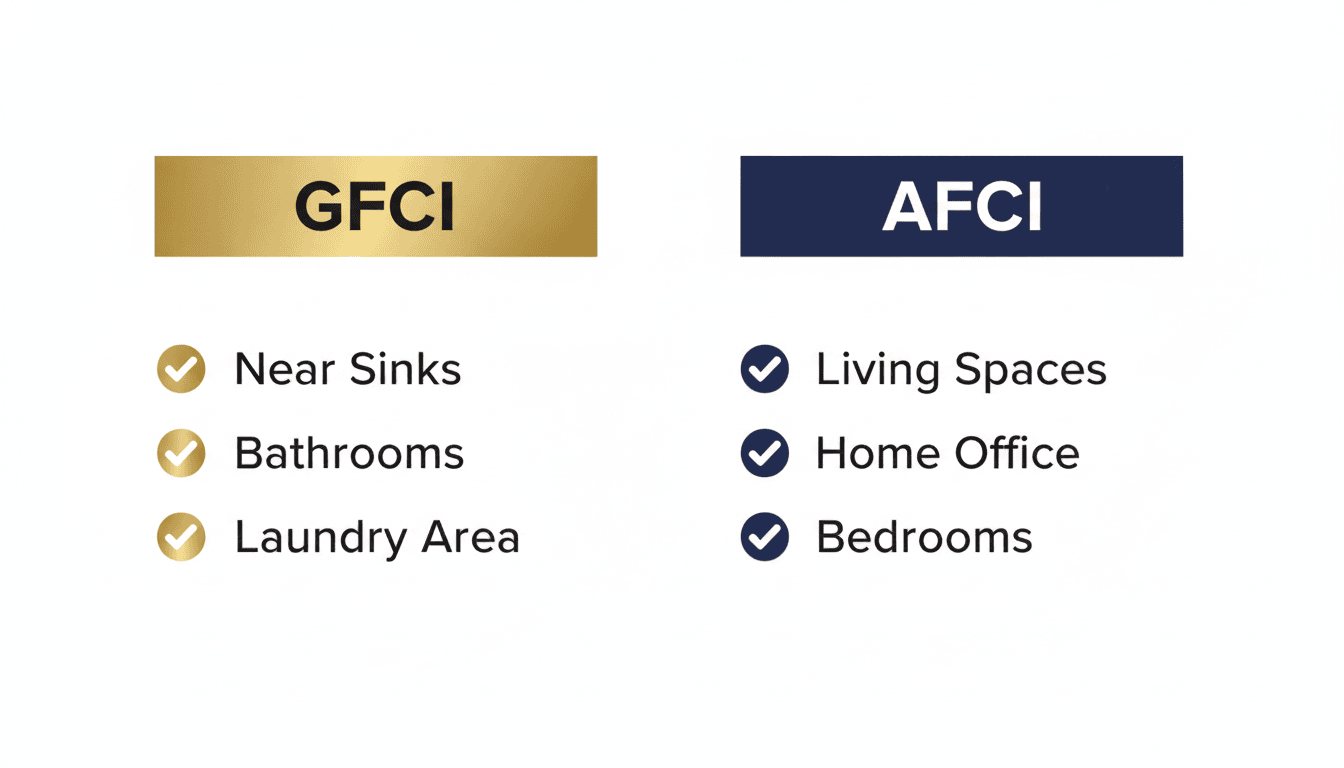
GFCI (Ground Fault Circuit Interrupter) protection is required:
- All receptacles within 1.5 metres of any sink
- All receptacles in bathrooms
- Laundry area receptacles
- Any outdoor or garage receptacles accessible from the basement level
AFCI (Arc Fault Circuit Interrupter) protection is required:
- All circuits serving finished living spaces — bedrooms, living areas, home offices
- Under OESC 2024, AFCI protection now extends beyond bedrooms to all finished habitable areas
AFCI breakers cost $40–$80 each versus $10–$15 for a standard breaker.
For a basement with 4–6 circuits all requiring AFCI protection, budget $200–$500 in breaker costs alone — separate from labour. A licensed electrician builds this into the quote upfront, so there are no surprises when the ESA inspector shows up.
ESA Permits, Inspections, and Your Certificate of Acceptance
What Basement Work Requires an ESA Permit?
In Ontario, any of the following triggers an ESA notification requirement:
- Adding new circuits from the main panel or a subpanel
- Installing new pot lights, switches, or outlets on new wiring
- Wiring a new basement bathroom, wet bar, or kitchenette
- Installing a dedicated circuit for an appliance
- Panel upgrade or subpanel installation
- Adding any new wiring to existing circuits
Simple device replacements — swapping a broken outlet or changing a light fixture on an existing circuit — generally don’t require a permit. When in doubt, your licensed electrician confirms the scope before any work starts.
The Notification and Inspection Process
Your licensed electrician files the ESA notification on your behalf — before work begins, or within 48 hours of starting.
Here’s the full sequence:
- ESA notification filed by your electrician
- Rough-in wiring completed
- ESA rough-in inspection (typically 5–10 business days)
- Walls close after inspection pass
- Finish wiring completed
- ESA final inspection
- Certificate of Acceptance issued
You don’t manage any paperwork. Padi Electric handles the ESA notification from filing through Certificate — you just need to be available for the two inspection visits.
Your Certificate of Acceptance: Why It Matters
The Certificate of Acceptance (CoA) is the ESA’s written confirmation that the electrical work on your property meets the Ontario Electrical Safety Code.
Keep it with your home’s permanent records.
It matters for three things:
- Home insurance: Ontario insurers routinely deny fire or damage claims involving electrical work that was never permitted or inspected. A CoA is the documentation your claim depends on.
- Real estate transactions: Buyers’ lawyers and home inspectors ask for it. Pre-2000 basements without documented electrical inspections trigger negotiation on price or remediation requirements.
- Future renovations: Establishes the verified baseline for your basement’s electrical system — so the next contractor knows exactly what they’re working with.
Basement Wiring Costs in Aurora and the GTA (2026)
Basement electrical costs in Aurora depend on scope, size, and what’s going in — but here are the real numbers.
Cost Breakdown by Scope
| Scope | Typical Range |
| Basic basement wiring — lighting + receptacles, 2–3 circuits | $2,000 – $3,500 |
| Full basement with bathroom, office, kitchenette — 5–8 circuits | $4,000 – $7,000+ |
| Pot lights / recessed lighting package | $2,000 – $5,000 |
| Panel upgrade (100A → 200A, if required) | $2,500 – $4,500 |
| ESA notification (permit) fee | $100 – $300+ |
| Licensed electrician hourly rate (Ontario) | $90 – $130/hr |
Aurora electrical costs run approximately 6% below the Ontario baseline due to competitive contractor availability in York Region. Estimates for single-family residential basements in Aurora, ON and surrounding GTA. Request a free quote — preliminary estimate within 30 minutes at padielectric.ca/book.
What Affects the Final Price
Several factors move where your project lands in these ranges:
- Basement size: A 600 sq ft rec room needs fewer circuits than a 1,200 sq ft basement apartment
- Scope of use: A bathroom, kitchenette, or home office each adds dedicated circuits — plan for them now rather than reopening walls later
- Panel capacity: If a panel upgrade is required, it’s a separate line item — doing it before basement wiring is more cost-effective than doing it after walls are finished
- AFCI breakers: Required for all finished living spaces under OESC 2024; budget $200–$500 depending on circuit count
- Pot lights: Recessed lighting adds both fixture cost and labour time; a full basement package in the GTA runs $2,000–$5,000
- ESA permit fees: Included in most licensed electricians’ quotes — confirm this is itemized when getting estimates
Padi Electric provides full transparent quotes — scope, circuit count, permit, and timeline — before work starts. No hidden fees, no mid-project surprises.
Frequently Asked Questions
Do I need a permit to wire my basement in Ontario?
Yes, in almost all cases. Adding new circuits, installing pot lights on new wiring, or adding a basement bathroom all require an ESA notification (permit) filed before work begins. Your licensed electrician handles this on your behalf — you don’t manage any paperwork yourself.
Can I do my own basement wiring in Ontario?
Legally, yes — homeowners can perform electrical work on their own principal residence in Ontario. But you’re still required to file an ESA notification and pass the same inspections as a licensed electrician. For basement finishing projects — which involve multiple circuits, GFCI/AFCI requirements, panel assessments, and two rounds of ESA inspection — most homeowners find hiring a licensed electrician is the clear choice on both cost and risk.
Do I need to upgrade my panel before finishing my basement?
Not always, but it’s worth assessing first. A licensed electrician performs a load calculation before any basement project to determine whether your current panel has capacity for the new circuits. Many Aurora homes built before 1990 run on 100A service, which may be at or near its limit. If a panel upgrade is needed, doing it before — not after — walls are finished avoids reopening completed work.
How long does basement wiring take?
Rough-in wiring for a typical Aurora basement takes 1–3 days depending on size and complexity. The ESA rough-in inspection is scheduled separately, usually within 5–10 business days. Finish wiring takes another 1–2 days after drywall is up. Total electrical time across both phases: 2–5 days of on-site work for a standard single-family basement.
What’s the difference between GFCI and AFCI protection?
GFCI (Ground Fault Circuit Interrupter) protects against shock — it detects current leaking to ground through water or a person and trips within milliseconds. Required near any water source in a finished basement. AFCI (Arc Fault Circuit Interrupter) protects against electrical fires — it detects dangerous arcing in connections and damaged cables that can ignite insulation. Required for all finished living spaces under Ontario’s 2024 Electrical Safety Code.
What happens if I finish my basement without an ESA permit?
The consequences are serious. Ontario insurers routinely deny fire and water-damage claims involving electrical work that was never permitted or inspected. Without a Certificate of Acceptance, unpermitted electrical work also creates a disclosure problem when selling — buyers’ lawyers and home inspectors flag it, triggering price renegotiation or remediation requirements before closing. Getting caught after the fact means opening the walls.
Does Padi Electric serve areas outside Aurora?
Yes — Padi Electric serves Aurora, Richmond Hill, Newmarket, Vaughan, and surrounding GTA communities. Call (416) 900-6667 or book at padielectric.ca/book for service availability at your address.
Conclusion
Finishing a basement is one of the smartest investments an Aurora homeowner can make.
Done right — with a proper panel assessment, code-compliant wiring, and ESA permits throughout — it adds livable square footage, insurance-protected value, and a Certificate of Acceptance that pays dividends at every future transaction.
Done without a licensed electrician or without a permit, it creates a liability behind the drywall: one your insurer can use to deny a claim and every future buyer will flag.
The most important steps to take right now:
- In the planning phase: Get a panel assessment first — it determines whether a panel upgrade is needed before any wiring starts, so your renovation budget is accurate from day one.
- If you have a general contractor lined up: Make sure electrical is scoped separately with a licensed electrician who pulls their own ESA notification — not bundled into an all-in GC quote without a clear permit line item.
- If your basement is already partially finished without a permit: Talk to a licensed electrician before listing your home — remediation is far less painful before a transaction than during one.
Padi Electric’s ESA-certified team has served Aurora, Richmond Hill, Newmarket, Vaughan, and the GTA for over 10 years — transparent pricing, no hidden fees, and a 30-minute preliminary estimate when you book online.
Quality. Safety. Reliability. Every time.
Get a Free Quote → padielectric.ca/book or call (416) 900-6667 for same-day and 24/7 emergency electrical service.

Written by Roozbeh Nahreini
Roozbeh Nahreini is the founder and owner of Padi Electric Inc., an ESA-certified electrical contractor serving Aurora and the Greater Toronto Area. With 10+ years of hands-on electrical expertise and a team combining 50+ years of field experience, Roozbeh specializes in residential and commercial electrical solutions—from panel upgrades and EV charger installation to smart home integration and advanced diagnostics. His commitment to transparent pricing, code-compliant workmanship, and 24/7 emergency response has established Padi Electric as a trusted neighborhood contractor across Aurora, Richmond Hill, Newmarket, Vaughan, and the GTA.