

Key Takeaways
Technological Advancements in Home Electrical Services: Staying ahead in Ontario’s rapidly evolving home electrical landscape means understanding—and acting on—the latest technology, safety, and efficiency trends. These core insights help homeowners, property managers, and builders future-proof their spaces with compliant, high-quality solutions.
- Upgrading core systems with modern panels, structured wiring (Cat6/Cat6a), and whole-home surge protection is essential for supporting smart devices, EV chargers, and renewable energy—especially in homes built before 2000.
- Smart home integration succeeds only with dedicated circuits, high-speed data cabling, and professional planning—ensuring seamless control, real-time monitoring, and reliable operation across all connected devices.
- Renewable energy systems and electrification (like solar panels, battery storage, heat pumps) require panel upgrades and licensed installation to meet Ontario code, unlock incentives, and cut home emissions by up to 50%.
- Level 2 home EV charging is now standard, delivering up to 10x faster charging than conventional outlets; safe, future-ready installs demand dedicated circuits, GFCI protection, and compliance with Ontario’s safety codes.
- Advanced safety and diagnostics tech—AFCI/GFCI breakers, whole-home surge protection, and AI-powered monitoring—prevents issues before they escalate, providing instant alerts and reducing downtime or risk.
- Smart LED lighting and automated controls save Ontario homeowners 20–30% in annual energy costs and boost comfort—while wireless power and intelligent load management are shaping the next era of home convenience.
- Regular electrical reviews and upgrades (every 3–5 years) are crucial to keep pace with new tech, stricter codes, and growing power demands—positioning your home for safety, efficiency, and long-term value.
- Partnering with licensed, insured electricians guarantees code compliance, long-term reliability, and access to rebates or grants—ensuring your upgrades deliver lasting safety, comfort, and ROI.
Explore the full article for in-depth strategies, practical examples, and professional tips to bring your Ontario home’s electrical system confidently into the future.
Introduction
Imagine walking through your front door and knowing your power, Wi-Fi, and security are all running seamlessly—energy-efficient, automated, and ready for anything, from EV charging to stormy nights. That’s not just tech hype; over 80% of Ontario home upgrades now include smart integration, safety upfits, or panel enhancements driven by new codes and rising expectations.
Whether you’re a homeowner, builder, or property manager, outdated wiring can quickly become a bottleneck—risking safety, comfort, and energy bills as your needs evolve. Many older homes simply aren’t equipped for today’s essentials: big appliances, electric vehicles, or 24/7 connectivity. Ignoring these realities could mean more frequent outages, higher insurance costs, and missed rebates on big upgrades.
What’s changed? Smart devices, renewable energy, and all-electric living have moved from “nice-to-have” to “must-have”—and Ontario’s safety standards are now more stringent than ever. Forward-thinking projects deliver:
- Panel upgrades supporting modern loads and future expansion
- Structured wiring for fast, reliable internet and integrated controls
- Compliance with the latest Ontario electrical codes and safety protocols
On top of that, licensed electricians can help you unlock incentives, prevent costly mistakes, and keep your property competitive for years to come.
This guide gives you an expert inside look at the tech transforming home electrical—showing how upgrades deliver:
- Safer, code-compliant installations
- Energy-efficient operation
- Seamless smart home integration
- Future-ready foundations for renewables and EVs
We’ll break down the core system changes, smart home essentials, renewable solutions, EV infrastructure, and the new safety standards you need to know.
Ready to see what powers Ontario’s next generation of homes? Here’s how the foundation is being redefined—and what you’ll need to be ready for tomorrow.
The Foundation of Modern Home Electrical Systems
Traditional residential electrical systems are getting a serious upgrade for 2025. Smart home technology, rising energy needs, and stricter Ontario codes are leading to major changes in how homes are wired and powered.
Homeowners today expect more:
- Safer installations
- Increased energy efficiency
- Support for new devices and renewable energy
Code compliance is essential—professional consultation means your wiring supports everything from EV chargers to solar panels, and keeps you legal.
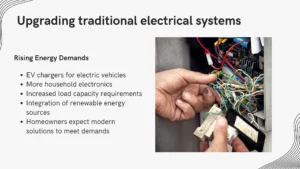
Core System Upgrades: What’s Changing?
Picture this: you walk into your home where power, data, and automation run seamlessly in the background. That’s only possible with a rock-solid foundation.
Modern systems rely on upgraded essentials, including:
- Service panels sized for current and future loads
- Structured wiring (Cat6/Cat6a) for high-speed internet and data
- Surge protection for all electronics and appliances
- Smart energy monitoring for real-time usage stats
Failing to update these leads to bottlenecks, system overloads, or safety hazards—especially in homes built before the 2000s.
Infrastructure for Emerging Technologies
Want a smart thermostat, battery storage, or fleet of EVs? Your home needs to be tech-ready. Foundational upgrades often involve:
- Ensuring service panels are 200 amps minimum to meet demand
- Installing dedicated neutral wires for new switches and devices
- Running Cat6 wiring for data and digital automation
- Providing isolated circuits for smart hubs and chargers
Many older Ontario homes need panel upgrades to accommodate electric heat pumps, induction ranges, or solar. One Toronto home, built in 1985, recently upgraded with new breakers and Cat6 runs—improving safety, Wi-Fi, and electrical reliability overnight.
The Role of Licensed Electricians
DIY shortcuts? Not worth the risk. Only licensed electricians can:
- Evaluate the real load demands of your home
- Plan circuit layouts to reduce overload and nuisance trips
- Ensure everything meets strict Ontario electrical safety standards
Simply put: “Your home’s electrical foundation is the launchpad for all future tech upgrades.”
Why This Matters
Homes built for yesterday’s needs can’t handle tomorrow’s tech. Upgrading your core electrical system:
- Maximizes safety, long-term value, and energy compatibility
- Delivers peace of mind, readiness for smart devices, and streamlined maintenance
The big win: foundation upgrades are the first—and most important—step to future-proofing your Ontario home for the next decade.
Smart Home Integration and IoT Solutions
The smart home revolution is here, and Ontario residents are at the forefront. IoT-enabled systems are transforming daily life—imagine controlling your lighting, heating, security, and appliances with a tap on your phone or a simple voice command.
Nearly 9 in 10 North American homes will adopt some level of smart automation by 2025. If you picture mornings where the heat, lights, and coffee maker sync to your schedule, you understand the draw of centralized home control.
Infrastructure Needed for Seamless Connectivity
To unlock true smart functionality, structured wiring and upgraded panels are key. Licensed electricians are upgrading older properties with:
- Cat6 or Cat6a cabling for reliable, high-speed data between smart devices
- Dedicated circuits and neutral wires at switches to ensure safety and performance
- Surge protection devices to shield sensitive tech from power surges
- Structured wiring panels to neatly centralize smart home data and controls
Picture this: an electrician opening a tidy cabinet where all your home’s data lines and circuits converge, ensuring smooth, organized connections for every device.
Next-Gen Panels and Circuit Breakers
Modern smart panels offer:
- Real-time energy tracking, letting you see usage down to the circuit
- Remote control and automation (think: turning off forgotten lights from anywhere)
- Fault detection with predictive alerts, reducing fire risks and costly downtime
New circuit breaker tech helps identify issues before they escalate, sending you and your electrician instant notifications of arc faults or overloads.
Integration Best Practices
Licensed professionals follow these integration essentials:
- Keep power and data cables separate to avoid interference
- Use dedicated outlets for smart speakers and hubs, preventing resets and dropouts
- Install surge protection at both the main panel and device level
These simple steps help future-proof homes against evolving tech standards, while avoiding common installation mistakes.
Trending Up: Rapid Adoption and Industry Response
With 89.5% of U.S. homes expected to feature smart tech by 2025, Ontario property owners are quickly catching up—driven by demand for convenience, safety, and efficiency.
Electricians across the province are:
- Completing advanced training in IoT and smart system installs
- Offering multi-device support, predictive maintenance alerts, and system monitoring as part of standard service
- Advising on scalable solutions so your home can grow as technology evolves
Smart home integration is now expected, not optional.
Professional planning and installation give homeowners reliable, seamless control and future-ready systems that boost comfort, value, and peace of mind. Keeping your electrical infrastructure current means your home truly works for you, not the other way around.
Renewable Energy Systems and Home Electrification
Ontario homeowners are embracing renewable energy systems—solar panels, battery storage, and microgrids—to power their homes efficiently and sustainably.
This shift is driven by increasing energy costs, the need for resilience during outages, and programs supporting low-carbon living.
Picture this: sunlight fueling your home during the day, batteries storing energy for nights and emergencies, and your system seamlessly switching between grid and backup.
Core Technologies & Home Requirements
To enable safe, reliable renewable energy solutions, modern homes require:
- Smart inverters that convert solar DC to AC, dynamically manage loads, and support grid interaction.
- Net metering setups, allowing excess solar production to be sold back to the grid.
- Automatic transfer switches for instant backup during outages.
- Enhanced electrical panels and upgraded wiring to handle increased electrical demand.
Professional installation and panel upgrades are essential to ensure compliance with Ontario’s strict codes and to future-proof your home for new technologies.
Electrification: Moving Beyond Gas
The push toward all-electric, decarbonized homes is happening now.
- Heat pumps replace fossil-fuel furnaces for heating and cooling.
- Induction cooktops and electric water heaters deliver efficient, gas-free utility.
- Panel upgrades (often to 200A service or higher) support increased power needs of these appliances.
80% of Ontario upgrades now involve some form of electrification—modernizing both comfort and safety.
Battery Storage & Backup Power
Lithium-ion battery systems offer:
- Peak shaving: reserve energy for costly peak hours.
- Backup power: keep essentials on during outages.
- Hybrid systems (battery plus generator): ultimate resilience against extended blackouts.
Intelligent management software helps homeowners:
- Monitor power usage in real time.
- Optimize when to draw from, store, or sell energy.
- Maximize ROI and minimize downtime.
Decarbonization, Incentives, and Real-World Impact
By switching to all-electric solutions, homes can cut emissions by 30-50% while improving indoor safety.
Ontario homeowners benefit from:
- Utility incentives like Save on Energy and Canada Greener Homes grants.
- Priority inspections and rebates for whole-home panel and battery installations.
Imagine a family in Toronto upgrading their panel, installing rooftop solar, and using battery storage to keep their home warm during January outages—while selling unused power back to the grid.
Electrification and renewables are no longer “future tech”—they’re now standard for new builds and major upgrades.
Professional guidance helps you unlock incentives, avoid costly code violations, and gain full control over your home’s energy experience—delivering safety, comfort, and long-term value at every step.
Electric Vehicle Charging Infrastructure
Home EV charging has surged in Ontario, with Level 2 (240V) stations now the residential standard for their superior speed and efficiency.
Picture this: charging your EV overnight—ready to go by morning, without any last-minute pit stops or range anxiety.
Why Level 2 Is the New Standard
Level 2 chargers deliver 6-10x the charging speed of standard outlets, making them practical for busy households.
- Faster charging: Regain 30-45 km of range per hour, ideal for daily commutes or errands.
- Ontario’s code-compliant tech: Level 2 requires approved installation and inspection for safety, and is now expected in new builds and renovations.
- Cost factor: Most installations range from $900 to $2,500—a smart investment for electric vehicle owners.
“Reliability starts with a professionally installed charger—don’t risk DIY shortcuts when power and safety are at stake.”
Core Electrical Requirements for Safe Charging
Ensuring your system is future-ready means:
- Panel evaluation: Confirming available capacity for high-amperage circuits.
- Dedicated circuits: Separate, high-amp lines prevent overloads and maximize charger performance.
- GFCI protection: Required by Ontario code to minimize shock risks in garages and outdoors.
A licensed electrician can guide upgrades, often suggesting oversized circuits to accommodate tomorrow’s larger batteries or additional vehicles—think future-proofing for a growing EV family.
Smart Charging Innovations & Integration
Modern chargers now go far beyond “plug-and-play.”
- Solar integration: Pair charging with rooftop solar to drive on sunshine, not just grid power.
- Flexible scheduling: Apps allow off-peak charging, automating savings when electricity rates dip.
- Load management: Advanced tech balances charging between multiple EVs or large home appliances, preventing breaker trips and optimizing energy use.
Imagine glancing at your phone: app alerts show your EV charged using 60% solar and only $2 worth of grid power—all automated.
Seamless Home Energy Management
Next-level setups link EV charging to broader home energy systems:
- Solar, battery, and grid coordination: Charge from excess solar, storage, or grid based on real-time rates and demand.
- Energy monitoring: Track every kilowatt-hour—see when and how your car is drawing power.
- Load prioritization: Smart controls shift charging to avoid peak hour surges, saving both money and infrastructure strain.
When done right, integrated EV charging means never worrying about blown fuses, surprise bills, or leaving efficiency on the table.
Choosing a licensed, insured professional guarantees your install is safe, compliant, and ready for the future. That’s the real power—knowing your home is already wired for what’s next.
Innovations in Safety, Maintenance, and Diagnostics
Today’s homes are safer and smarter than ever, thanks to advanced safety technologies and digital diagnostics that prevent problems before they escalate.
Licensed Ontario electricians now install AFCI (Arc Fault Circuit Interrupter) and GFCI (Ground Fault Circuit Interrupter) breakers as standard defense against electrical fires and shocks.
For comprehensive protection, whole-home surge protection is added directly at the main panel, guarding every device you plug in against voltage spikes from storms or grid events.
Real-Time, Remote System Monitoring
Modern electrical panels often feature Internet-enabled sensors that watch for:
- Arcing (which signals possible wire damage)
- Overload conditions (preventing tripped breakers)
- Unexpected voltage drops or surges
These panels instantly send notifications to both homeowners and service technicians—often before anyone notices a problem.
Picture this: Your phone pings with an alert at midnight, showing exactly which outlet is drawing unusual current. The issue is isolated in seconds, not hours.
Predictive Maintenance With Artificial Intelligence
Leading systems use AI and machine learning to detect patterns and predict issues such as:
- Loose connections causing intermittent arcing
- Appliances drawing unsafe current
- Faults likely to develop into safety hazards if ignored
This smarter approach can reduce fire risk and unplanned downtime—think maintenance that prevents problems, not just repairs after the fact.
Virtual Troubleshooting & Transparent Digital Service
When issues do arise, technicians can often diagnose and resolve many problems remotely.
- Virtual check-ups use live video and app-based diagnostics to walk homeowners through simple fixes, sometimes eliminating the need for a visit.
- Digital invoicing and transparent reports ensure clients know what was fixed, and why—and every detail is stored for future reference or warranty claims.
Ontario Electrical Safety Codes and Best Practices
Every upgrade must meet or exceed the Ontario Electrical Safety Code—not only for compliance but for your peace of mind.
- Always hire a licensed and insured electrician trained in the latest tech; Ontario’s regulations protect your investment and your family.
- Regularly review your electrical system as tech evolves or after major upgrades—safe homes require proactive care.
Smart, connected safety features are quickly becoming the standard for homes—early detection and professional compliance are non-negotiable for modern Ontario living. When the next electrical challenge arises, fast remote diagnostics and predictive maintenance mean less disruption and far greater peace of mind.
Energy Efficiency and the Future of Residential Power
Picture this: lights that sense your presence, adapt to daylight, and dim automatically when you leave the room. Today’s homes in Ontario are rapidly transitioning to advanced LED lighting systems paired with smart dimmers, slashing energy costs and maximizing comfort for busy families.
Automated dimmer technology reacts to your lifestyle and optimizes brightness for every mood or task. By upgrading, homeowners often see annual energy savings of 20-30% compared to outdated lighting.
Early Adoption: Wireless Power and Smart Controls
Homeowners are starting to experience wireless power transfer (WPT) for smaller devices—think plug-free charging pads hidden in kitchen counters, nightstands, or workspace surfaces.
Sol-Ark inverters and similar smart load controllers take energy management further by:
- Instantly prioritizing critical appliances during grid stress or outages
- Shedding non-essential loads without manual intervention
- Keeping life running smoothly, even when the power blips
“Your home can now respond to rising demand and outages—automatically protecting what matters most, while lowering utility bills.”
The Digital Business Model & Customer Value
Expect a digital-first experience: modern electricians now offer customer portals for real-time service tracking and instant digital invoicing.
Key services include:
- Project management tools providing transparent updates for renovation or upgrade projects
- Integrated energy services like remote monitoring, maintenance alerts, and usage dashboards
This digital shift makes professional help more accessible and efficient—picture quick online bookings and guided recommendations right on your phone.
Market, Cost, and Value Considerations
Comparing smart/renewable installations to traditional setups:
- Upfront, LED and automation systems can cost 10–30% more, but recover this investment through lower energy use and fewer replacements
- Government incentives, rebates, and grants for Ontario homeowners can cover 10-40% of project costs, maximizing affordability
A professionally designed system delivers:
- Ongoing savings on your utility bills
- Boosted property value and appeal to future buyers
- Peace of mind with code-compliant, future-ready upgrades
Choosing a licensed electrician means every upgrade is safe, reliable, and optimized for long-term results.
Energy efficiency isn’t just about savings—it’s about building homes that are safer, smarter, and ready for what’s next. Partnering with an expert brings confidence, clarity, and lasting value to every Ontario homeowner.
Preparing for What’s Next in Home Electrical Services
Staying ahead in home electrical means committing to ongoing system reviews and timely upgrades—the difference between a truly future-ready home and falling behind.
A modern electrical system isn’t set-and-forget; it’s dynamic, constantly adapting to new technology, safety regulations, and the ever-growing list of devices demanding power.
Why Ongoing Reviews Matter
Every year, homes in Ontario see an influx of new tech, stricter codes, and more sustainable options.
For homeowners and managers, regular electrical assessments offer:
- Optimized safety as codes and best practices evolve
- Room for upgrades, like EV chargers or smart panels, as your needs change
- Savings opportunities with energy monitoring or utility incentives
Professional electricians recommend a system checkup every 3-5 years, or before any major renovation or equipment upgrade.
Trends Shaping Tomorrow’s Electrical Systems
Current momentum points to a future where your electrical setup is intelligent, flexible, and sustainable. Key emerging trends include:
- AI-powered home energy management systems that balance load and cut costs automatically
- Grid-interactive homes with the ability to sell energy back, reducing bills while supporting Ontario’s grid stability
- Advanced battery storage for total peace of mind—think lithium-ion batteries paired with rooftop solar, handling outages seamlessly
Picture this: With the right prep, your home can automatically shed non-essential loads during peak demands, alert you to a failing breaker before it trips, and even schedule EV charging for the lowest rates.
Electricians as Trusted Advisors
The days of “just running wires” are over—today’s electrical professionals are strategic partners and safety advocates.
Expert electricians help you:
- Evaluate if your panel can handle a future heat pump or EV (no guesswork)
- Identify smart upgrades that increase property value and comfort
- Navigate Ontario’s ever-changing codes for absolute compliance
Quotable tip: “Investing in professional guidance today means avoiding expensive fixes tomorrow.”
When you treat your electrical system as an evolving asset, you’re not just keeping up—you’re future-proofing your comfort, safety, and investment for the long run.
FAQ
-
What are technological advancements in home electrical services?
Technological advancements in home electrical services include smart home integration, renewable energy systems, EV charging solutions, and advanced safety features like AFCI and GFCI breakers. These innovations improve safety, energy efficiency, and the overall functionality of modern homes. -
How do smart home electrical systems work?
Smart home systems rely on structured wiring, high-speed internet connections, and dedicated circuits. This allows homeowners to control lighting, heating, and security remotely, providing convenience and energy savings while supporting new technologies. -
Why is upgrading my electrical panel important for home automation?
Upgrading your electrical panel ensures that it can handle modern devices like smart thermostats, EV chargers, and renewable energy systems. It helps prevent overloads and ensures your home remains compliant with Ontario’s strict electrical safety codes. -
How can I make my home more energy-efficient?
Homeowners can enhance energy efficiency by adopting smart lighting, automated controls, and renewable energy systems. Regular upgrades and smart home integration also contribute to reduced utility bills and improved comfort. -
What is the role of licensed electricians in home electrical upgrades?
Licensed electricians ensure that electrical systems are safely upgraded to meet new technology requirements. They provide professional planning, installation, and compliance with Ontario’s electrical codes, ensuring both safety and functionality.
Conclusion
The future of home electrical isn’t just about keeping the lights on—it’s about creating a safer, smarter, and more resilient home that’s built to handle tomorrow’s technology.
When you invest in modern electrical upgrades backed by licensed professionals, you’re setting your property up for comfort, energy savings, and long-term value.
—
Key Takeaways:
- Schedule a professional electrical assessment every few years to ensure your system is code-compliant and ready for new tech, from EV chargers to home automation.
- Prioritize safety-focused upgrades—including surge and arc fault protection—to protect what matters most.
- Upgrade your service panel and wiring to support smart home devices, renewables, and future appliances with confidence.
- Tap into Ontario’s incentives and rebates for energy-efficient, electrified solutions that reduce costs up front and over time.
- Partner with licensed, insured electricians committed to best practices and real-world results.
—
Next Steps:
- Book a consultation with a local, certified electrician to review your current setup and create a tailored upgrade plan.
- Ask about structured wiring, panel upgrades, and EV-ready circuits—even if you’re not ready for all features today, prepping now reduces costs later.
- Review available incentives (Canada Greener Homes, Save on Energy, etc.), and act while funding is still available.
- Adopt a future-ready mindset—see every upgrade as an investment in reliability, safety, and daily ease.
—
The power to shape your home’s future is in your hands. Every smart upgrade you make today sets the stage for a safer, more efficient, and more connected tomorrow—because in Ontario, powering up the right way is how real progress begins.
“Your electrical system is the foundation of modern living—build it for what’s next, and your home will rise to every challenge ahead.”

Written by Roozbeh Nahreini
Roozbeh Nahreini is the founder and owner of Padi Electric Inc., an ESA-certified electrical contractor serving Aurora and the Greater Toronto Area. With 10+ years of hands-on electrical expertise and a team combining 50+ years of field experience, Roozbeh specializes in residential and commercial electrical solutions—from panel upgrades and EV charger installation to smart home integration and advanced diagnostics. His commitment to transparent pricing, code-compliant workmanship, and 24/7 emergency response has established Padi Electric as a trusted neighborhood contractor across Aurora, Richmond Hill, Newmarket, Vaughan, and the GTA.