

Get instant clarity on what separates residential from commercial electrical services—and how to choose the right expertise for your Ontario property. Each insight below equips you with actionable guidance for safer, smarter decisions, whether you’re a homeowner or a business operator.
- Residential vs. Commercial power needs differ drastically—homes run on 120V-240V single-phase, while businesses require 208V-480V three-phase systems to support larger loads and critical equipment.
- Compliance with Ontario Electrical Safety Code is non-negotiable—project shutdowns and liability risks are real consequences for skipping permits or hiring unlicensed electricians.
- Wiring and infrastructure choices matter—homes use NM-B (Romex) tucked behind drywall, while commercial spaces demand THHN wire in metal conduit for tougher, higher-capacity environments.
- Project complexity and coordination multiply in commercial work—expect multiple stakeholders, strict scheduling, and phased installations to minimize disruption and maximize business uptime.
- Safety protocols go further in commercial projects—think fire-rated cabling, arc flash protection, and regular emergency lighting checks, whereas homes emphasize GFCI/AFCI installs and routine hazard assessments.
- Proof of licensing, insurance, and sector experience is critical—verify all credentials up front to protect your property and guarantee code-compliant work.
- Documentation and inspection at every step secure your investment—permits, load calculations, and inspection logs are essential not just for insurance, but for diagnosing future issues efficiently.
- Specialized electrical services depend on project type—from simple panel upgrades at home to complex, multi-phase power distribution in offices, schools, or shops, always match your needs to the right expertise.
Making an informed choice means safer systems and long-term peace of mind—review our full article to power your next project the right way.
Introduction
Imagine this: your neighbor’s renovation halts because an unexpected code violation shuts off power for days—while across town, a bakery reopens just hours after a major panel upgrade, business humming as usual.
Getting electrical work right is more than a checklist—it’s the backbone of comfort at home and uptime at work. In Ontario alone, updated codes and regulations contribute to a 25% drop in electrical incidents each year. Yet, the differences between residential and commercial electrical services remain a mystery for many property owners.
Whether you’re a homeowner planning a smart lighting install, a property manager eyeing an energy-efficient retrofit, or a business owner expanding into a bigger space, knowing the distinctions matters.
Here’s where confidence becomes critical—you want an electrical partner who speaks your language, prioritizes safety, and delivers code-compliant, high-quality solutions tailored to your space.
In this guide, you’ll uncover:
- Which wiring, panels, and materials keep homes cozy—and businesses thriving
- How voltage, system design, and legal codes shape every project
- The real risks (and costs) of skipping permits or working outside regulation
- What questions to ask—and the credentials to demand—before hiring for your next electrical job
Choosing the right electrical service isn’t just about flipping a switch. It’s the difference between peace of mind and costly, stressful complications.
From simple repairs to full-scale new builds, you’ll get the practical insights you need to make safe, well-informed decisions for your property—no matter the scale.
Now, let’s break down exactly what separates residential and commercial electrical systems—and why understanding these fundamentals protects your investment from the very first circuit.

Understanding the Fundamentals: Residential vs. Commercial Electrical Systems
Not all electrical systems are created equal—what powers a downtown office tower is fundamentally different from what keeps your home safe and comfortable.
Residential systems are usually simple, low-voltage (120V-240V) setups designed for daily home life, while commercial setups must deliver higher power (208V-480V) for bigger buildings and major equipment.
Core Differences in System Design
Picture this: In a single-family home, you’ve got familiar light fixtures, outlets behind the couch, and circuits branching from a modest breaker panel.
A commercial property, on the other hand, uses:
- Three-phase power (steady, powerful flow for elevators, HVAC)
- Large distribution panels and sub-panels
- Built-in redundancy for maximum uptime
Residential projects focus on comfort and daily reliability—think smart home controls and safe lighting.
Commercial projects are about managing scale and complexity: dozens of offices, retail displays, or even entire warehouses staying powered every hour.
Voltage, Power, and Complexity
- Homes: Rely on 120V-240V, single-phase current—ideal for appliances and entertainment.
- Business Spaces: Require 208V-480V, three-phase systems—essential for heavy machinery and critical systems.
This means commercial projects often demand:
- More robust materials
- Higher-capacity panels
- Ongoing maintenance to handle long hours and bigger loads
Legal Standards & Why They Matter
Every project in Ontario must meet provincial safety codes:
- Residential and commercial work must comply with the Ontario Electrical Safety Code and national standards like NEC and NFPA 70/70E.
- Non-compliance isn’t just a risk—it can lead to project shutdowns and major liability.
Licensed specialists ensure legal, safe, and efficient installs in both sectors.
Typical Property Types & Stakeholders
You’ll find residential electrical services in:
- Homes and cottages
- Apartments, condos, and townhomes
- Additions or renovations
Commercial services are needed for:
- Offices, schools, hospitals, and restaurants
- Retail stores and warehouses
Needs shift by environment. Residential clients value personal comfort, safety, and control, while commercial clients prioritize business continuity and code-compliant uptime.
Stakeholders range from:
- Homeowners and tenants to
- Property managers, business owners, and contractors
Memorable Takeaways
The type of property you have sets the rules for your electrical system—compliance, safety, and performance depend on sector-specific knowledge.
If you’re upgrading power for a bakery or rewiring your home, always work with licensed electricians familiar with your property type. “Choosing the right specialist keeps Ontario’s homes and businesses powered—the right way.”
Key Technical Differences: Infrastructure, Materials, and System Design
Commercial and residential electrical systems are built on fundamentally different foundations—wiring type, power handling, and safety protocols all adjust to their environments.
While homes use NM-B (Romex) cable tucked neatly behind drywall, commercial spaces rely on THHN wire run through metal conduit (EMT) or armored MC cable to withstand higher demands and tougher conditions.
Panel Power: Size, Capacity, and Scalability
Panel design is where the scale really shows.
- Residential panels: Typically 100-200 amp, supporting 120V-240V loads—think appliances, lights, EV chargers.
- Commercial panels: Routinely 400 amps or more, handling 208V-480V three-phase power for HVAC, elevators, data centers.
- Backup power is the norm: Automatic transfer switches and generators boost uptime in businesses, while homes usually rely on manual solutions.
“Picture this: A condo panel fits in a laundry room. A shopping plaza’s main panel takes up a room of its own—and it manages power for dozens of tenants at once.”
Load Calculations and Power Distribution
Every project starts with a load calculation, but the math scales with the environment.
- Residential load calculations: Center on predictable daily needs—kitchens, heating, home offices.
- Commercial calculations: Factor in not just equipment, but future expansion, after-hours operations, lighting networks, and emergency systems.
Commercial layouts also feature:
- Extensive sub-panels for dedicated zones
- Redundant power feeds for business continuity
- Complex lighting control targeting efficiency
Safety Features: Above and Beyond
Homes and businesses share electrical code foundations (Ontario Electrical Safety Code), but commercial builds go further:
- Fire-rated cable and installation
- Integrated system monitoring
- Stricter fire and emergency lighting codes
- Mandatory GFCI/AFCI in homes, but expanded arc flash mitigation, lockout-tagout protocols, and routine testing in business spaces
Wiring and Component Standards
The wiring, outlets, and protection devices you see at home aren’t always suited for commercial buildings.
- Residential: Standard outlets, GFCIs in kitchens/bathrooms, NM-B cabling, simple surge protectors
- Commercial: Twist-lock receptacles, heavy-duty outlets, THHN in conduit, surge suppression at panel, building-wide controls
Grounding and bonding systems are critical everywhere. Steel and concrete commercial buildings require different methods and materials compared to wood-framed homes, influencing both safety and installation costs.
The distinctions in infrastructure and materials shape every project and estimate. Choosing the right electrical contractor starts with knowing your environment’s demands—be it home comfort or business resilience.

Service Categories and Typical Projects
Picture this: A homeowner calls for a quick panel upgrade, while a business needs a full lighting retrofit—these are daily realities in the electrical industry.
Every electrical job fits into one of five service categories:
- Repairs—fixing faults, resolving safety hazards, restoring power
- Retrofits—modernizing existing wiring or lighting for efficiency
- Upgrades—panel or service upgrades to increase capacity
- New Installations—wiring additions, new circuits, or system builds
- Maintenance—routine checks, preventive care to extend equipment life
Each sector demands specialized attention to code and client priorities.
Typical Projects: Residential vs. Commercial
Most residential jobs are designed for everyday comfort and safety:
- Panel/service upgrades (usually 100-200 amps, 120V/240V)
- Rewiring or troubleshooting to resolve aging wiring or code issues
- Installing or upgrading lighting—think smart LEDs or feature lighting
- Electrical for renovations (basements, additions)
- EV charger installs—a growing trend as electric cars take off
On the commercial side, projects are larger and more complex, with a focus on uptime and compliance:
- Power distribution systems with three-phase wiring, 208V-480V
- Lighting retrofits to meet energy codes or improve workspace quality
- HVAC and elevator wiring requiring permits and tested expertise
- Generator installs and code compliance upgrades for critical operations
- Installation of distribution panels and backup systems
“Reliable electrical work is the backbone of Ontario’s busiest businesses and safest homes.”
Project Scale, Timelines, and Coordination
Project scale shapes everything—repairs may take hours, but new commercial installs often run weeks.
- Residential jobs: Often a single technician; 1-2 days for rewires or upgrades
- Commercial jobs: Crew coordination, complex scheduling to avoid business disruption, extended inspections
- Commercial projects usually mean detailed drawings, multiple trade partners, and progressive sign-offs
Most upgrades, retrofits, and repairs—residential or commercial—include a warranty or support plan for peace of mind.
Project Lifecycle: From Assessment to Inspection
No matter the property, a safe and compliant job follows a structured process:
- Site assessment—review electrical loads, conditions, and safety
- Load calculation—ensure the system supports all devices
- Permitting and approvals—required by Ontario law
- Project planning—maps out materials, manpower, and timelines
- Execution—installation or repair by licensed electricians
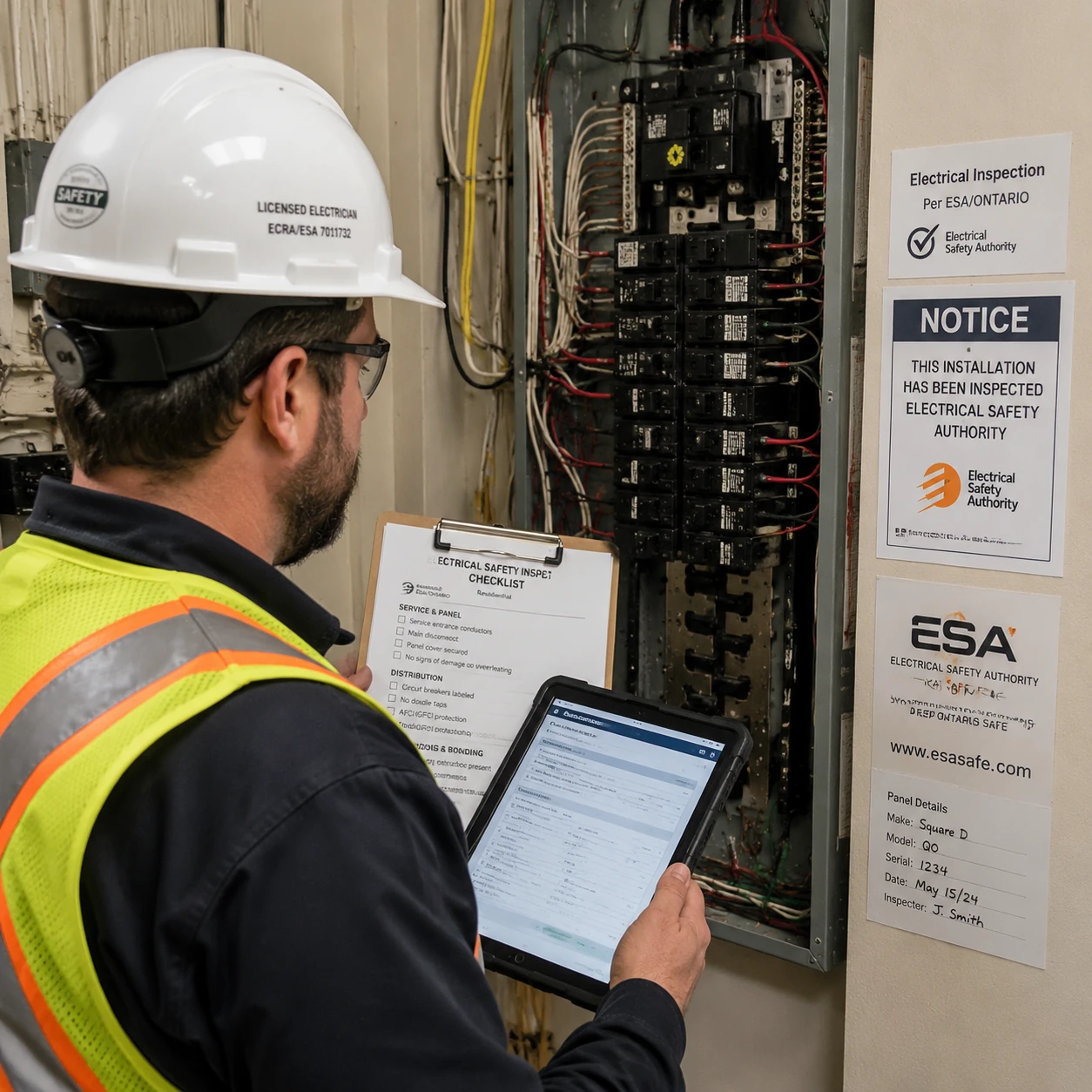
- Inspection—third-party or ESA review for compliance
Key documentation—like load charts, permits, and inspection certificates—is stored for future reference and insurance.
“We don’t just wire homes or power businesses—we make sure every project is safe, documented, and future-proof.”
Clear communication, transparent estimates, and ongoing updates keep clients informed at every step.
For anyone comparing electrical service options, focus first on the category, project scope, and compliance needs—these shape timelines, outcomes, and safety for every home or business in Ontario.
Code Compliance and Safety: Navigating Regulatory Requirements
Every electrical project in Ontario, whether residential or commercial, must follow strict codes and safety standards. These rules not only ensure property protection—they keep lives safe.
Residential systems are governed by the National Electrical Code (NEC) and NFPA 70, while commercial installations face the NEC, NFPA 70E, and sometimes OSHA standards—with Ontario amendments layered in. Homes rely on foundational codes; business environments often mandate stricter backup and emergency procedures.
Legal Checks and Permitting Barriers
Inspections and permits are not optional. For residential jobs, permits and city inspections guard homeowner safety and resale value.
Commercial projects demand extra scrutiny:
- Multiple permit stages, including initial and interim approvals
- Coordination with fire, emergency, and sometimes health inspectors
- Documentation that tracks changes, upgrades, or expansions
Staying on top of paperwork means passing every milestone—no shortcuts allowed.
Licensing, Training, and Team Qualifications
Who can handle your wiring matters.
Ontario requires that all electricians hold valid licenses—but commercial certifications are more extensive.
- Residential electricians: Trained for single-phase, lower voltage, home environments
- Commercial electricians: Up-to-date on three-phase power, advanced emergency systems, OSHA/arc flash, project management
Ongoing certification and safety refreshers are mandatory, not optional.
“Every safe project begins with the right license and real-world training.”
Documentation, Recordkeeping, and Reliability
Meticulous documentation separates compliant jobs from risky ones.
- Residential: Permits, inspection logs, major upgrade records
- Commercial: Ongoing safety audits, testing logs, incident reports, and signed-off compliance forms
A paper trail isn’t just bureaucracy—it protects your investment and helps diagnose future issues.
Safety Measures and Best Practices
Sector-specific precautions protect people and property.
For homes:
- GFCI (Ground-Fault Circuit Interrupter) installation in kitchens, baths, outdoors
- AFCI (Arc-Fault Circuit Interrupter) circuits for bedrooms
- Regular hazard assessments for aging wiring or overloaded panels
For businesses:
- Lockout/tagout protocols when servicing panels
- Scheduled arc flash/incident energy assessments
- Routine preventative maintenance—no “set and forget” approach
“The right safety step, at the right time, can prevent years of headaches—or worse.”
Staying compliant isn’t about paperwork; it’s about quality, trust, and future-proofing your property. Whether upgrading a home panel or designing backup power for a hospital, choose verified professionals who prove safety with every inspection and signature.

Coordination, Communication, and Customer Service
When it comes to electrical services, the way projects are managed and communicated can make or break both the timeline and customer satisfaction.
Homeowners can expect a single point of contact—often a lead electrician or project manager—who guides them through every step, from quotes to clean-up. For commercial jobs, things scale up fast. It’s all about multi-stakeholder teams: property managers, general contractors, engineers, and inspectors must all stay looped in to avoid delays or costly errors.
Managing the Project: Who’s Involved and How
Picture this: You’re upgrading panel wiring in a home. The work is direct, and your main focus is the homeowner’s comfort and safety.
Now compare that to a retail store’s lighting retrofit—work crews, tight after-hours scheduling, and no room for mistakes that impact sales. Every hour of business downtime can cost hundreds or even thousands of dollars in lost revenue.
Key project dynamics include:
- Residential: Personal collaboration with homeowners, clear timelines, direct decisions
- Commercial: Coordination with multiple parties, blueprint reviews, regular team check-ins
Keeping Disruption to a Minimum
Maintaining daily life or business operations is non-negotiable.
Residential projects prioritize minimal mess, clear communication about outages, and working around family routines.
Commercial clients demand:
- Detailed phasing to reduce operational downtime
- Safety barriers and signage for staff and customers
- Advance notice of disruptive work, especially in 24/7 facilities like hospitals
“Every minute a business is down, the cost adds up—schedule smartly, communicate early, and always have a backup plan.”
Setting Expectations and Building Relationships
Accurate, transparent estimates set the tone for trust on both sides. Homeowners expect to know:
- What the job covers (materials, labour, permits)
- Scheduling details and flexibility for weather or delays
- Warranty coverage and long-term support
For property managers and business owners, clear cost breakdowns and written schedules are essential for budget planning and internal approval.
Service doesn’t stop after the last inspection; a strong warranty and responsive aftercare often become the reason for a repeat call or referral.
Successful electrical service projects come down to proactive communication, well-managed scheduling, and a genuine commitment to keeping every client—large or small—informed and supported. Whether it’s protecting a family’s comfort or a company’s productivity, clear coordination and customer-focused service are non-negotiable.
Choosing the Right Electrical Service for Your Property
Selecting the right electrical service starts with knowing your property and project goals.
Whether you own a home, manage a business, or oversee renovations, the demands of your space determine which electrical expertise you need.
Picture this: You’re renovating a café in Toronto—will the job require simple lighting upgrades, or heavy-duty power for new appliances and POS systems? This is where professional guidance makes a critical difference.
A Quick Decision-Making Checklist
Use this framework to clarify your needs before you call an electrician:
- Property Type:
- Home, condo, or apartment
- Office, retail, warehouse, school, or restaurant
- Project Complexity:
- Simple repairs or full-scale system upgrades
- Code-compliant additions or specialty installations (like EV chargers, generators)
- Regulatory Requirements:
- Residential or commercial permits
- Ontario Electrical Safety Code and inspection standards
- Business Hours/Uptime Impact:
- Does the work require after-hours scheduling to avoid downtime?
- Will ongoing operations be affected?
80% of electrical service delays come from unclear project scope or missing documentation.
Compare Property & Project Requirements
| Needs | Residential | Commercial |
|—————–|————————-|———————————–|
| Voltage | 120V-240V | 208V-480V |
| Wiring | NM-B (Romex) | THHN in EMT/MC |
| Permits | Homeowner/electrician | Owner, project mgr, city zoning |
| Typical Jobs| Rewiring, lighting | Power dist., emergency lighting |
| Work Hours | Flexible, daytime | Strict, off-hours, phased |
Verifying Your Electrician
Before hiring, always verify credentials to ensure safety and compliance:
- Proof of up-to-date licensing for Ontario
- Confirm liability insurance and WSIB coverage
- Ask if they specialize in residential or commercial work
- Review documented safety history and project portfolio
“Reliability starts with credentials—licensed, insured, and safety-certified.”
Key Questions to Ask Before Hiring
- Do you have experience with my specific property type?
- Can you show proof of Ontario licensing and insurance?
- How will you ensure compliance with current safety codes?
- What steps do you take to protect tenants or business operations during work?
Need more details? Visit our in-depth residential and commercial service pages to match the right solution to your project.
When safety, compliance, and long-term peace of mind are your goals, choosing the right electrical partner is your smartest move. Always require proof of expertise—you’ll thank yourself for it.
Ontario property owners can review permit requirements and electrical safety standards through the Electrical Safety Authority Ontario
Businesses and homeowners can also learn about workplace electrical safety through the Canadian Centre for Occupational Health and Safety
Conclusion
Making the right choice in electrical services is about more than power and wiring—it’s about safeguarding what matters most, advancing your property goals, and choosing expertise that brings reliability, compliance, and peace of mind.
When you work with a licensed, safety-focused team, you’re not just getting electrical work—you’re protecting your investment, your business, and your family for years to come.
—
Key Takeaways for Confident Decision-Making:
- Clearly identify your property’s needs—residential or commercial demands define every step
- Verify all credentials—ensure your electrician is fully licensed and insured for Ontario projects
- Prioritize code compliance—every permit, inspection, and document is critical to your safety and future value
- Communicate project expectations—clear dialogue minimizes disruption and sets timelines up for success
- Partner with specialists who document every stage—from planning to inspection, transparency is your insurance
—
Immediate Next Steps:
- Contact licensed professionals before your next project—ask for proof of experience with your specific property type
- Review your own documentation and permits to prepare for upgrades or repairs
- Schedule a safety assessment or inspection—small steps now can prevent major issues later
- Share these insights with your team or tenants—proactive communication builds trust at every level
—
Ontario’s electrical landscape rewards diligence and informed choices. When you demand safety, quality, and real accountability, you’re not only powering your property—you’re investing in its future.
Choose wisely, act boldly, and let excellence be your standard—because every circuit you upgrade, every code you follow, is a step toward a safer, more resilient Ontario.
“Powering Ontario, the Right Way—starts with you.”
Planning an upgrade? Learn more about our professional commercial electrical services for offices, retail stores, restaurants, and industrial properties across Ontario.
FAQs
What is the difference between residential and commercial electrical services?
Do commercial electrical projects require permits?
Can a residential electrician handle commercial work?
Why is commercial electrical work more expensive?

Written by Roozbeh Nahreini
Roozbeh Nahreini is the founder and owner of Padi Electric Inc., an ESA-certified electrical contractor serving Aurora and the Greater Toronto Area. With 10+ years of hands-on electrical expertise and a team combining 50+ years of field experience, Roozbeh specializes in residential and commercial electrical solutions—from panel upgrades and EV charger installation to smart home integration and advanced diagnostics. His commitment to transparent pricing, code-compliant workmanship, and 24/7 emergency response has established Padi Electric as a trusted neighborhood contractor across Aurora, Richmond Hill, Newmarket, Vaughan, and the GTA.