

Get to know the essentials of commercial electrical services so you can keep your Ontario business safe, compliant, and operational—no matter your industry. These actionable insights outline how the right choices deliver immediate reliability, efficiency, and peace of mind.
- Prioritize code compliance by choosing fully licensed electricians who ensure every project meets the strict standards of the Ontario Electrical Safety Code (OESC)—crucial for avoiding costly downtime, inspections, and fines.
- Invest in custom power solutions that match your business’s needs, from three-phase panels to tailored circuits, guaranteeing scalable power and reliable operations even as your company grows.
- Request LED upgrades and smart controls to realize 40-60% energy savings and boost workplace safety, all while cutting ongoing maintenance by switching to high-performance fixtures and sensors.
- Schedule routine maintenance to reduce electrical outages by up to 34%, extend equipment life, minimize insurance claims, and catch potential hazards long before they disrupt your business.
- Demand rapid emergency response from your electrical partner, ensuring 24/7 support for urgent issues like sudden power loss, surge damage, or code violations that threaten business continuity.
- Integrate modern data, security, and automation systems by using structured cabling, access controls, and cloud monitoring—future-proofing your property for growth, safety, and compliance.
- Tap into Ontario’s energy incentives for commercial upgrades to LED lighting and advanced controls, earning rebates on up to 50% of project costs with paybacks in as little as 2-4 years.
- Real-world results show businesses see up to 30% drops in utility bills and fewer insurance claims after investing in proactive electrical solutions and scheduled care.
Explore the full article to see how these strategies shield your operation, unlock hidden savings, and power your business the right way—every day.
Common Commercial Electrical Services Every Ontario Business Owner Needs to Know
Imagine your business losing power just as the lunch rush begins, or failing an inspection because a single emergency light wasn’t up to code. For Ontario property managers and business owners, these aren’t just headaches—they’re costly, disruptive setbacks.
Behind every thriving business is an electrical system built on safety, compliance, and reliable power. Whether you’re running a restaurant, managing office space, or overseeing a busy retail operation, even a minor misstep can spell lost revenue, failed inspections, or legal liabilities few can afford.
What makes commercial electrical work different? The stakes. From three-phase systems and complex power needs to a patchwork of safety codes and liability exposures, commercial spaces demand specialized expertise and meticulous attention.
The right electrical partner does more than keep the lights on. With licensed professionals, you gain:
- Code-compliant installations that pass even the toughest inspections
- Rapid-response repairs and 24/7 emergency coverage
- Proactive maintenance plans that cut downtime and costly disruptions
- Detailed safety reporting and project documentation for insurance and peace of mind
Ontario’s business landscape is evolving—and so are the demands on your electrical infrastructure. New tech, ambitious upgrades, and energy efficiency targets mean your choices today have ripple effects for years.
You’ll discover which electrical services matter most, how top teams protect your operations and reputation, and where small improvements can lead to lower bills, safer workplaces, and fewer compliance headaches.
Ready to learn what separates reliable, accountable electricians from the rest? Let’s start by understanding what your commercial property truly needs—and why smart choices now are the best investment for your business’s future.
Understanding Commercial Electrical Service Needs
Commercial electrical needs go beyond just powering lights and outlets—they’re about keeping businesses safe, compliant, and operational every day.
Ontario’s commercial code requirements mean even a single misstep can lead to costly downtime, safety risks, or failed inspections.
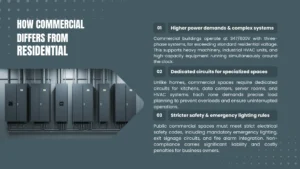
How Commercial Differs from Residential
Unlike homes, commercial properties face:
- Much higher power demands (think 347/600V and three-phase systems common in Ontario)
- More complex layouts involving dedicated circuits for kitchens, data centers, and HVAC
- Stricter safety and egress lighting codes for public/customer spaces
- Greater liability exposure for business owners if something goes wrong
Picture this: Loss of power in a restaurant kitchen during a rush, or a failed emergency lighting inspection at an office—business disruptions can cost thousands per hour.
Core Safety, Compliance, and Reliability Priorities
For Ontario businesses, electrical safety and reliability aren’t optional:
- The Ontario Electrical Safety Code (OESC) sets mandatory rules for all commercial buildings
- Insurance, occupancy permits, and worker safety depend on code-compliant systems
- Routine inspections and upgrades help avoid equipment damage, fires, and legal penalties
“Every outlet, panel, and wire in your space is an investment in your team’s safety and your business’s reputation.”
The Role of Licensed Professionals
A trusted commercial electrician must be:
- Fully licensed and insured, with hands-on experience
- Up-to-date with Ontario and municipal codes
- Able to provide documented inspections and safety reports
Stories of property managers discovering unlicensed work—only after an audit or small fire—happen more often than you’d think.
Partnering for Business Continuity and Compliance
Choosing a long-term electrical partner ensures:
- Rapid emergency response when outages or faults happen
- Proactive maintenance, minimizing business disruptions
- Custom, site-specific service plans that evolve as your business grows
Some Ontario facilities report up to a 30% reduction in downtime after switching to scheduled commercial maintenance programs.
The right commercial electrical team keeps your lights on and your business compliant—from new installations to 24/7 emergency service. Prioritize licensed, transparent expertise to protect your bottom line, your people, and your peace of mind.
Installation Services: Building Reliable Power Foundations
Commercial electrical installation is about more than powering a space. It’s about creating safe, scalable foundations that keep Ontario’s businesses running smoothly and compliantly.
Whether it’s a new build or a retrofit, every electrical installation is engineered around core needs:
- Reliable power capacity for modern tech and equipment
- Code compliance with the Ontario Electrical Safety Code (OESC)
- Adaptability for future upgrades
Picture this: A new multi-unit office is rising in Toronto. Electrical contractors collaborate from day one with architects and general contractors—mapping out panel locations, efficiently routing wiring, and designing lighting for every space.
New Construction and Retrofitting
New construction starts with detailed assessment and planning. Key stages include:
- Site evaluation and power needs analysis
- Designing main panels, subpanels, and wiring routes
- Integrating safety essentials—emergency lighting, surge protection, fire alarm panels
- Inspection and sign-off by ESA-licensed electricians
Retrofitting involves upgrading legacy systems—new breakers, rewiring, panel expansions—designed to meet today’s tech loads and safety codes.
- Old retail units in Hamilton often need panel upgrades to 200A or three-phase (347/600V) setups
- Restaurants routinely add circuits and LED emergency lights as part of code-mandated upgrades
“A proactive retrofit might save you a loss of revenue from a single outage, or a critical insurance claim.”
Advanced Lighting Solutions
Lighting is where function and savings meet. Common commercial requests:
- LED upgrades for 40-60% energy cuts
- Task lighting—focused for workstations, displays, or prep areas
- Emergency and security lighting for occupant safety and regulatory compliance
- Sensor controls for automated on/off and reduced utility bills
Ontario’s OESC requires clearly marked emergency exits with backup lighting in all public spaces—non-compliance can mean fines or business shutdown.
In real projects, such as a Mississauga warehouse LED retrofit, businesses cut utility bills by over 50% and slashed future maintenance with longer-lasting fixtures.
Savvy business owners know: Choosing the right installation partner isn’t just about today’s needs—it’s about readying your building for tomorrow. A licensed team ensures you’re code-compliant, scalable, and protected from costly surprises.
Power Distribution and Backup Systems
Keeping your business powered isn’t just about plugging in—it’s about reliable, safe distribution and robust backup solutions that prevent costly disruptions.
Ontario’s commercial properties demand more than basic power. Main electric panels, subpanels, and balanced load distribution are essential for supporting everything from data centers to retail stores.
A well-designed system can mean the difference between seamless operations and downtime that diverts revenue.
Power Distribution Systems
Modern commercial buildings often run on three-phase power and high-voltage systems (347/600V is common across Ontario businesses).
To tailor a system to your needs, electricians assess:
- Total load requirements based on equipment, lighting, and future expansion
- Safe expansions (like adding new circuits) to support business growth
- Power quality upgrades—including surge protection and voltage regulation—to protect sensitive electronics
Picture this: An Ontario warehouse needed to upgrade their panel to handle new machinery. After a professional assessment, load balancing and a new three-phase panel avoided circuit trips and downtime—saving thousands in potential lost productivity.
Key takeaway: Regular assessments and panel upgrades prevent overloads and reduce the risk of unplanned outages.
Backup Power Solutions
When the lights go out, backup generators and uninterruptible power supplies (UPS) take center stage.
Here’s what businesses need to know:
- Types of backup: Diesel/gas standby generators, battery-based UPS for critical systems, and hybrid solutions for extended outages
- Industry customization: Medical clinics require uninterrupted power for life-safety equipment, while office towers prioritize seamless IT operation
- Routine testing: Backup systems must meet Ontario Electrical Safety Code standards, with quarterly inspection schedules and yearly full-load tests for compliance
Imagine a downtown Toronto restaurant that lost power on a busy Friday night—but their generator kicked in instantly, saving the night’s business and safeguarding refrigerated inventory.
Key fact: According to a 2022 industry survey, 73% of Ontario businesses with backup systems report less downtime and fewer insurance claims.
Why Power System Design Matters
A well-designed electrical setup:
- Protects employees and equipment
- Ensures regulatory compliance
- Keeps operations resilient, even during storms or grid failures
Reliable power distribution and backup aren’t optional—they’re the infrastructure behind every successful Ontario business. Investing in proactive system design means your lights stay on, your team stays safe, and your business stays ahead.
Maintenance, Repair, and Emergency Response
Routine preventative maintenance is the foundation for keeping Ontario businesses powered, safe, and compliant. Scheduling regular inspections, tests, and cleaning of panels, wiring, and lighting can reduce costly outages by as much as 34%.
Well-maintained electrical systems mean minimal downtime—something every property manager and business owner values.
Routine Maintenance Programs
Picture this: A commercial office receives its quarterly maintenance check. Out come the checklists:
- Visual inspections of wiring, breakers, and main panels
- Testing emergency lighting and alarms
- Confirming GFCI and AFCI outlets function properly
- Reviewing load balancing and surge protection
With a routine schedule in place, issues like overheating, loose connections, or tripped breakers get caught early. This approach is proven to extend equipment life and reduce insurance claims related to electrical faults.
“Small electrical issues tend to become major liabilities—unless you catch them first.”
Electrical Repairs
Even with great maintenance, repairs are inevitable. The most common service calls include:
- Faulty breakers tripping repeatedly
- Damaged outlets or switches causing outages
- Flickering or failed lighting fixtures
Skilled electricians prioritize repairs that impact safety—think exposed wires, burning smells, or panel hot spots. For businesses, addressing these problems quickly means fewer disruptions and less risk to staff and customers.
“A single failed outlet isn’t just an inconvenience—it can be a red flag for larger system issues.”
Emergency Electrical Services
When the unexpected hits—sudden power loss, electrical fire risk, or surge damage—response speed matters. Ontario businesses depend on:
- 24/7 emergency dispatch
- Direct communication with licensed professionals
- Liaison with authorities like the Ontario Electrical Safety Authority for hazard clearance
Restoring power, isolating hazards, and keeping businesses operational is the promise. Every emergency call triggers clear protocols: assess, secure, repair, and document.
“Fast, safe emergency response isn’t just service; it’s business protection in action.”
A proactive approach to maintenance, rapid targeted repairs, and immediate emergency support spells safety, compliance, and uninterrupted business. Prioritizing licensed, responsive electrical service is the surest path to long-term reliability, safety, and peace of mind.
Technology Integration and Modernization Services
Modern commercial spaces run on more than just power—they depend on integrated technology to keep employees connected, secure, and productive.
Businesses today demand smart systems that streamline operations, automate controls, and protect assets around the clock.
Picture this: an Ontario office where lighting, security, and network infrastructure all “talk” to each other—a reality that begins with proper planning and licensed electrical expertise.
Data and Communication Cabling
Fast, reliable digital communication is the lifeblood of any business.
To future-proof your space, prioritize:
- Ethernet cabling for high-speed internet and internal networks
- Fiber optics for maximum capacity, ultra-fast data, and scalable growth
- Structured cabling systems that support seamless IT/electrical integration and smart technology upgrades
In modern Ontario offices and retail sites, scalable network design is essential for growing data needs.
Best practices call for:
- Running cat6/cat6a cable pulls with labeled, organized patch panels
- Routing all cabling per CSA and OESC standards
- Providing dedicated electrical/mechanical closets for easy expansion
A robust network today means less downtime tomorrow—think: “Your business grows, your infrastructure keeps up.”
Security, Alarm, and Access Control Systems
Businesses face complex risks—from data breaches to asset theft and unauthorized entry.
Protecting your site means integrating:
- Fire alarms, carbon monoxide detectors, and emergency intercoms
- High-definition cameras, door sensors, and motion-activated lighting
- Access badge and key card entry systems for staff and visitors
Ontario’s codes demand:
- Proper placement and maintenance of all life safety and alarm systems
- Compliance documentation to satisfy insurance and regulatory audits
- Regular testing, scheduled record-keeping, and visible inspection tags
Well-designed security isn’t just safety—it’s insurance peace of mind. “Secure your property now, avoid costly claims later.”
Automation and Compliance Essentials
The best commercial projects blend:
- Lighting controls that respond to occupancy for up to 60% energy cost savings
- Centralized monitoring of HVAC and lighting with user-friendly dashboards
- Cloud integration for remote security monitoring and diagnostics
All technology upgrades must meet Ontario building, electrical, and privacy codes.
Tailored documentation, professional permits, and final inspections protect you from expensive rework or liability.
Every commercial upgrade is a chance to boost efficiency, safeguard your space, and build future-ready operations—the right integrations today mean fewer headaches tomorrow.
Energy Efficiency and Code Compliance
Energy efficiency isn’t just about saving on utility bills—it’s key for sustainability and long-term business value.
In Ontario, businesses can reduce their operating costs by as much as 30% through strategic energy upgrades and meeting the latest electrical codes.
Picture this: a busy Toronto office replaces every fluorescent tube with LEDs and smart occupancy sensors. Their annual electricity cost drops by thousands, while maintenance headaches disappear.
Lighting and Controls
Modern commercial lighting is all about LED retrofits and automated lighting controls.
Key benefits include:
- Up to 50% reduction in lighting electricity costs for LED upgrades
- Occupancy-based controls curb waste in hallways, washrooms, and meeting rooms
- Longer bulb life and fewer maintenance calls—think ten years of steady performance
Case in point: One Ontario retailer slashed annual lighting spend by $8,000 after a comprehensive upgrade. Utility rebates put real dollars back in their pocket in year one.
“Every retrofit is an investment in your bottom line and your brand’s environmental footprint.”
Full-Service Code Compliance
Staying compliant with the Ontario Electrical Safety Code (OESC) is non-negotiable for every business.
Compliance means:
- Initial professional assessment and detailed design plan
- Proper permitting and documentation before work begins
- Full ESA inspection—no shortcuts allowed
- Clear sign-off and certification for insurance and municipal approval
Key requirements often overlooked:
- Emergency lighting and exit signage
- Safe wiring for three-phase and high-voltage applications
- Documentation for all electrical work—crucial for audits and post-incident reviews
Failure to comply can mean:
- Steep fines and business interruptions
- Invalidation of insurance
- Reputation loss within the community
“Code compliance isn’t just paperwork—it’s your shield against risk and unnecessary costs.”
Ontario Incentives and Support
Ontario offers attractive energy efficiency incentives for businesses, including rebates on LED upgrades and advanced controls. Many commercial upgrades qualify for instant discounts under provincial programs.
- Typical payback: 2-4 years for most lighting retrofits
- Some programs cover up to 50% of project costs
When you pair energy efficiency upgrades with code compliance, you make your business safer, leaner, and positioned for growth.
The right electrical partner will help you map out a safer, more efficient future—lowering utility bills while keeping you on the right side of Ontario’s codes and incentives.
Typical Commercial Electrical Projects: Real-World Examples
Ontario’s Most Common Commercial Setups
Picture this: a bustling Toronto restaurant at peak hours, or a high-traffic office tower with hundreds of employees relying on seamless power and data every minute.
Each space has unique electrical demands—but all share a need for safety, compliance, and minimal downtime.
The most frequent commercial projects in Ontario include:
- Office buildings: Advanced lighting controls, panel upgrades, and robust data cabling for IT networks.
- Restaurants & cafés: Dedicated circuits for high-wattage kitchen equipment, code-compliant emergency lighting, and fire suppression system integration.
- Retail stores: High-efficiency LED lighting, security camera installations, and surge protection for sensitive POS systems.
- Warehouses & logistics: Three-phase power setups, industrial-grade panels, and emergency backup systems for forklifts and lighting.
- Multifamily buildings: Separate metering, smart lighting controls, and life safety systems spanning multiple floors.
Service Priorities and Challenges
Safety and compliance are always at the top of the checklist—especially with Ontario’s rigorous codes.
Every project demands:
- Licensed electricians with knowledge of local requirements.
- Careful load calculations for expanding systems or adapting older buildings.
- Coordination with other trades to keep timelines tight—average project duration ranges from 1 day for minor upgrades to 3+ weeks for full retrofits.
Before-and-after moments shine here:
- An outdated 70s office with unreliable circuits becomes a modern workspace with flicker-free LED lighting and robust data infrastructure.
- A restaurant’s kitchen, previously plagued by tripped breakers, gets a dedicated, balanced panel—meaning no lost revenue from outages.
What Real-World Projects Teach Us
Clients see instant benefits:
- Up to 30% drops in energy bills after LED and advanced lighting solutions.
- Reduced insurance premiums from upgraded safety and fire systems.
- Fewer business interruptions thanks to scheduled maintenance and rapid-response troubleshooting.
Authentic, on-the-job photos of licensed electricians and completed projects set the standard for transparency and quality.
Interested in seeing how a site-specific electrical solution could work for your property? Connect with a local expert for a personalized assessment—it’s the fastest way to uncover hidden risks, unlock efficiency, and keep your operation powered the right way.
The most successful Ontario businesses don’t wait for breakdowns—they invest in solutions that make every day safer, more efficient, and fully compliant.

Why Common Commercial Electrical Services Are the Backbone of Business Safety and Compliance
Reliable, code-compliant electrical systems are more than a business requirement—they’re your lifeline to safety, productivity, and peace of mind. When you invest in professional, licensed electrical service, you empower your business to operate confidently, minimize risks, and stay ahead of costly surprises.
Every decision you make about your electrical infrastructure has a direct impact on your team’s safety, your operations, and your bottom line. Being proactive now helps you avoid disruption and build lasting value for your property.
—
Key Takeaways:
- Partner with licensed, insured professionals to ensure every installation and upgrade meets the Ontario Electrical Safety Code—protecting your people and your reputation.
- Schedule routine maintenance and safety inspections to minimize downtime and catch small issues before they grow into major liabilities.
- Invest in reliable backup power solutions so that your business stays operational no matter what the grid throws your way.
- Prioritize code-compliant energy upgrades—like LED lighting and advanced controls—to cut costs, qualify for rebates, and future-proof your property.
- Document all work and keep up with compliance records to safeguard insurance coverage and streamline audits.
—
Next Steps:
- Book a professional electrical assessment of your commercial space—identify both current needs and hidden future risks.
- Create or update a maintenance plan with your provider to keep your systems compliant and reliable year-round.
- Review your backup power and safety infrastructure to address any vulnerabilities before the next outage or inspection.
- Ask for real project examples and transparent documentation from any electrician you consider—demand verifiable quality and compliance.
—
The most successful Ontario businesses aren’t just powered by electricity—they’re powered by knowledge, preparation, and partnership.
Your next move sets the standard for safety and success. Choose licensed expertise, act decisively, and keep your business thriving—because real power is never left to chance.
FAQs
- What are the most common commercial electrical services Ontario businesses need?
The most common commercial electrical services include panel upgrades, LED lighting retrofits, emergency lighting installation, data cabling, backup power systems, and routine maintenance — all essential for safety and code compliance under the Ontario Electrical Safety Code.
- How do common commercial electrical services help businesses stay code-compliant?
Licensed electricians ensure every installation and upgrade meets OESC standards, providing proper permits, ESA inspections, and documentation that protect businesses from fines, insurance issues, and operational shutdowns.
- Can common commercial electrical services reduce my business’s energy costs?
Yes — LED upgrades and smart lighting controls are among the most impactful common commercial electrical services, cutting energy costs by up to 50% and qualifying for Ontario rebate programs with payback periods as short as 2–4 years.
- How often should Ontario businesses schedule common commercial electrical maintenance services?
Most commercial properties benefit from quarterly inspections covering panels, wiring, breakers, and emergency lighting — a routine that can reduce electrical outages by up to 34% and extend equipment lifespan significantly.
- What emergency electrical services should a commercial provider offer?
A reliable provider of common commercial electrical services must offer 24/7 emergency dispatch, rapid hazard isolation, power restoration, and full documentation — ensuring business continuity and compliance with Ontario safety authorities.