
Key Takeaways
If your home was built before 1950, there’s a real chance knob and tube wiring is still working behind your walls. Here’s what every Ontario homeowner should know before renovating, buying, selling — or renewing an insurance policy.
- Knob and tube wiring isn’t illegal in Ontario — the Electrical Safety Authority (ESA) considers existing systems acceptable if properly maintained, but the 2021 Ontario Electrical Safety Code no longer permits new installations.
- Insurance is the real deadline: roughly 40% of Ontario insurers won’t cover homes with active knob and tube, and many others add a 15–30% premium surcharge.
- It has no ground wire — that means no third prong, no surge path, and a higher shock and fire risk than modern wiring, especially in kitchens, bathrooms, and damp spaces.
- Full replacement typically costs $8,000–$15,000 for an average Ontario home in 2026, including an ESA inspection — larger or more complex homes can reach $20,000–$30,000.
- An ESA certificate after rewiring is what unlocks standard insurance rates again — often saving hundreds of dollars a year.
- Age alone doesn’t condemn wiring, but any home over 40–50 years old deserves a professional electrical assessment before you trust it with modern loads.
Keep reading for how to identify knob and tube, what the ESA actually says, what replacement involves, and the honest numbers behind the cost.
About 4 in 10 Ontario insurers will simply say no to a home with active knob and tube wiring.
That’s usually the moment homeowners discover it — not from flickering lights or a burning smell, but from an insurance renewal letter or a home purchase falling through.
If you own (or are buying) a century home in Aurora, Newmarket, Richmond Hill, or anywhere in the GTA, knob and tube wiring is one of those things you want to understand before it becomes urgent.
Here’s the good news: this isn’t a panic situation. Knob and tube wiring has run safely in some homes for close to a century. But it was engineered for a world of 60-watt bulbs and one radio — not EV chargers, induction stoves, and finished basements.
In this guide, we’ll walk through:
- How to identify knob and tube wiring in your home
- What the ESA and Ontario law actually say about it
- The genuine risks — and the myths
- What insurers require, and how that affects buying or selling
- Real 2026 replacement costs for Ontario homes, with no vague ranges
We’re a licensed, ESA-certified electrical contractor that’s worked on plenty of older GTA homes — so this is the same plain-spoken rundown we’d give a neighbour over the fence. Let’s start with what you’re actually looking at.
What Is Knob and Tube Wiring?
Knob and tube wiring (often shortened to K&T or “knob and tube electrical”) was the standard way to wire North American homes from the 1880s until about 1950.
If your Ontario home was built before then and has never been fully rewired, some of it is probably still in service.
How it works
The system is simple, and honestly, well-made for its era:
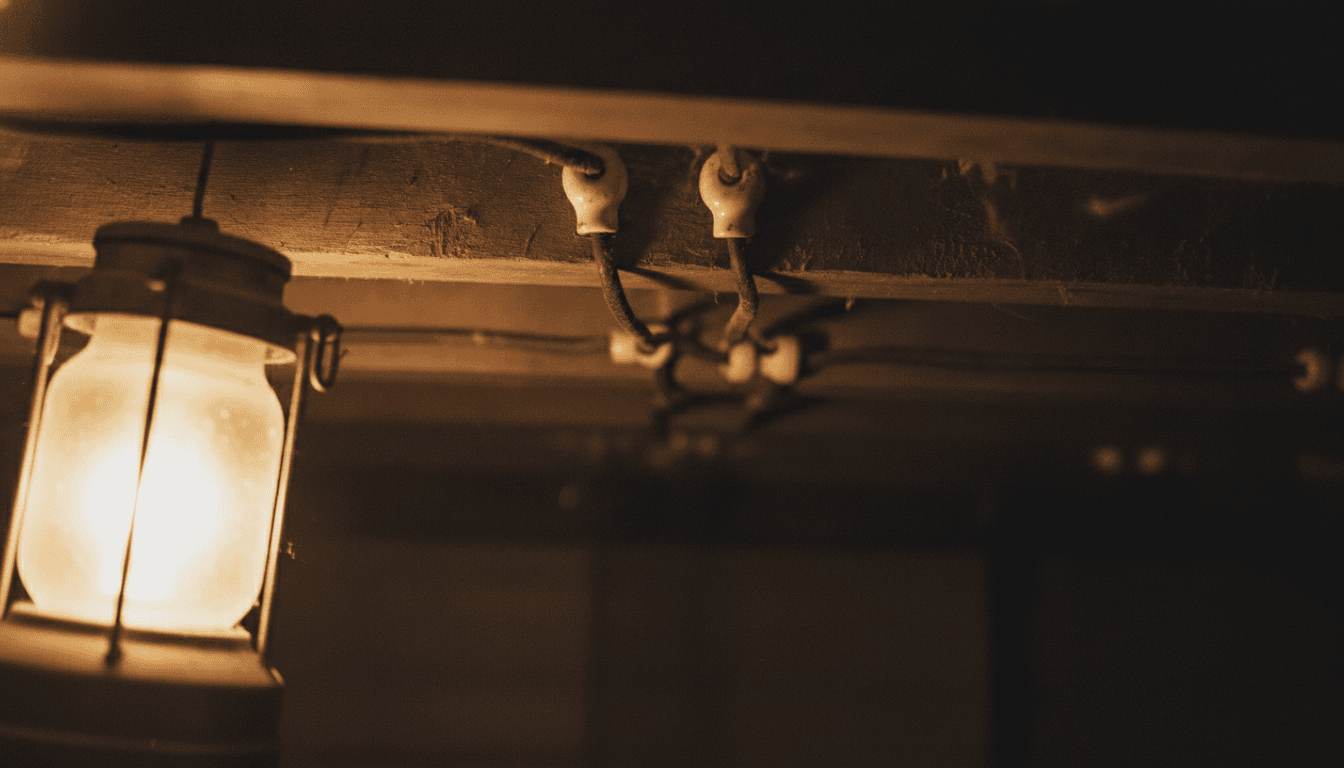
- Porcelain knobs anchor the wires along joists and studs
- Porcelain tubes protect wires where they pass through wood framing
- Two separate single wires — one hot, one neutral — run independently, spaced apart
- The copper is wrapped in rubberized cloth insulation instead of modern plastic sheathing
How to spot it
You don’t need to open a wall. Check these places first:
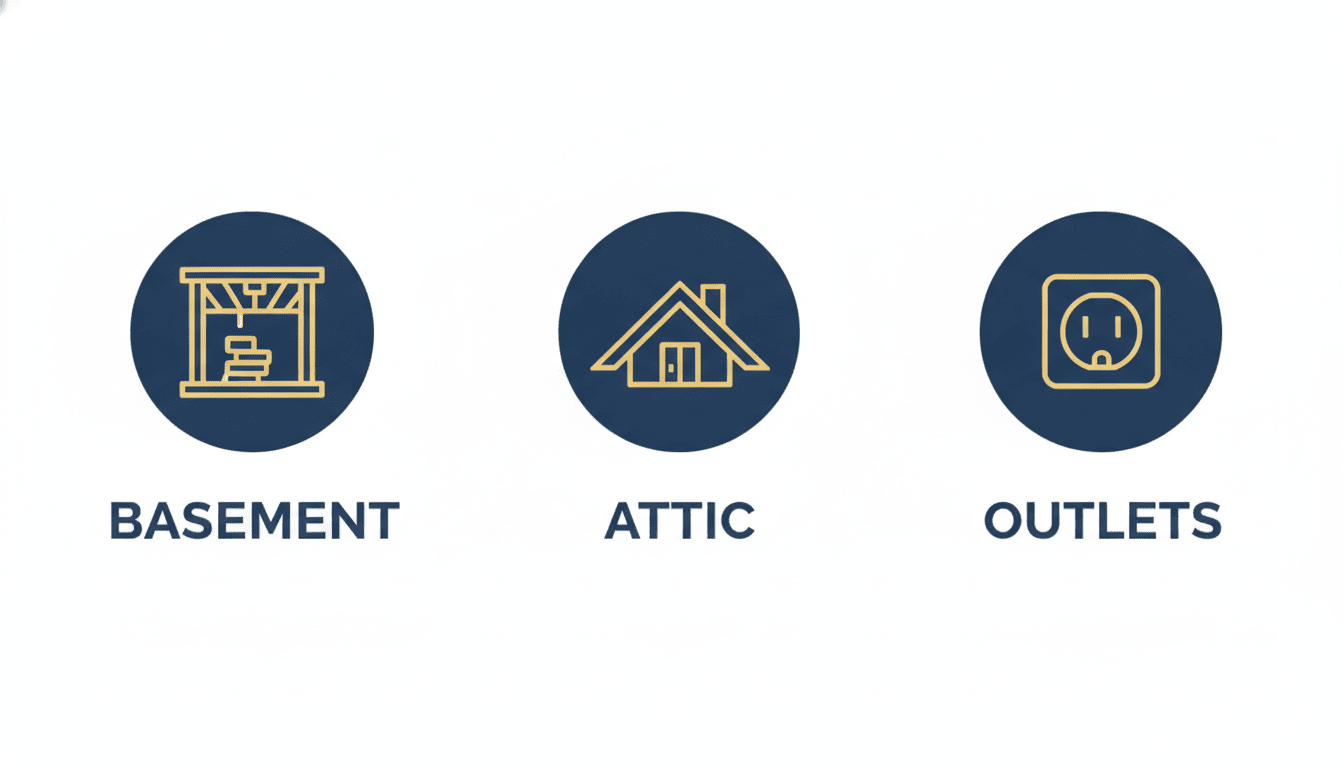
- Unfinished basement ceilings — look for white ceramic knobs with black cloth-covered wires running between joists
- The attic — same knobs and tubes, often near the eaves
- Your outlets — two-prong receptacles (no ground slot) throughout the house are a strong hint
- The panel — an older 60-amp service or a fuse box often keeps company with K&T
One caution: many GTA homes have been partially rewired over the decades. A modern panel doesn’t guarantee the wiring behind your plaster is modern too.
If you’re not sure, a licensed electrician can confirm it in a short visual assessment — no demolition required.
Is Knob and Tube Wiring Legal in Ontario?
Here’s the answer most homeowners are surprised by: yes, existing knob and tube wiring is legal in Ontario.
What the ESA actually says
The Electrical Safety Authority’s official position is that knob and tube wiring is “safe, provided it is properly maintained.”
The Ontario Electrical Safety Code (2021 edition) no longer permits new knob and tube installations — but the code isn’t retroactive. An existing, undamaged, unmodified system doesn’t break any law. There is no ESA mandate forcing you to remove it.
So why does everyone treat it as a problem?
- Insurers set their own rules — and many won’t touch active K&T regardless of what the code allows
- The system predates grounding — modern safety devices assume a ground path that K&T simply doesn’t have
- Almost no K&T system is still original — 75+ years of renovations, amateur splices, and added circuits change the safety math
The ESA’s actual recommendation
The ESA advises hiring a Licensed Electrical Contractor for a proper electrical assessment — which is different from a general home inspection.
A home inspector can flag that K&T exists. Only a licensed electrician can evaluate its condition — brittle insulation, overloaded circuits, buried junctions — and tell you whether yours is the well-preserved kind or the hazardous kind.
Bottom line: legal, yes. Ignorable, no.
The Real Risks: Why Insurers and Electricians Worry
Knob and tube wiring earned its bad reputation honestly — but not for the reasons most people assume. The original system, left alone, is not a ticking bomb. The trouble is that almost nothing about a 1920s home has been left alone.
The four genuine hazards
1. No ground wire. K&T is a two-wire system. There’s no third conductor to safely carry fault current — which means no three-prong outlets, no proper surge protection, and a higher shock risk if insulation fails.
2. Aging insulation. The rubberized cloth wrap gets brittle after 50+ years. Where it cracks or flakes off, bare copper can sit exposed inside your walls or attic.
3. Buried in insulation. K&T was designed to shed heat into open air. When attics get blown-in insulation (very common in Ontario energy retrofits), the wires overheat — this is one of the biggest fire-risk factors, and modern code prohibits it.
4. Decades of amateur modifications. Overfused circuits, taped splices, extra outlets tapped in by a handy previous owner — most K&T fires trace back to what was added, not what was original.
Modern life is the stress test
A 1940s circuit was built for a few lights. Today the same circuit might be asked to run:
- A space heater and a window AC unit
- A kitchen full of appliances
- A home office with everything plugged into two-prong adapters
That mismatch — old capacity, modern demand — is the real story of knob and tube risk.
Knob and Tube Wiring and Home Insurance in Ontario
For most Ontario homeowners, insurance — not safety — is what finally forces the knob and tube decision.
What insurers actually do
- About 40% of insurers refuse to write or renew policies on homes with active knob and tube
- Another 30% will insure it with a surcharge — typically 15–30% above standard premiums
- Most of the rest demand an ESA inspection certificate, proof of partial replacement, or both
Buying or selling a century home?
- Insurers commonly give buyers a limited window (often ~60 days) to replace or certify K&T after closing
- Financing can wobble — some lenders hesitate when a home can’t get standard insurance
- Sellers who rewire before listing typically recover the cost in a smoother sale and stronger offers
The fix that unlocks everything
After a licensed electrical contractor replaces the wiring, the work is inspected and you receive an ESA certificate of inspection.
That single document is what moves you back to standard insurance rates — which, for many households, saves hundreds of dollars every year, quietly paying down the rewiring bill in the background.
Tip: if full replacement isn’t in this year’s budget, ask your electrician about a documented assessment and phased plan. Some insurers will extend coverage when they see a licensed contractor’s report and timeline.
Knob and Tube Wiring Replacement Cost in Ontario (2026)
Let’s talk real numbers — because “it depends” isn’t helpful when you’re budgeting.
A full knob and tube wiring replacement cost quote in Ontario normally includes new copper wiring throughout, grounded three-prong outlets, AFCI/GFCI protection where code requires it, and the ESA inspection. Many homes pair the rewire with a panel upgrade, since a 60-amp service can’t support modern loads anyway.
What moves the price up or down
- Access — open basement ceilings and attics are cheap to work in; finished walls aren’t
- Wall type — original plaster-and-lath takes more care (and patching) than drywall
- Home size and circuit count — more rooms, more runs
- Panel condition — a 60-amp service usually needs upgrading to support the new wiring
- How much K&T actually remains — partial rewires cost less, but only help insurance if documented properly
Why quotes vary so much
Two electricians can quote the same house thousands apart based on how they handle wall access and patching. Always ask what’s included — a transparent, itemized quote (wiring, panel, permits, patching, ESA inspection) is the only way to compare fairly.
That’s how we quote every rewiring job: upfront pricing, no hidden fees, and a free estimate before any commitment.
What Replacing Knob and Tube Wiring Involves
“Rewiring the house” sounds like living in a construction zone for a month. In practice, it’s more surgical than most homeowners expect.
The process, step by step
- Assessment and quote — a licensed electrician maps what’s still K&T, checks the panel, and prices the full scope
- ESA permit filed — required for this work in Ontario; your contractor handles it
- New wiring pulled — modern cable is fished through walls, floors, and ceilings, usually starting from the attic and basement where access is easiest
- Devices replaced — grounded outlets, switches, and fixture connections, with GFCI/AFCI protection where the code requires
- Old K&T disconnected — dead wiring can safely stay in the walls; what matters is that nothing is energized
- ESA inspection — the work is verified and you receive the certificate your insurer wants
How long does it take?
- Average home: roughly 3–5 working days
- Larger or fully finished homes: 1–2 weeks
You can normally live in the house throughout — power comes back on each evening, and work moves room by room.
Does the drywall have to come down?
Mostly, no. Experienced electricians fish wire through existing cavities and make small, strategic openings rather than stripping walls. Expect some patching — but a full gut is a myth left over from how this work was done decades ago.
A good rewire should leave your home safer, insurable, and looking exactly the way it did before — just with three-prong outlets.
Older GTA homes often hide a second surprise from a later era: aluminum wiring from the 1960s and 70s. If your home falls in that window instead, read our companion guide to aluminum wiring in Ontario homes.
Frequently Asked Questions
At what age should a house be rewired?
There’s no automatic expiry date — condition beats age. That said, homes over 40–50 years old should get a professional electrical assessment, and anything with original pre-1950 wiring (knob and tube or early cable) is overdue for one. Warning signs that move the timeline up: warm outlets, frequent breaker trips or blown fuses, flickering lights, or two-prong outlets throughout.
Does a house need rewiring after 25 years?
Usually not. Copper wiring from the 1990s or 2000s is typically fine if it was installed to code and hasn’t been damaged. At 25 years, an inspection makes sense; a rewire usually doesn’t — unless renovations, DIY modifications, or aluminum/K&T sections are in the mix.
Can a house be rewired without removing drywall?
Largely, yes. Electricians fish new cable through wall cavities, attics, and basements, cutting small access openings only where needed. You’ll have some patching and painting afterward — not a demolition project.
How much would it cost to rewire a 2,000 sq ft house?
In Ontario in 2026, a 2,000 sq ft home typically lands in the $10,000–$16,000 range for a full rewire including panel work and ESA inspection — toward the higher end with plaster walls or three storeys. The cost to rewire a house scales mostly with access and circuit count, not just square footage.
Is knob and tube wiring safe if I just leave it alone?
The ESA’s position is that well-maintained, unmodified K&T is acceptable. The catch: very few systems are still unmodified, and you can’t see insulation condition or buried splices from the outside. “Leave it alone” is only a safe strategy after a licensed electrician has confirmed what you have.
Will insurance drop me if they find knob and tube?
Not always — but roughly 40% of Ontario insurers won’t cover active K&T, and many others surcharge 15–30%. If your insurer discovers it at renewal, expect a requirement to replace or certify it within a set window. An ESA certificate after replacement restores standard rates.
Conclusion
Knob and tube wiring isn’t an emergency — but it is a decision. And in Ontario, that decision usually gets made for you by an insurance renewal, a home purchase, or a renovation permit, at the worst possible time.
Getting ahead of it is simpler than most homeowners expect:
- Confirm what you have — a licensed electrician can identify and assess K&T without opening walls
- Know your insurance position — ask your broker now, not at renewal
- Budget with real numbers — $8,000–$15,000 for a typical Ontario home, with the ESA certificate that restores standard insurance rates
- Choose a licensed, ESA-certified contractor — this is permit-required work in Ontario, and the certificate only comes from doing it right
The century homes across Aurora, Newmarket, and Richmond Hill are worth keeping — and worth wiring for the way we actually live now.
Not sure what’s behind your walls? Padi Electric is a fully licensed, insured, ESA-certified electrical contractor serving Aurora and the GTA for over 10 years. We’ll assess your wiring honestly, give you a transparent quote with no hidden fees, and handle every permit and inspection.
Get your free quote today — call +1 (416) 900-6667 or book online, and we’ll have a preliminary estimate to you within 30 minutes.
Quality. Safety. Reliability. Every time.