

If you need to price commercial electrical work per hour in Ontario, clarity and transparency are your greatest assets. Use these actionable insights to ensure your pricing is competitive, compliant, and trusted by clients—protecting your business while guaranteeing client satisfaction.
- Choose a pricing model that fits the project—Time & Materials (T&M), hybrid, or flat-rate—to match job scope, risk level, and client needs for maximum transparency and confidence.
- Price commercial hourly rates higher than residential—Ontario commercial hourly ranges typically $75–$150/hr for licensed electricians, reflecting complex codes, larger teams, and stricter safety requirements.
- Always factor in overhead and indirect costs—insurance, equipment, vehicles, admin, and compliance add up to $69/hour on average, forming a key part of your quote, not just labor alone.
- Build clear, itemized estimates and invoices—list hourly rates, material markups (commonly 20%), and all inclusions/exclusions to eliminate surprises and promote ongoing client trust.
- Account for regional and project-specific variables—expect higher rates in urban centers and adjust for permit fees, urgency, after-hours work, and seasonal/weather delays that can shift costs 20–30%.
- Present and document pricing with digital tools—use digital time tracking, written authorizations, and real-time communication so clients see every cost line, building credibility and repeat business.
- Prioritize code compliance and ongoing education—bake inspection fees and evolving Ontario safety codes into your pricing, demonstrating a commitment to safety and eliminating future setbacks.
- Review and refine your rates regularly—monitor break-even points (approx. $107–$118/hr with margin) and adjust for overhead shifts, market competition, and new regulatory changes to stay profitable and competitive.
Applying these strategies empowers you to set reliable, transparent hourly rates for commercial electrical work—building long-term trust with Ontario clients and setting your business apart. For in-depth examples and step-by-step pricing methods, dive into the full guide.

What You Need to Know About Commercial Electrical Work Costs
How much is peace of mind worth when your business relies on safe, compliant electrical work—especially in an emergency?
If you’ve ever faced a sudden outage, a failed inspection, or an urgent upgrade request, you know: pricing for commercial electrical work isn’t just about the dollar amount on the invoice. It’s about making sure your project is safe, meets code, and gets done right, the first time.
Still, most property managers and business owners are left guessing—why does one electrician quote $75 an hour and another $140 for the “same” job? And what exactly are you paying for when the hours start adding up?
Here’s what Ontario’s most trusted commercial electricians know (that many clients don’t):
Hourly rates reflect much more than just time on site
Transparent pricing protects you from surprise costs and hidden risks
Choosing the right pricing model—hourly, hybrid, or flat-rate—can keep your project on schedule and within budget
This guide is your toolkit for understanding how each line on a commercial electrical bill gets calculated, how to compare your options with confidence, and how to spot practices that signal reliability (or raise red flags).
You’ll learn how real pros build estimates, what actually drives hourly pricing in the Ontario market, and:
- The key factors behind commercial hourly rates—from labor skill tiers to regional permit fees
- When to choose time and materials, hybrid, or flat-rate pricing to match your project’s needs
- How open communication, compliance, and clear documentation save time and money
Every insight in the sections ahead is designed to help you safeguard your property, control your budget, and build trust with your service team—whether you’re planning a major installation or responding to an urgent call.
Understanding the “why” behind every dollar means safer jobs, cleaner handoffs, and no nasty surprises when the invoice lands.
Let’s break down the most common pricing models—and what to watch for—to ensure every hour you pay for delivers lasting value and zero compromises on safety.
Understanding Commercial Electrical Hourly Pricing Models
Commercial Pricing Models: Quick Overview
Pricing commercial electrical work isn’t a one-size-fits-all formula.
Unlike residential jobs, commercial projects often involve more rigorous codes, larger teams, and riskier environments—so pricing transparency and professionalism become non-negotiables.
Most Ontario firms rely on these core pricing models:
- Time and Materials (T&M): Ideal for repairs, changes, or undefined scopes.
- Hybrid Pricing: Diagnostic/assessment fee, plus hourly or task-based billing.
- Flat-Rate Pricing: Fixed price for installs/upgrades where scope is tightly defined.
A key difference: Commercial hourly rates are typically higher than residential, reflecting stricter requirements and higher stakes.
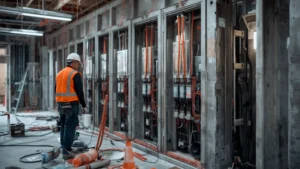
Time and Materials (T&M) Pricing
T&M pricing means clients are billed only for the actual hours worked ($75–$150/hr, higher for masters) plus the real cost of materials—often with a 20% markup to cover handling, supply chain risk, and warranty.
Picture this: A tenant calls with flickering lights and possible code violations. Electricians tackle discovery, troubleshooting, and repairs without knowing the full scope up front.
This model offers:
- Flexibility for ambiguous or evolving jobs
- Compensation for variable risks—unexpected repairs, after-hours needs
But be aware:
- T&M can lead to client disputes over hours/materials
- Uncertainty may make budgeting difficult for business clients
Clear, itemized invoices (listing hours, rates, material markups, and subtotaled costs) build trust and clarity on every T&M job.
“Every hour and every part—documented and explained, no surprises.”
—
Hybrid and Flat-Rate Pricing in Commercial Work
The hybrid model introduces a non-refundable diagnostic fee (often $150+), with the balance billed hourly or via a fixed rate if the repair is greenlit.
Flat-rate pricing works best for:
- Lighting and panel upgrades ($150–$600/job)
- Retrofit installs ($4–$15 per sq ft for wiring, $6–$12 for offices, $9–$15 for kitchens)
- Routine maintenance with clearly defined scopes
Strengths of flat or hybrid pricing:
- Predictable costs for clients
- Reward for efficiency and expertise
Limitations:
- Risky if the job’s complexity is underestimated
- Not ideal for surprise-heavy projects
Value-based pricing occasionally applies to expedited or high-value projects—priced according to the impact it delivers, not just labor hours.
Visualize a fast-track restaurant fit-out: Flat-fee quoted for wiring, with a kicker for opening ahead of schedule.
—
To price commercial electrical work confidently, choose a model that matches the project’s scope, risk, and client needs—always ensuring the reasoning is clearly shared. The best electricians in Ontario use transparent hourly or flat rates, detailed invoices, and real-time client communication to build lasting relationships and keep projects on track.
Key Cost Components Behind Commercial Hourly Rates
Understanding how commercial electrical hourly rates are structured goes far beyond the headline labor charge. The real story is in the layers beneath—each driving your quote and your electrician’s ability to deliver on time, every time.
Labor: Skill Tiers, Overtime, and Productivity
Your rate isn’t just “labor per hour”—it’s a blend of skill, experience, and on-the-ground challenges.
- Apprentices typically command lower rates but require oversight, while journeypersons bring efficiency, and master electricians—the highest skill tier—often bill at premium rates ($100–$200/hr).
- Expect about $75–$150/hr for experienced professionals in Ontario, with local factors and union requirements influencing the mix.
- Non-billable hours eat up nearly 50% of a technician’s week—think meetings, safety training, drive time, or prepping for jobs, all of which must be accounted for in your invoice.
- Productivity rates can shift your project’s cost dramatically: if a 4-hour job takes two days due to access, weather, or scope creep, costs rise fast.
“Half the job is what you see on site—half is what keeps the lights on behind the scenes.”
Overhead and Indirect Expenses
Behind every spark is a layer of business infrastructure you never see on your invoice.
- Insurance and licensing
- PPE and tool depreciation
- Vehicle fleet and fuel
- Scheduling/admin software
- Office staff
- Permits, inspections, and marketing
All these costs are totaled yearly, then divided by expected billable hours (often just 960–1920 per electrician, per year). Accurate overhead forecasting separates thriving firms from those operating on razor-thin margins.
“If you want sustainability, you must price for every wire, wheel, and warranty backing your quote.”
Materials and Equipment Considerations
Commercial jobs demand more than just wire and conduit—they pull in heavy hitters and specialized safety protocols.
- Commercial-grade materials cost more for higher loads and compliance.
- Equipment rentals (boom lifts, trenchers, specialty tools) can add hundreds per day.
- Expect a 20% markup on materials—this covers sourcing, storage, and last-minute emergencies.
- Delays from supply chain interruptions or new electrical codes are now routine, resulting in contingencies baked into every estimate.
“Picture this: your restaurant’s panel upgrade needs a scissor lift nobody’s got in stock—every extra day, the hourly rate ticks upward.”
Every number on a commercial electrical estimate is backed by careful cost control and transparent business practices. The real value is in ethical, safety-driven pricing—helping you avoid surprises, now and in the future.

Factors Influencing Regional and Project-Specific Pricing
Regional Labor and Permit Cost Variability
Hourly pricing for commercial electrical work in Ontario can swing between $75 and $135 per hour, depending on where your project is located.
Electricians in urban centers like Toronto or Ottawa typically command higher rates than those in smaller communities.
Why the difference? Local factors such as:
- Labor market tightness: High demand and limited supply in cities
- Travel costs: More time and fuel required for remote or rural jobs
- Complexity of inspection or permitting: Tighter municipal oversight in urban areas
Permit and inspection costs can add $400–$2,000+ per job, and these are almost always passed along in your hourly or total project cost.
Project Complexity and Risk Variables
Not all commercial spaces are created equal—project scope directly impacts price. Picture this: wiring a warehouse with clear runs is vastly different than fitting out a high-end restaurant with custom lighting, advanced fire alarms, and integrated controls.
Pricing commonly jumps based on:
- Square footage and project type:
- Offices: $6–$12 per sq ft
- Kitchens/restaurants: $9–$15 per sq ft
- Building type: Old buildings and mixed-use spaces often need code upgrades.
- Electrical load and risk: Jobs with specialized systems, backup power, or higher loads mean more hours and expertise.
- Urgency, downtime, and after-hours: Fast-track schedules or 24/7 environments can push rates 20–30% higher.
“After-hours and high-risk environments drive up hourly costs faster than you’d expect,” is a phrase every Ontario business owner has heard from an honest electrical contractor.
Seasonal, Regulatory, and Market Forces
Ontario’s weather alone can extend timelines—heavy snow or ice storms may force electricians to delay exterior work, shifting schedules and pricing upward.
Additional influences include:
- Supply chain volatility: Delays for panels, breakers, or specialty fixtures may increase project contingencies by 5–10%.
- Code updates: New Ontario Electrical Safety Code rules in 2025 mean adjustments for compliance—these costs get baked into hourly rates.
- Market competition: Savvy electricians monitor their win rates; many raise prices by 3–5% when booked out 4–6 weeks.
- Utilization rates: If staff are busy, rates climb to protect margins but avoid the “race to the bottom.”
“Smart pricing isn’t just about covering costs—it’s about protecting safety, quality, and long-term trust.”
For anyone pricing commercial electrical work in 2025, always factor in local labor market trends, permit fees, project complexity, and seasonal risks—these set the real cost baseline. Staying transparent about these drivers helps Ontario clients and contractors make decisions that power business safely and reliably.
Real-World Pricing Examples and Practical Scenarios
Picture this: you’re a business owner in Ontario faced with a sudden outage in your retail plaza. You want answers right away and pricing that’s transparent, not confusing.
Let’s break down exactly how commercial electrical work is priced per hour, using real scenarios that Ontario clients and electricians encounter every month.
—
Break-Even Rate Calculation and Profit Margins
Before quoting any job, smart contractors calculate their real break-even rate. This means tallying:
- Direct labor costs (wages, benefits)
- Overhead (insurance, vehicle, office, permits, marketing)
- Tools and equipment depreciation
For a licensed commercial electrician in Ontario in 2025:
- Average direct labor: $38/hour
- Annual overhead: $96,000 per crew
- Billable hours per tech/year: ~1,400 (after non-billable time)
- Overhead per hour: $96,000 ÷ 1,400 ≈ $69
So, minimum hourly rate just to break even:
$38 (labor) + $69 (overhead) = $107/hour
Add a sustainable 10% profit margin:
$107 × 1.10 ≈ $118/hour
A small change in overhead—say, a 10% insurance hike—pushes your break-even rate up fast. “A $5/hour overhead shift can make a good year or a bad one.”
—
Sample Commercial Work Pricing Scenarios
Scenario 1: T&M Repair Call in a Retail Plaza
- Urgent nighttime repair, 3 hours for a storefront
- Hourly rate: $125 (OT premium)
- Materials: $180 (with 20% markup)
- Total: (3 × $125) + $180 = $555
“Rapid repairs are transparent—every hour and part is listed, no surprises.”
—
Scenario 2: Flat-Rate Office Lighting Retrofit
- 25 fixtures replaced, 4,000 sq ft modern office
- Flat labor/materials fee: $7/sq ft = $28,000
- Includes: all lighting, demo, disposal, compliance
Clients know the cost upfront—great for budgeting and scheduling.
—
Scenario 3: Hybrid Diagnostic/Repair in a Restaurant
- Diagnostic fee: $175
- Repair rate: $120/hour (2 hours needed)
- Parts: $75
- Total: $175 + (2 × $120) + $75 = $490
This approach builds trust: “You see what’s billable, right from the first minute on-site.”
—
Scenario 4: Value-Based Fast-Track Installation
- Mission-critical – chef’s kitchen, needs power in 2 days
- Bid based on client urgency: $4,500 (includes overtime team)
- Premium justified by business value (revenue saved)
—
The bottom line: Ontario’s best commercial electricians combine clear calculations, pricing models matched to each job, and transparent communication to win repeat business and trust—even when hours and scopes change.
Best Practices for Transparent and Competitive Hourly Pricing
Open, honest communication and a strong focus on safety and compliance set the standard for pricing commercial electrical work in Ontario.
Clients expect clarity, while electricians need to protect their business and reputation—success depends on getting both right.
—
Communicating Estimates and Managing Client Expectations
Presenting hourly pricing should be simple, clear, and leave no room for guesswork.
A well-structured estimate always includes:
- Clear hourly labor rates (e.g., $75–$150/hr for licensed electricians in Ontario)
- All material markups (commonly 20%) and scope of supply
- Inclusions and exclusions, such as travel, permit fees, overtime premiums, and diagnostic charges
Be direct about which tasks are covered and which may incur additional costs.
Encourage clients to ask questions—address the top three FAQs:
- What does the hourly rate include?
- How do you handle unexpected work?
- How are material and permit costs tracked?
Picture this: A client receives an email with a digital estimate, followed by a call walking them through each cost line—no surprises, only trust.
—
Building Transparency Through Documentation and Tools
Transparency is built, not assumed.
Document every change, delay, or added task as soon as it happens.
The most trusted teams use:
- Written work authorizations before starting extra tasks
- Digital time-tracking apps (like Jobber or ServiceTitan) to log technician hours accurately
- Clear, itemized invoices that show both hours worked and material costs, line by line
These systems create a visual timeline anyone can understand—and that confidence keeps repeat business flowing.
—
Staying Compliant, Profitable, and Customer-Focused
Ontario’s electrical safety code isn’t just a rulebook—it’s a value statement.
Always factor code requirements and inspection fees into your pricing, and explain why they matter:
- “Following code protects your investment and keeps your insurance valid.”
- “We include inspection charges up front, so there are zero hidden fees by project end.”
To sharpen your pricing over time:
- Routinely review job costing to compare estimates vs. real costs.
- Gather client feedback after every project to find blind spots.
- Invest in ongoing education so your rates reflect current best practices and code changes.
“Price transparency and safety are the foundation of trust in commercial electrical work.”
Teams that maintain fair pricing, prioritize safety, and nurture skilled staff consistently become Ontario’s most referred electrical contractors.
—
The most effective hourly pricing methods don’t just tick boxes—they build confidence, foster loyalty, and ensure both sides get lasting value from every project.
Making Smarter Decisions in Commercial Electrical Work
Effective commercial electrical pricing isn’t just about numbers—it’s about delivering clarity, trust, and real value for every business project in Ontario.
By mastering transparent hourly pricing, you set higher expectations for safety, fair billing, and project outcomes—all while protecting your bottom line.
Key Takeaways:
- Communicate every estimate and invoice with total transparency—itemize labor, materials, and overhead
- Build trust early by sharing your pricing model and handling unexpected work with clear authorizations
- Align every quote with Ontario’s electrical safety codes, permitting requirements, and compliance fees
- Invest in digital tools and documentation for flawless accuracy and accountability
- Routinely review real job costs to sharpen your rates and boost competitiveness
Next Steps:
- Audit your current pricing documentation—streamline communications so clients have zero confusion
- Update your digital estimates and invoices to highlight all labor rates and markups upfront
- Schedule time to train your team on clear, simple client communication tools
- Connect with a licensed Ontario inspector to ensure all quotes reflect up-to-date code and permitting fees
- Request client feedback after each project to reinforce your reputation as a trusted partner
There’s no shortcut to building lasting client confidence—only precise pricing, open dialogue, and a commitment to safety can power your reputation forward.
Make every hour count. Empower your clients with answers, your team with clarity, and your business with the confidence that comes from pricing commercial electrical work, the right way.
“Transparent pricing isn’t a detail—it’s your brand’s promise to Ontario. Set the standard, and the referrals will follow.”
FAQ

Written by Roozbeh Nahreini
Roozbeh Nahreini is the founder and owner of Padi Electric Inc., an ESA-certified electrical contractor serving Aurora and the Greater Toronto Area. With 10+ years of hands-on electrical expertise and a team combining 50+ years of field experience, Roozbeh specializes in residential and commercial electrical solutions—from panel upgrades and EV charger installation to smart home integration and advanced diagnostics. His commitment to transparent pricing, code-compliant workmanship, and 24/7 emergency response has established Padi Electric as a trusted neighborhood contractor across Aurora, Richmond Hill, Newmarket, Vaughan, and the GTA.