

Home Electrical Safety Inspection Checklist in Toronto helps you ensure your Toronto home meets essential electrical safety standards with precision and confidence. As licensed electrical professionals specializing in Toronto, we understand the critical importance of regular safety inspections to protect your family and property from potential hazards. In this guide, you’ll learn exactly what experienced electricians look for during a thorough home electrical safety inspection, and how following a reliable checklist ensures long‑term safety and peace of mind.
Understanding Home Electrical Components
Our reputation for excellence in Toronto’s electrical sector stems from our unwavering commitment to thorough safety inspections that protect both your home and your family. Professional home electrical safety inspections in Toronto are not optional — they are essential for maintaining your home’s electrical system and ensuring compliance with Ontario’s rigorous safety codes. Whether your house is a modern build or a heritage property, the Home Electrical Safety Inspection Checklist in Toronto is your roadmap to identifying risks before they escalate.
Essential Electrical Components and Their Inspection Requirements
Your home’s electrical system comprises several critical components that demand regular professional assessment. The main service panel, often called the breaker box, serves as your home’s electrical command center. During our comprehensive inspections guided by the Home Electrical Safety Inspection Checklist In Toronto, we meticulously examine every element to guarantee safety and performance:
Main Electrical Panel Assessment:
-
Visual inspection for rust, water damage, or corrosion
-
Thermal scanning to detect potential hotspots indicating overloading
-
Verification of proper circuit breaker ratings
-
Check for secure mounting and adequate accessibility
Circuit Breaker Evaluation:
-
Testing mechanical operation and reset functionality
-
Inspection for signs of arcing or heat damage
-
Verification of proper amperage ratings for connected circuits
-
Assessment of GFCI and AFCI protection where required
Wiring System Inspection:
-
Examination of wire insulation condition
-
Verification of proper wire gauge for circuit ampacity
-
Detection of unauthorized modifications or amateur repairs
-
Assessment of junction box connections and cover plates
Grounding System Verification:
-
Testing ground rod connections and resistance levels
-
Inspection of bonding jumpers and continuity
-
Verification of proper grounding electrode system
-
Assessment of equipotential bonding for metal components
Using the Home Electrical Safety Inspection Checklist In Toronto, we ensure nothing is overlooked—from minor defects to major risks—and that every component measures up to safety expectations.
Proper maintenance and verification of the grounding electrode system is crucial for preventing electrical shocks and ensuring overall home safety. A well-functioning grounding system directs excess electrical current safely into the earth, reducing the risk of electrical fires and equipment damage. During every Home Electrical Safety Inspection Checklist In Toronto, our licensed electricians pay special attention to the integrity of the grounding electrode system, confirming that it meets all Ontario Electrical Safety Code requirements. Neglecting this critical component can lead to dangerous voltage imbalances and compromise your home’s electrical protection.
Professional Standards and Safety Measures
As licensed Toronto electricians, we conduct all inspections in strict accordance with the Ontario Electrical Safety Code and CSA C22.x standards. Our comprehensive evaluation includes:
-
Detailed documentation of all findings with photographic evidence
-
Thermal imaging scans of electrical components
-
Load calculations to ensure system capacity matches usage
-
Verification of surge protection effectiveness
Our Home Electrical Safety Inspection Checklist In Toronto ensures you are not only compliant with existing codes, but prepared for updates and future safety standards as electrical technologies evolve.
Modern Safety Technologies
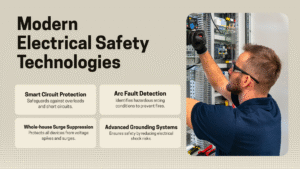
Today’s electrical systems incorporate advanced safety features that require specialized inspection. The Home Electrical Safety Inspection Checklist In Toronto includes evaluation of:
-
Smart circuit protection devices
-
Whole‑house surge suppression systems
-
Arc fault detection technology
-
Advanced grounding systems
Regular inspection of these components ensures your home’s electrical system remains safe and efficient. Our Toronto‑based team maintains continuous education on emerging technologies and safety standards, ensuring your inspection meets current requirements while anticipating future needs.
Signs Your Home Needs Electrical Inspection
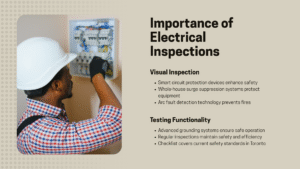
When safeguarding your Toronto home’s electrical system, being alert to warning signs can prevent serious hazards and costly repairs. Home Electrical Safety Inspection Checklist In Toronto becomes particularly valuable when certain red flags appear. Knowing these indicators helps homeowners make timely decisions for their family’s safety.
Among the most telling signs that your Toronto residence requires immediate electrical inspection is the frequent tripping of circuit breakers or blown fuses. This recurring issue often signals an overtaxed electrical system, particularly common in older Toronto neighborhoods where homes weren’t designed for today’s power demands. When circuit breakers consistently trip despite normal usage patterns, it’s time to consult a licensed professional and apply the Home Electrical Safety Inspection Checklist In Toronto thoroughly.
Flickering or dimming lights, especially when major appliances kick in, represent another critical warning signal. While Toronto’s power grid is generally stable, internal wiring issues can cause voltage fluctuations that manifest as unstable lighting. These symptoms might indicate loose connections or deteriorating wiring that requires professional assessment using the checklist.
Exercise particular caution when you notice unusual sounds emanating from electrical outlets or switches. Buzzing, crackling, or popping noises aren’t normal and could indicate arcing electricity—a serious fire hazard that demands immediate professional intervention. Ontario’s electrical safety standards emphasize the importance of addressing such auditory warnings promptly.
Warm or discolored wall plates around outlets and switches serve as visible indicators of potential electrical problems. If you discover these temperature anomalies during your routine home maintenance, don’t wait for more severe symptoms to develop. Toronto’s licensed electrical inspectors can identify whether these signs point to overloaded circuits or damaged wiring by following the checklist guidance.
Perhaps the most alarming signal is the presence of burning odors near any electrical components. This warning sign requires immediate attention, as it often precedes electrical fires. Smart Toronto homeowners know that even slight burning smells warrant disconnecting power to the affected area and scheduling an urgent electrical safety inspection according to the checklist.
Many older Toronto homes, particularly in established neighborhoods, may exhibit multiple warning signs simultaneously. Regular safety inspections become even more critical in these cases, as aging electrical systems face increased stress from modern power requirements. Professional inspectors can evaluate whether your home’s electrical infrastructure meets current Ontario Electrical Safety Code standards through robust use of the Home Electrical Safety Inspection Checklist In Toronto.
Unlike the previously discussed component inspections, these warning signs often manifest during daily activities, making homeowners the first line of defense in electrical safety. When combined with the technical evaluations of your electrical panel and wiring systems, recognizing these signals creates a comprehensive approach to home electrical safety.
As we’ll explore in the upcoming section about common residential electrical issues, many of these warning signs connect directly to specific challenges faced by Toronto homeowners, particularly those living in heritage properties or homes built during certain periods. Understanding these indicators helps bridge the gap between identifying potential problems and implementing necessary updates to meet modern safety standards using the checklist.
Common Residential Electrical Issues
Toronto’s residential landscape presents distinct electrical safety challenges that demand thorough professional assessment and regular maintenance. In older neighborhoods like Rosedale, The Annex, and High Park, where heritage homes grace the streets, electrical systems often tell a complex story of evolving safety standards and technological advancement.
Home Electrical Safety Inspection Checklist In Toronto helps uncover outdated or unsafe systems in these properties before they cause costly damage or become fire hazards.
Knob and tube wiring, predominantly found in Toronto homes built before 1950, represents one of the most pressing safety concerns for homeowners. While this wiring method was standard practice in its era, it lacks the grounding protection modern electrical systems provide. Professional inspectors specifically look for deteriorating insulation, improper modifications, and areas where this legacy wiring may be covered by insulation – a significant fire hazard that violates current Ontario Electrical Safety Code requirements.
Homes constructed during the aluminum wiring period (1965‑1976) require particular attention during safety inspections. Throughout Toronto’s expanding suburbs of that era, aluminum was used as a cost‑effective alternative to copper. However, aluminum’s tendency to oxidize and expand/contract with temperature changes can lead to loose connections and potential fire risks. Licensed electrical contractors carefully examine all aluminum wire connections, looking for telltale signs of oxidation, overheating, or improper copper‑to‑aluminum adaptations.
Modern living has introduced unprecedented demands on residential electrical systems. Toronto homeowners increasingly report circuit overload issues as they add high‑draw appliances and electronic devices to their homes. Professional safety inspections include a detailed load calculation to ensure your electrical service capacity matches your household’s current needs. This assessment becomes particularly crucial in older Toronto neighborhoods where original 60‑amp services may still be in place despite today’s standard requirements of 100‑amp or 200‑amp service.
Toronto’s variable climate poses unique challenges to residential electrical systems. Freeze‑thaw cycles can affect external wiring components, while summer humidity and winter storms test the integrity of weather‑protected installations. Comprehensive safety inspections examine outdoor electrical equipment, checking for proper weatherproofing, secure connections, and appropriate GFCI protection in areas exposed to moisture.
Renovation projects in Toronto homes must align with current electrical codes, even in areas not directly under renovation. Professional inspectors evaluate recent modifications against the latest Ontario Electrical Safety Code requirements, ensuring additions like basement apartments, kitchen upgrades, or home offices meet all safety standards. This includes verifying proper permits were obtained and that all work was completed by licensed electrical contractors.
Each of these issues requires specific testing protocols and specialized equipment during inspection. Licensed Toronto electrical contractors use thermal imaging to detect hot spots in aluminum wiring connections, circuit analyzers to evaluate load distribution, and detailed documentation tools to track system components requiring attention or replacement. This systematic approach ensures no potential safety hazards are overlooked.
Beyond identifying these common issues, professional electrical safety inspections in Toronto homes include verification of proper surge protection, AFCI/GFCI protection in required locations, and the presence of working smoke and carbon monoxide detectors as mandated by local building codes. Inspectors also assess panel capacity for future upgrades, ensuring homeowners can safely accommodate growing electrical needs while maintaining compliance with safety standards.
Toronto homeowners should maintain detailed records of electrical safety inspections, including dated documentation of any identified issues and completed repairs. This documentation not only helps track system maintenance but also provides valuable information for future property transactions and insurance purposes. Regular safety inspections by licensed Toronto electrical contractors remain the most effective strategy for protecting your home and family from electrical hazards.
FAQ
-
What is included in the Home Electrical Safety Inspection Checklist In Toronto?
The Home Electrical Safety Inspection Checklist In Toronto includes checking your main electrical panel, circuit breakers (including GFCI and AFCI), wiring system, grounding system, and modern safety technologies. It also involves load calculations, thermal imaging, and verification that all components comply with Ontario’s electrical safety codes. -
How often should I use a Home Electrical Safety Inspection Checklist In Toronto?
You should use the Home Electrical Safety Inspection Checklist In Toronto at least once every few years and especially after significant renovations, adding high‑power appliances, experiencing warning signs (like flickering lights or frequent breaker trips), or purchasing an older home. Regular use ensures early detection of hazards. -
Can the Home Electrical Safety Inspection Checklist In Toronto prevent electrical fires?
Yes. Following the Home Electrical Safety Inspection Checklist In Toronto helps identify risks such as loose wiring, overloaded circuits, arcing, improper grounding, or failing safety devices. Addressing these issues early significantly reduces the risk of electrical fires and improves safety in your home. -
Do I need a licensed electrician for the Home Electrical Safety Inspection Checklist In Toronto?
Absolutely. A licensed electrician is essential to properly conduct the Home Electrical Safety Inspection Checklist In Toronto, since many components require professional tools, knowledge of Ontario Electrical Safety Code, and experience to spot hidden hazards that an untrained eye might miss. -
What are the costs and benefits of doing the Home Electrical Safety Inspection Checklist In Toronto?
While costs vary depending on home size, age, and complexity, using the Home Electrical Safety Inspection Checklist In Toronto offers substantial benefits: peace of mind, insurance compliance, lower long‑term repair expenses, protection against fire risks, and increased safety for inhabitants. Over time, the investment pays off through avoided damages and proactive maintenance.
Conclusions
Regular electrical safety inspections by licensed Toronto professionals are vital for maintaining your home’s safety and compliance with Ontario’s codes. Don’t wait for issues to surface—schedule your comprehensive home electrical safety inspection today with Padi Electric and rest assured your family and property are protected.

Written by Roozbeh Nahreini
Roozbeh Nahreini is the founder and owner of Padi Electric Inc., an ESA-certified electrical contractor serving Aurora and the Greater Toronto Area. With 10+ years of hands-on electrical expertise and a team combining 50+ years of field experience, Roozbeh specializes in residential and commercial electrical solutions—from panel upgrades and EV charger installation to smart home integration and advanced diagnostics. His commitment to transparent pricing, code-compliant workmanship, and 24/7 emergency response has established Padi Electric as a trusted neighborhood contractor across Aurora, Richmond Hill, Newmarket, Vaughan, and the GTA.