
Key Takeaways
Upgrading your electrical system is more than just a facelift—it’s an investment in safety, efficiency, and future readiness for your home or property in Ontario. These key points give you the practical essentials to ensure every renovation is compliant, cost-effective, and built to last.
- Strategic planning upfront saves money and hassle—work with a licensed electrician to conduct a full assessment and load calculation before any project begins, preventing rework and surprise costs.
- Code compliance isn’t optional—it’s protection—every major upgrade in Ontario requires a permit and Electrical Safety Authority (ESA) inspection to safeguard your insurance and resale value.
- Upgrade panels and wiring for modern needs—install a 200A panel with spare capacity, AFCI/GFCI protection, and whole-home surge protection to handle EV chargers, tech devices, and future renovations.
- Only use ESA-licensed professionals—choosing a certified, insured electrician guarantees safety, accountability, and up-to-code work you can trust for years to come.
- Prioritize thorough documentation and labeling—demand a clear circuit directory and updated panel schedule, making future troubleshooting, expansion, or resale painless.
- Never compromise on safety practices—insist on strict protocols like de-energizing circuits, PPE use, and safe work zones to protect your family, occupants, and crew.
- Plan for tomorrow’s tech today—factor in EV charging, solar, and smart home infrastructure during renovations for affordable, flexible upgrades down the road.
- Avoid shortcuts and hidden hazards—skipping permits, hiding junction boxes, or reusing old components can result in project delays, insurance issues, and serious safety risks.
Trusting your next electrical upgrade to qualified professionals and following these best practices means you’ll power your property safely, efficiently, and confidently—today and far into the future. For step-by-step guidance and expert insights, dive into the full guide.
Introduction
Imagine finishing your dream renovation—new kitchen, tailored lighting, a sleek EV charger in the garage—only to find the breakers trip constantly or, worse, your insurance company rejects a claim because your electrical upgrades weren’t done to code.
This isn’t rare—over 60% of Ontario homeowners experience surprises or setbacks during electrical renovations due to overlooked safety codes or underestimated loads.
If you’re a homeowner, property manager, or builder in Ontario, you know that electrical upgrades aren’t just about keeping the lights on—they’re about safety, investment protection, and planning for the future.
A well-designed electrical system powers the tech you want today and prepares your property for tomorrow’s needs, from smart home devices to EV charging and future-proof panel upgrades.
But the process is full of hurdles:
- Navigating changing safety codes and permits
- Avoiding costly rework from under-sizing or improper wiring
- Coordinating upgrades with major renovations for less disruption
- Ensuring every decision protects your property value and insurance
The right approach can cut headaches and future costs before they start.
Inside this guide, you’ll find:
- Straightforward steps for safe, code-compliant planning
- A clear checklist for choosing an ESA-licensed electrician
- Practical strategies for seamless integration—whether upgrading a heritage home or a commercial space
- Actionable advice for documentation, maintenance, and future flexibility
By the time you finish, you’ll know exactly how to steer your next electrical upgrade—whether you’re running a renovation, expanding a business, or simply planning ahead for Ontario’s growing power needs.
Ready to see how strategic planning can make your electrical renovations safer, smarter, and worry-free?
Let’s start where every successful project begins: planning upgrades and renovations that get it right the first time.
Planning Electrical Upgrades and Renovations
Why Start with Strategic Planning?
Electrical upgrades can future-proof your home, but only with careful planning from the start.
A single oversight in load calculations or wiring placement can lead to costly rework or even safety hazards.
Picture this: You’ve just finished a beautiful kitchen remodel—only to discover your new range keeps tripping the breaker because the panel wasn’t upgraded.
Strategic planning saves money, reduces disruption, and avoids surprise issues down the road.
Professional Assessment & Load Evaluation
A full electrical assessment by a licensed electrician is step one. This should always include:
- Inspecting wiring for age, brittleness, damage, or unapproved DIY repairs
- Checking the panel for capacity limitations, corrosion, and code violations
- Reviewing grounding and bonding on all systems
- Assessing all devices and outlets for safety, correct sizing, and code compliance
Expert quote: “A professional assessment isn’t just about now—it’s your built-in insurance against future issues.”
Next, work with your electrician to estimate both current and future electrical loads. Factor in:
- New appliances (including induction stoves or high-end ranges)
- Upgraded HVAC systems or air conditioning
- EV chargers and home batteries
- Expanding lighting systems or tech-heavy home offices
- Additional IT, security, or entertainment equipment
A properly sized upgrade eliminates chronic tripped breakers and lets you add that EV charger or home theatre later, worry-free.
Integration with Broader Renovations
Combining electrical work with larger renovations offers big advantages. When walls are already open, upgrades become:
- Faster, less disruptive, and often cheaper
- Easier to run new wiring or replace old aluminum or knob-and-tube
- Simpler to coordinate with other trades, streamlining the whole project
Memorable tip: “The best time to upgrade is when you’re already renovating—don’t pay to open walls twice.”
Work with all contractors to coordinate timelines. This avoids backtracking, missed inspection windows, and keeps projects on track.
Always consult an Ontario-licensed electrician to ensure every part of your upgrade meets code—cutting corners or missing permits risks safety, insurance, and resale value.
By prioritizing strategic planning, comprehensive assessment, and load forecasting, you set the stage for safe, cost-effective upgrades that power your home well into the future.
Navigating Ontario Code Compliance and Permitting
Ontario’s electrical safety codes and permitting rules are strict for good reason—your property and insurance are riding on it. The Electrical Safety Authority (ESA) enforces national and local standards like the Ontario Electrical Safety Code (OESC), which adapts the NEC for local needs.
Any major upgrade—panel swaps, new circuits, wiring overhauls, or service changes—requires a permit and ESA inspection. Insurance companies can reject claims if your system isn’t up to code, making this step non-negotiable for protection and peace of mind.
Code Compliance: What You Must Know
Picture this: an inspector standing over a newly installed panel, checklist in hand, confirming every detail. These are some of Ontario’s top code mandates:
- Service panel upgrades must follow strict ampacity, manufacturer, and space guidelines.
- Every new or modified circuit needs AFCI (Arc Fault) and GFCI (Ground Fault) protection in designated rooms—think kitchens, bathrooms, and outdoor spaces.
- Surge protection devices are required on new or replaced service equipment as of 2021 OESC updates.
- Tamper-resistant outlets (TRRs) are now mandatory for all dwelling areas, reducing shock risks.
- Grounding and bonding must follow precise specs—skipping this step invites fire and shock hazards.
Worksite procedures follow OSHA-type standards—circuits must be de-energized before work, with proper PPE and lockout/tagout practices enforced.
Permits, Inspections & Paperwork: A Transparent Process
A typical project’s permit journey looks like this:
- Hire an ESA-certified electrician.
- File a permit with the ESA (often done by your contractor).
- Complete the work with inspection readiness in mind—clear labeling, open access to panels, nothing buried.
- Arrange for an ESA inspection; most are scheduled within 3-10 business days.
- Get ESA approval—and keep documentation for your records and future resale.
Projects stumble—and even fail—when:
- Permits aren’t filed before work starts
- Inspectors find hidden junction boxes, unapproved breakers, or wrong gauge wiring
- Documentation is missing or incomplete
Why You Need a Licensed Pro
Only ESA-licensed, fully insured electricians can guarantee compliance in Ontario. Choosing the wrong contractor risks delays, failed inspections, and insurance nightmares.
As a rule, “If you can’t show an ESA Certificate of Acceptance, your system isn’t legal.” It’s that simple. Avoid costly surprises: get expert advice upfront, ask for credentials, and keep every permit and inspection record.
A smart, compliant upgrade isn’t just paperwork—it’s a guarantee of safety, insurance protection, and lasting peace of mind.
Safety-First Practices During Upgrades
Electrical upgrades are never “plug and play.” Every step needs active risk management to protect lives and property.
Professional electricians follow strict protocols whether a circuit is live or offline. Before any project, they always:
- De-energize circuits and verify with a test meter
- Lock out/tag out (LOTO) breakers to prevent accidental power-on
- Use only insulated tools and undamaged equipment
- Wear personal protective equipment (PPE): insulated gloves, eye/face protection, arc-rated clothing
Neglecting these basics puts your insurance, safety, and entire project at risk. “Skipping one safety step can mean the difference between a smooth upgrade and a family emergency.”
Preventing Electrical Hazards
Identifying and fixing legacy hazards is essential for safety and code compliance.
Licensed electricians are trained to:
- Spot brittle wires, faulty splices, or ungrounded outlets—common causes of shock and fire
- Replace outdated fuses with modern breakers
- Shield all exposed wiring and box interiors from accidental contact
Picture this: you upgrade old kitchen wiring and discover brittle, cloth-insulated wires that could spark behind the wall—finding and replacing these hazards is why pro assessments are worth every penny.
Fire departments report that electrical failures cause over 1 in 10 home structure fires across Ontario each year, making professional prevention non-negotiable.
Maintaining a Safe Renovation Environment
Keeping the renovation area protected is just as vital for families as for crews.
- Set up a clear work zone: keep pets and children safely away, use safety barriers if needed
- Only use extension cords and power tools that are code-compliant and free from damage
- Store tools and leftover materials so no energized parts are left exposed overnight
A safe job site is an efficient one. “What you don’t see—like a hidden energized wire—can carry the most risk.”
The cost of safety shortcuts can last for years. Insist your upgrade plan includes full risk controls and never settle for work that skips inspections or trusted practices. Proper safety is the foundation of every successful electrical renovation.
Designing for Modern Needs: Panels, Circuits, and Components
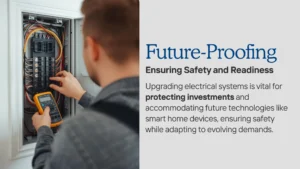
Upgrading your electrical system isn’t just about capacity—it’s about safety, reliability, and future readiness. Outdated panels and wiring can leave you vulnerable to fire hazards, failed home insurance claims, and tech limitations that frustrate modern living.
Today’s best practices center on
- Replacing aging fuse boxes and underpowered breaker panels—anything less than 100A service is no longer sufficient for most homes
- Installing panels with spare slots for home offices, EV chargers, and HVAC upgrades
- Integrating AFCI and GFCI protection—now required in living areas, bathrooms, kitchens, laundry rooms, and outdoors
- Adding surge protection at the main panel to defend against the $10,000+ cost of equipment damage from Ontario’s power surges
“An outdated panel doesn’t just restrict new tech—it’s a flashing red light for safety insurers.”
Main Service Panel Upgrades
Picture this: You add a hot tub or heat pump—but your old panel flickers, trips, or can’t keep up. That’s a sign it’s time to upgrade.
Know your panel should be upgraded if:
- It’s warm or smells burnt
- Breakers frequently trip
- You see fuses, double-tapped breakers, or rust
- Service is 60A or 100A, rather than today’s 200A standard
Future-proofing means sizing service for at least 25% above your projected load and using combination-type AFCI/GFCI circuit breakers. Integrate whole-home surge protection at the new panel—now a code requirement for many Ontario projects.
A modern panel is your foundation for safe, flexible tech growth: “Upgrade today. Power the house you want tomorrow.”
Branch Circuits, Receptacles, and Wiring
Old wiring is like a cracked sidewalk: it looks harmless until there’s an accident. Electrical fires in Ontario are most often traced to brittle conductors and improper splices hidden behind finished walls.
Your checklist for safer, smarter branch systems:
- Replace aluminum, knob-and-tube, or deteriorated copper wiring
- Add outlets (minimum one every 3.5m in living areas) to avoid overloading
- Install tamper-resistant receptacles (TRRs) in all areas where children could play—now Ontario code
- Use GFCI outlets anywhere water might be present and AFCIs everywhere else
Every new circuit must be properly grounded and bonded—no shortcuts. Failure here can mean failed inspections or lost insurance coverage.
The smartest upgrades are about more than new hardware. They give you confidence, comfort, and room to grow—always backed by a clean, code-compliant installation you’ll rely on for decades.
Upgraded panels, robust circuits, and modern safety devices aren’t just upgrades—they’re peace of mind for Ontario homes ready for what’s next.
Documenting and Ensuring Quality, Compatibility, and Maintenance
Picture this: you’ve just renovated your home’s electrical system. Everything looks neat and new, but what’s beneath the surface matters just as much as the finish.
Choosing the right parts and keeping detailed documentation is the backbone of every safe, reliable upgrade.
Product and Equipment Selection
Save yourself headaches—and hazards—by using only Ontario-approved, listed products. This means every outlet, breaker, and wire is vetted for your safety.
Consider the benefits of selecting premium equipment:
- Longer lifespan, fewer breakdowns—quality pays for itself fast
- Maintains insurance eligibility and meets Ontario safety standards
- Delivers top performance for sensitive electronics and new tech
Cutting corners by reusing outdated or non-listed components can seem budget-friendly, but it opens the door to:
- Increased risk of fire or shock
- Failed inspections and insurance headaches
- Voided warranties for your appliances
Think of each upgrade as adding another solid link to your home’s electrical chain.
Documentation and Ongoing Maintenance
Labeling and documentation are your system’s roadmap. Before the wires are covered, your electrician should:
- Label every circuit, breaker, and disconnect with the room, device, and voltage
- Update the panel schedule and keep a copy onsite
- Save all “as-built” diagrams or schematics for future reference
This helps you and future professionals:
- Troubleshoot issues at lightning speed
- Confirm loads, identify upgrades, and spot changes
- Maintain compliance with Ontario’s strict ESA inspection requirements
For property managers and resale: detailed documentation can boost property value and save money on future renovations.
Setting Foundations for Longevity
A well-labeled and documented system transforms routine maintenance or emergency repairs. Imagine being able to hand a new electrician one sheet that tells exactly what every wire does—clarity saves time, cost, and confusion for years ahead.
Having a well-documented, code-compliant, and high-quality electrical system isn’t just good practice—it’s your foundation for peace of mind and long-term safety. Prioritize documentation now and avoid costly surprises down the line.
Best Practices for Residential Upgrades
Upgrading your home’s electrical system means planning for safety, flexibility, and future tech—not just code minimums.
The stakes are personal: outdated wiring and overloaded panels are the top causes of residential electrical fires in Ontario, according to ESA data.
For homeowners, the difference between safe, lasting upgrades and future headaches comes down to two things:
- Partnering only with licensed residential electricians
- Designing for both present and future electrical demands
“Don’t gamble with your family’s safety—electrical shortcuts today mean costly surprises tomorrow.”
Optimizing Home Safety and Performance
Today’s best practices go far beyond minimum code compliance.
Picture this: Real electricians replacing old, brittle wiring with modern copper conductors while installing new GFCIs in bathrooms and kitchens, and AFCIs in living spaces. Every newly renovated room gains:
- GFCI and AFCI protection for shock and fire prevention
- Integrated smoke and CO detectors—wired and interconnected for constant vigilance
- Energy-efficient LED lighting on smart dimmers, saving power with each use
Panels, junction boxes, and disconnects should always remain unobstructed and accessible—never hidden behind drywall or cabinetry. Concealed access points are a recipe for inspection issues, insurance pushback, and real safety risks.
“Home safety isn’t a finish line—it’s a standard that should always rise with your lifestyle.”
Smart Home and Future Technology Integration
Residential upgrades now blend traditional power with tomorrow’s tech.
Ontario homes are seeing a surge in demand for:
- EV charging stations
- Solar panel readiness
- Structured wiring for whole-home Wi-Fi and automation
Think ahead: Position new circuits and conduit runs where future wall-mounted displays or devices may appear. Ask your electrician to oversize key circuits or install flexible conduit—boosting your home’s adaptability without extra mess or cost later.
A professionally upgraded system means your home can easily add:
- A second EV charger
- Rooftop solar
- Or even whole-home battery storage—whenever you’re ready
Smart planning now is money saved and headaches avoided down the road.
With these best practices, Ontario homeowners gain more than just compliance—they unlock peace of mind, flexible living, and energy savings that last. Always choose a licensed expert, document your system, and make every upgrade easy to access and expand.
Common Pitfalls and How to Avoid Them
Cutting corners on electrical upgrades can create more hazards than solutions. The most frequent mistakes Ontario homeowners make aren’t just technical—they’re avoidable oversights that hit hard on both safety and your wallet.
Skipping critical steps is the top pitfall:
- Bypassing required permits or inspections leaves projects undocumented, risking fines or insurance voids.
- Going without a licensed electrician’s consultation can lead to costly code violations that must be redone.
- Ignoring expert load calculations results in overloaded panels, power interruptions, or dangerous overheating.
Why Shortcuts Backfire—And What It Looks Like
Picture this: adding a new EV charger or basement suite, only to discover your panel wasn’t sized for the extra load. Over 60% of Ontario homeowners face project delays or budget overruns because of these surprises.
Other common mistakes include:
- Covering junction boxes behind drywall, making future troubleshooting or expansion a nightmare.
- Reusing outdated breakers or wiring to save upfront costs, but risking insurance claims being denied after a fault or fire.
- Poor grounding and bonding, leaving your home at risk for electrical shock or equipment damage.
“You wouldn’t want your electrician to hide a critical shut-off—so don’t let shortcuts happen behind the scenes, either.”
Checklist: How to Get It Right
Stay on track and avoid common pitfalls with these Ontario-specific checks:
- Always verify permits are opened with the ESA before starting upgrades.
- Demand up-front load calculations for major renovations—ask to see the math that supports panel sizing and wiring choices.
- Never accept covered junction boxes or blocked panels; clear access is both a code and a safety requirement.
- Insist on labelled circuit directories and updated panel schedules—they’re gold for future service or resale.
- Only hire ESA-certified electricians; check credentials and insurance before work begins.
When to Get a Second Opinion
Watch for these red flags:
- No written scope or contract.
- “No permit needed” claims on anything more than like-for-like device swaps.
- Quotes much lower than competitors—this can signal shortcuts on products or safety.
Proper planning and informed oversight now are the best ways to avoid hidden costs—and dangerous surprises—later. Safe, compliant upgrades always cost less in the end and deliver the peace of mind every Ontario homeowner deserves.
FAQ
-
Why are electrical system upgrades important in Ontario?
Electrical system upgrades and renovations are essential for ensuring safety, compliance with local codes, and preparing your home for modern technology like EV chargers and smart devices. These upgrades can improve energy efficiency, reduce the risk of electrical failures, and maintain insurance coverage. -
How do I ensure my electrical renovation meets safety codes?
Always hire an ESA-licensed electrician for your electrical system upgrade. They will ensure all work is performed to current electrical safety codes, which include permits, inspections, and necessary upgrades to your system, such as panel and wiring changes. -
What are common mistakes during electrical renovations in Ontario?
Some common mistakes include failing to obtain proper permits, under-sizing electrical panels, and overlooking new technology needs like EV chargers. Working with a licensed professional will ensure your electrical system renovations meet all code requirements and are future-proof. -
How can I plan for future technology when upgrading my electrical system?
During electrical system upgrades, it’s important to include capacity for future needs, like EV charging stations, solar panels, or home automation. Planning for these technologies now will make future upgrades more affordable and seamless. -
What is the cost of electrical system upgrades in Ontario?
The cost of electrical system upgrades and renovations varies based on the scope of the project, including the need for new panels, wiring, or outlets for modern devices. A typical upgrade might range from $2,000 to $10,000, depending on the complexity.
Conclusion
Upgrading your electrical system is more than a routine project—it’s an investment in safety, performance, and peace of mind for years to come.
With Ontario’s strict codes and fast-moving technology, the right approach keeps your property protected, insured, and ready for every new innovation your life demands.
Here’s how you can immediately put best practices to work:
- Partner only with ESA-licensed, fully insured electricians—ask for credentials every time
- Insist on upfront load calculations and thorough planning to match today’s needs and tomorrow’s dreams
- File proper permits and schedule ESA inspections before you start; documentation is your safety net
- Demand upgraded panels, robust wiring, and code-required safety devices like GFCI and AFCI protection
- Maintain a detailed, labeled panel schedule—your blueprint for future confidence and resale value
Ready to build the most reliable, future-proof foundation for your home or business?
- Book a professional assessment today—get clarity on your system’s strengths and risks
- Walk your space with your electrician, reviewing all panels, devices, and load needs
- Commit to quality products and clear documentation; insist nothing gets hidden behind your walls
- Keep detailed inspection records—they matter for insurance, upgrades, and every future service call
- Share these insights with family or fellow property managers to set a new standard in safety
The most powerful electrical upgrades aren’t just about new wires or bigger panels—they’re about the peace of mind, safety, and possibilities you create with every decision.
Make your next upgrade a legacy of reliability and innovation—because powering Ontario, the right way, starts with you.