

Key Takeaways
Common Residential Electrical Issues are key safety concerns for homeowners in Ontario, and staying proactive about identifying and resolving them can help prevent serious hazards. Below are the most critical electrical problems, solutions, and best practices every homeowner should know in 2025:
- Frequent breaker trips or flickering lights signal underlying electrical problems—don’t ignore repeated faults, as they contribute to over 20% of residential fires in Ontario each year.
- Outdated panels built before 1990 lack modern safety features and can trigger higher insurance premiums; consider a professional upgrade if you notice corrosion, heat, or buzzing.
- Persistent dead outlets or hot outlet covers are warning signs—turn off power and contact a licensed electrician immediately if a burning smell or heat is present.
- Simple checks like resetting GFCIs or unplugging overloaded devices can resolve up to half of minor power issues, but repeated or widespread problems always warrant expert intervention.
- Ontario’s latest safety codes require upgrades for EV chargers, smart systems, and home renovations—future-proof your property with dedicated circuits and larger panels.
- Red flags such as burning smells, sparking, or buzzing at outlets or breaker panels demand urgent professional help; these are not minor annoyances but high-risk hazards.
- Licensed electricians deliver code-compliant, insured work—verify their ESA/ECRA license and references before any major repair or upgrade for true peace of mind.
- Routine inspections every 5 years—plus annual checks for homes over 30 years old—significantly reduce the risk of fire and maintain insurance eligibility across Ontario.
Stay proactive: addressing electrical issues early keeps your home safe, efficient, and future-ready—read the full article for expert troubleshooting tips and essential safety guidelines.
Introduction
A single flicker from your lights or a mysterious buzzing from your breaker panel may seem like minor annoyances—until you realize over 20% of Ontario house fires start with electrical faults just like these.
You’re not alone if you’ve ever wondered whether a tripped breaker is “just one of those things” or a real red flag.
Every year, families in Ontario face headaches—and sometimes serious hazards—from common electrical problems that can show up in any home, old or new.
Maybe you’ve spotted an outlet that feels warm to the touch, or you’re puzzled by lights dimming every time the microwave runs.
These everyday warning signs can be more than inconvenient—they might be signals of issues lurking inside your walls, ready to cause bigger trouble if ignored.
Your home’s electrical system faces growing demands from EV chargers, home offices, smart tech, and powerful appliances.
What was once safe for yesterday’s needs might now be stretched to a breaking point.
Ignoring the signs—or turning a blind eye to persistent problems—means missing the chance to protect your home, your family, and your peace of mind.
That’s why we’re breaking down:
- The most frequent electrical issues Ontario homeowners face
- How to distinguish between minor glitches and urgent safety risks
- Simple troubleshooting steps that keep you safe (and code-compliant)
- When it’s time to call a licensed pro, and what makes their role essential
Whether you own a newly built condo in Toronto or a century home near the lake, recognizing—and acting on—key electrical warning signs is the best way to safeguard your investment.
Ready to learn how everyday electrical problems can escalate, and what practical action you can take, right now?
Let’s start by decoding the most common issues hiding in plain sight.
Understanding the Most Common Residential Electrical Issues
Electrical problems are a part of everyday life in Ontario homes, ranging from minor annoyances—like a dead outlet—to serious safety hazards such as a sparking panel or burning smell.
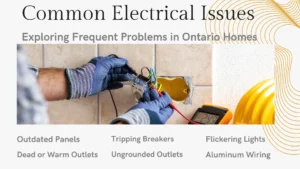
Across both century homes and new builds, the top issues are:
- Outdated electrical panels
- Circuit breakers that trip repeatedly
- Flickering or dimming lights
- Dead or warm outlets
If left unaddressed, these problems can escalate quickly. According to Ontario safety data, electrical faults account for over 20% of residential fires each year.
“Picture this: you notice lights quietly flickering while the fridge kicks in, or you feel warmth on an outlet cover. Those subtle signs can point to hidden risks just waiting to surface.”
The Impact of Age—and Modern Demands
Older homes may hide original, unsafe wiring behind new drywall, while recent builds face strain from EV chargers, home offices, and smart technology.
That means:
- A 1970s panel might simply lack the safety features required by today’s electrical code
- Overwired, or poorly maintained panels are flagged by insurance providers as a fire risk
- Even newer homes can face overloads from modern appliances and electronics
Ontario’s regulations require licensed professionals to ensure every update or panel swap meets strict safety codes, protecting both your family and your property.
Outdated Electrical Panels
Panels built before 1990 may not have essential safety features, proper breaker sizing, or the capacity for a modern home.
Signs you may need an upgrade:
- Frequent tripping breakers
- Panels that look corroded, hot, or make buzzing sounds
- Insurance companies raising red flags or premiums
Panel upgrades are handled by licensed electricians, who ensure the replacement meets current Ontario codes and can often finish the job in a single day.
Circuit Breaker Problems
Breakers trip due to:
- Circuit overloads (too many devices)
- Short circuits or ground faults
- Faulty, outdated appliances
Single trips can be normal, but repeat or simultaneous trips mean it’s time to call a licensed pro. According to 2025 safety stats, ignoring repeated breaker trips is a top cause of preventable fires.
“Think of your breaker as the first line of defence. If it keeps going off, that’s your home’s way of shouting for help.”
Flickering or Dimming Lights
Major causes include:
- Loose wiring connections
- Circuit strain from high-power appliances
- Incompatible light fixtures or bulbs
If lights dim every time the microwave runs, your home’s wiring may be at its limit. Before calling a pro, check if the issue only happens with certain devices or rooms—then unplug and test.
If it continues, or you spot lighting changes throughout your home, get a professional inspection ASAP.
Dead or Faulty Outlets
Common reasons for dead outlets:
- Tripped GFCIs (Ground Fault Circuit Interrupters)
- Worn-out internal components
- Loose or unsafe wiring
Test with a known working lamp or phone charger. If outlets feel hot or emit a burning smell, turn off power and contact a licensed electrician immediately.
“A hot outlet isn’t just faulty—it’s dangerous. Prompt action can prevent fire and protect your family.”
—
Staying proactive about electrical issues protects your property and peace of mind. At the first sign of repeated faults, flickering, or overheating, consult a licensed Ontario electrician for a thorough inspection—and keep your home powered the right way.
Practical Troubleshooting Tips for Homeowners
Electrical hiccups are a reality in Ontario homes, but not every glitch demands a service call. Staying safe and knowing what you can check yourself—within code—saves time, hassle, and worry.
Picture this: you walk into the kitchen and the lights won’t turn on, or a small appliance suddenly shuts off mid-use. This guide will help you quickly separate minor issues from emergencies.
Step-by-Step Solutions for Common Issues
Start by identifying the problem area or affected device. Ask: is it just one outlet? A single room? Or is half the house dark?
- Test other devices in the same outlet to rule out a faulty gadget.
- Unplug all appliances on the affected circuit if a breaker has tripped—one high-wattage item could be the culprit.
- Check your electrical panel for any breakers in the “OFF” position. Reset with a firm, single switch.
- Test and reset GFCIs (ground fault circuit interrupters), especially in kitchens, bathrooms, and outdoors.
- Use an outlet tester or voltage detector (under $30 at hardware stores) to safely check if an outlet is live. Follow manufacturer instructions and never force testers into damaged outlets.
If a breaker trips again instantly or you see sparks, it’s time to call a professional. Don’t take risks with repeated electrical faults.
Staying Safe: Do’s and Don’ts
Quick reminders for safe, responsible troubleshooting:
Do:
- Turn off main power before inspecting switches or outlets.
- Check and reset GFCIs regularly, especially after storms.
- Document what you observe—smells, buzzing, hot surfaces—for your electrician.
Don’t:
- Ignore outlets or switches that feel warm or emit burning smells.
- Rely on extension cords or “temporary” fixes for permanent power.
- Open electrical panels or touch bare wiring—this is for licensed electricians only.
A general rule: if the issue is persistent, widespread, or makes you feel unsafe—pause and consult a professional.
Actionable Value at a Glance
Simple checks like resetting GFCIs or identifying overloaded circuits can resolve 50% of routine call-outs, but the top priority is always your safety.
If in doubt, choose peace of mind: Ontario’s codes exist for a reason—let a licensed electrician handle anything you’re unsure about. These steps keep your home safe and your family protected, no matter what the year ahead brings.
Warning Signs That Require Immediate Professional Intervention
Electricity keeps homes running, but it can become dangerous in seconds.
Knowing when to call for urgent help is one of the most important responsibilities for any Ontario homeowner.
Critical Electrical Warning Indicators
Watch for these signs—they’re not just annoying quirks; they’re red flags for serious hazards:
- Burning smells near outlets or panels
- Sparking outlets or visible arcing
- Buzzing noises from switches, outlets, or the breaker panel
- Warm or hot outlet/switch covers
Any of these can suggest imminent risk of electrical fire, shock, or property damage.
Picture this: you notice an outlet is warm to the touch after running a space heater. It’s not just working hard—it’s a potential ignition source.
What to Notice and Document
Before your electrician arrives, provide clear details:
- What you saw, heard, or smelled (e.g., “strong burning odor from bedroom outlet,” “loud buzzing from main panel,” “outlet sparked with a pop”)
- How often the issue occurs—continuous, occasional, or tied to a specific device
- Any recent electrical work, storms, or water damage
This information helps a licensed professional pinpoint the root cause fast.
“Don’t wait and hope it goes away—heat and noise can be silent warnings of hidden danger.” That’s a message worth sharing.
High-Risk Scenarios and Emergency Protocols
If you experience:
- Electrical fire:
- Shut off power at your main breaker if safe.
- Evacuate immediately—don’t try to handle it yourself.
- Call 911 and state you have an electrical fire.
- Significant sparking or arcing:
- Move away and avoid contact with outlets or devices.
- Shut off power at the main panel only if it’s safe (no flames, smoke, or water present).
- Water-related electrical faults:
- Never approach wet electrical equipment.
- Leave your home and call an electrician after ensuring family safety.
Always keep Ontario’s emergency line and your chosen electrician’s number mapped and ready.
Real-World Ontario Example
A Toronto family heard buzzing from their breaker panel late one night—within minutes, smoke started rising from the cupboard.
They evacuated, called 911, and the fire was contained. The culprit? An overloaded, outdated panel.
“If electricity smells wrong or sounds wrong, it probably is—fast action saves lives.”
The safest move: Call a licensed, insured electrician immediately for anything out of the ordinary. Your vigilance can prevent disaster, protect your family, and safeguard your home’s future.
The Evolving Landscape of Home Electrical Systems in 2025
The average Ontario home today looks nothing like it did just a decade ago.
Smart thermostats, electric vehicle (EV) chargers, and home battery systems are now staples, turning living spaces into complex hubs of technology.
Demand for reliable, future-ready electrical systems has never been greater.
—
What’s Driving Change in Ontario Homes
By 2025, new trends are reshaping how we power our homes:
- High-wattage devices: More than half of Ontario homes added at least one high-draw appliance or device in the last two years.
- Home renovations: Over 40% of homeowners in the GTA now factor electrical upgrades into every major reno.
- Smart home integration: Nearly 1 in 4 new builds includes smart lighting, security, or automation from day one.
- EV adoption: Ontario saw a 32% spike in home EV charging station installations last year.
Each trend puts added stress on wiring, panels, and circuits originally built for much smaller loads.
“Picture this: You’re plugging in your car, running laundry, and streaming a movie—all while the AC hums.” Older systems left un-upgraded can overload, trip, or even spark fire risks.
—
How Codes and Standards Are Keeping Up
Ontario’s electrical safety codes now require:
- Larger electrical panels to handle higher loads
- Dedicated circuits for EV chargers, HVAC, and kitchen upgrades
- AFCI and GFCI protection in more locations for safer, code-compliant homes
Inspection rates have climbed, with 19% more permits issued for residential upgrades in 2024 versus 2022.
“Tomorrow’s safest homes are those upgraded today.”
—
Preparing Your Home for the Future
To keep your home safe and ready:
- Schedule a professional assessment if you’re adding major appliances, smart tech, or an EV charger.
- Consider full rewiring if your home still runs on knob-and-tube or aluminum wiring.
- Upgrade your panel when circuits are maxed or trips become common.
- Work with licensed electricians for any smart system installation—unlicensed work can void insurance and create hazards.
Not sure where to start? Ask for a custom safety plan that forecasts your home’s needs over the next decade.
—
Electrical upgrades are now essential, not optional, for Ontario homes. Invest in the right improvements and you’ll increase safety, protect property, and enjoy real peace of mind—now and into the future.
Expert Guidance: When and Why to Call a Licensed Electrician
Picture this: you notice sparks from an outlet or smell burning near your panel—do you know who to call, or when to act fast? Licensed electricians bring more than technical skills—they deliver safety, code compliance, and accountability that DIY fixes simply can’t match.
What Professional Electricians Bring to the Table
A licensed electrical contractor in Ontario is your source for:
- Proper permits and adherence to Ontario’s Electrical Safety Code
- Fully insured workmanship for peace of mind
- Documented upgrades that satisfy insurance and protect home value
These professionals solve long-standing issues, reduce risk, and keep your family and property secure. “A single visit can prevent a preventable electrical fire,” is a fact echoed by experts province-wide.
When It’s Time to Step Back and Call In Help
Homeowner know-how has limits. Self-help ends—and expertise begins—when you experience:
- Repeated breaker trips, especially after unplugging devices
- Outlets/switches that buzz, spark, or feel hot
- Burning smells, scorched outlets, or flickering all-house lights
Any scenario with smoke, fire, or exposed wiring is an emergency. Step away, keep people clear, and call a professional immediately.
How to Choose the Right Electrician in Ontario
Finding a reputable contractor means:
- Confirming they hold a valid ESA/ECRA license
- Looking for full insurance coverage and clear company references
- Reviewing verified client reviews—real outcomes, not just promises
Bigger upgrades or code-required repairs? Ask for a detailed quote and timeline—most panel upgrades or major repairs in Ontario take 1-2 days and range from $1,500 to $3,000.
The Ongoing Role of Maintenance and Inspections
Prevent electrical incidents with:
- Annual safety inspections (especially for homes older than 30 years)
- Scheduled panel and wiring checks—recommended every 5 years
- Immediate review after renovations or new appliance/EV charger installations
A simple policy: if you’re unsure, reach out. “Your safety is worth a quick call; electrical risks never wait for a convenient moment.”
Homeowners who partner with licensed electricians see fewer surprises and enjoy lasting peace of mind. Prioritizing pro safety and regular inspections is the clearest way to safeguard your home, family, and investment—today and for years to come.
FAQ
-
What are the most common residential electrical issues in Ontario?
The most common residential electrical issues in Ontario include outdated electrical panels, tripping breakers, flickering or dimming lights, and dead or warm outlets. These issues can lead to significant risks such as electrical fires if left unresolved. It’s important to address these problems early by consulting a licensed electrician. -
How can I troubleshoot common residential electrical issues myself?
Simple troubleshooting for common residential electrical issues involves resetting GFCIs, unplugging overloaded devices, and checking for any visible signs of damage to outlets. However, persistent problems like frequent tripping breakers or buzzing outlets should always be handled by a professional. -
When should I call an electrician for common residential electrical issues?
If you experience frequent breaker trips, flickering lights, or a burning smell from an outlet, it’s time to call a licensed electrician. Common residential electrical issues such as these are often indicators of more serious problems that require professional intervention to avoid potential hazards. -
What role does modern technology play in common residential electrical issues?
Modern technology, including EV chargers and smart home devices, can place additional strain on an electrical system, which may lead to common residential electrical issues. If your home is experiencing frequent electrical problems, it might be time to upgrade your panel to handle the increased demand from newer appliances. -
How do outdated electrical panels contribute to common residential electrical issues?
Outdated electrical panels lack the safety features and capacity to handle modern electrical demands, leading to frequent breaker trips, overheating, and potential fire risks. These are among the most dangerous common residential electrical issues, and upgrading the panel is essential to ensure the safety of your home.
Conclusion
Keeping your home’s electrical system safe isn’t just about fixing minor problems—it’s about protecting what matters most and planning for a smarter, safer future.
By spotting the signs early and acting fast, you not only prevent costly damage but also uphold the highest standards of safety for your family and property.
Be proactive with these power moves:
- Schedule a licensed electrician for regular inspections, especially if your home is older or you notice warning signs.
- Upgrade outdated panels and wiring—don’t wait for a “close call” to make essential improvements.
- Test and reset your GFCIs monthly, and teach everyone at home how to recognize red flags like burning smells, sparks, or buzzing outlets.
- Keep emergency contact numbers—including your trusted electrician—posted in an easy-to-find spot.
- Document any unusual electrical events (noises, smells, flickering) to help professionals solve issues quickly.
Start with these steps:
- Walk through your home and note any recurring electrical hiccups or oddities today.
- Book a professional safety assessment if you’re renovating, adding smart tech, or haven’t had an inspection in years.
- Share what you’ve learned with family, neighbors, or friends—awareness keeps everyone safer.
Your attention and quick action can prevent emergencies before they start. When in doubt, choose expertise: Ontario’s codes and licensed pros exist to power your home the right way, now and for years to come.
A safe home is a powerful home—commit to electrical safety, and you’re investing in peace of mind that lasts well beyond the next upgrade.

Written by Roozbeh Nahreini
Roozbeh Nahreini is the founder and owner of Padi Electric Inc., an ESA-certified electrical contractor serving Aurora and the Greater Toronto Area. With 10+ years of hands-on electrical expertise and a team combining 50+ years of field experience, Roozbeh specializes in residential and commercial electrical solutions—from panel upgrades and EV charger installation to smart home integration and advanced diagnostics. His commitment to transparent pricing, code-compliant workmanship, and 24/7 emergency response has established Padi Electric as a trusted neighborhood contractor across Aurora, Richmond Hill, Newmarket, Vaughan, and the GTA.