
Key Takeaways
If your home was built between the mid-1960s and late 1970s, there’s a good chance aluminum wiring is running behind your walls — and it matters more to your insurer than almost anything else on your electrical system. Here’s the short version:
- Aluminum wiring was standard in Ontario from about 1965 to the late 1970s, when copper prices spiked — millions of Canadian homes still have it.
- The wire itself isn’t the problem — the connections are. Aluminum expands, contracts, oxidizes, and loosens at outlets and switches, which is where the fire risk lives.
- Homes with untreated aluminum connections are up to 55 times more likely to reach fire-hazard conditions at outlets, per the U.S. Consumer Product Safety Commission.
- Insurers care a lot: many Ontario companies surcharge 15–30% or refuse coverage until the wiring is remediated and documented.
- You usually don’t need a full rewire. Copper pigtailing — about $2,000–$4,500 for a typical home — satisfies most insurers when done by a licensed electrician with ESA documentation.
- Full replacement runs $8,000–$15,000+, and mainly makes sense during major renovations or when the wiring has widespread damage.
Below: how to spot aluminum wiring, the warning signs it’s failing, what insurers actually require in Ontario, and an honest comparison of pigtailing vs. replacement.
Here’s a stat that gets homeowners’ attention: outlets with untreated aluminum wiring are up to 55 times more likely to develop fire-hazard conditions than copper ones, according to the U.S. Consumer Product Safety Commission.
Now the reassuring part: the fix for most Ontario homes costs a few thousand dollars, not tens of thousands — and it’s usually done in a day or two.
Aluminum wiring is one of the most misunderstood issues in GTA real estate. Buyers panic over it. Sellers get blindsided by it. And every year, homeowners find out about it the same way: an insurance renewal, a home inspection, or a renovation permit.
If your home in Aurora, Newmarket, Richmond Hill, or anywhere in the GTA was built in the 1960s or 1970s, this guide is for you.
We’ll cover:
- How to check whether you have aluminum wiring — without opening a wall
- Why it fails, and the warning signs it’s already failing
- What Ontario insurers require before they’ll cover you at standard rates
- Pigtailing vs. full replacement — real 2026 costs and when each makes sense
As a licensed, ESA-certified electrical contractor that works on GTA homes from this era every week, we’ll give it to you straight — the same way we would if you were our neighbour. Because you might be.
Why Ontario Homes Have Aluminum Wiring
Between roughly 1965 and the late 1970s, copper prices climbed so high that builders across North America switched to the next best conductor: aluminum.
It wasn’t a shortcut. Aluminum conducts electricity well, it was approved for use, and it was installed in good faith in hundreds of thousands of Canadian homes — including huge swaths of the subdivisions built around Toronto in that era.
So what went wrong?
Aluminum behaves differently than copper at termination points — the spots where wire meets an outlet, switch, or breaker:
- It expands and contracts more with every heating and cooling cycle, gradually loosening screw connections
- It oxidizes when exposed to air — and aluminum oxide resists electricity, creating heat at the connection
- It’s softer, so it creeps and deforms under screw terminals over decades
Loose, oxidized, overheating connections — hidden behind cover plates — are where nearly all aluminum wiring problems start.
Is it still legal?
Yes. The Ontario Electrical Safety Code permits aluminum wiring when it’s properly installed and terminated. In fact, modern stranded aluminum is still routinely used for service entrance cables and large-appliance feeds today.
The issue isn’t the metal. It’s fifty-year-old connections that were never designed for it — and the decades of renovations that mixed copper devices onto aluminum circuits.
If your home dates from this era, assume aluminum until proven otherwise — and get it confirmed.
How to Tell If You Have Aluminum Wiring in Your House
You can often confirm aluminum wiring in your house in ten minutes, without tools and without opening a single wall.
Three places to look
1. The electrical panel. Look at the cable jackets entering the panel (don’t touch anything inside). Aluminum-era cable is often marked “ALUMINUM,” “AL,” “ALUM,” or “ACM” printed along the sheathing every foot or so.
2. Unfinished basement or attic areas. Find exposed cable runs along joists and read the jacket markings there — same labels.
3. The home’s paperwork. A pre-purchase home inspection report, previous ESA records, or renovation permits will usually flag it.
The era test
- Built before 1965? More likely copper — or knob and tube if it’s much older
- Built 1965–1979? Aluminum is a strong possibility
- Built after 1980? Branch-circuit aluminum is rare — builders had switched back to copper
Warning signs it’s already causing trouble
Call a licensed electrician promptly if you notice:
- Warm or discoloured outlet and switch cover plates
- Flickering lights that aren’t bulb-related
- A faint plastic or burning smell near receptacles
- Outlets that work intermittently or stopped working
- Breakers tripping on circuits that never used to trip
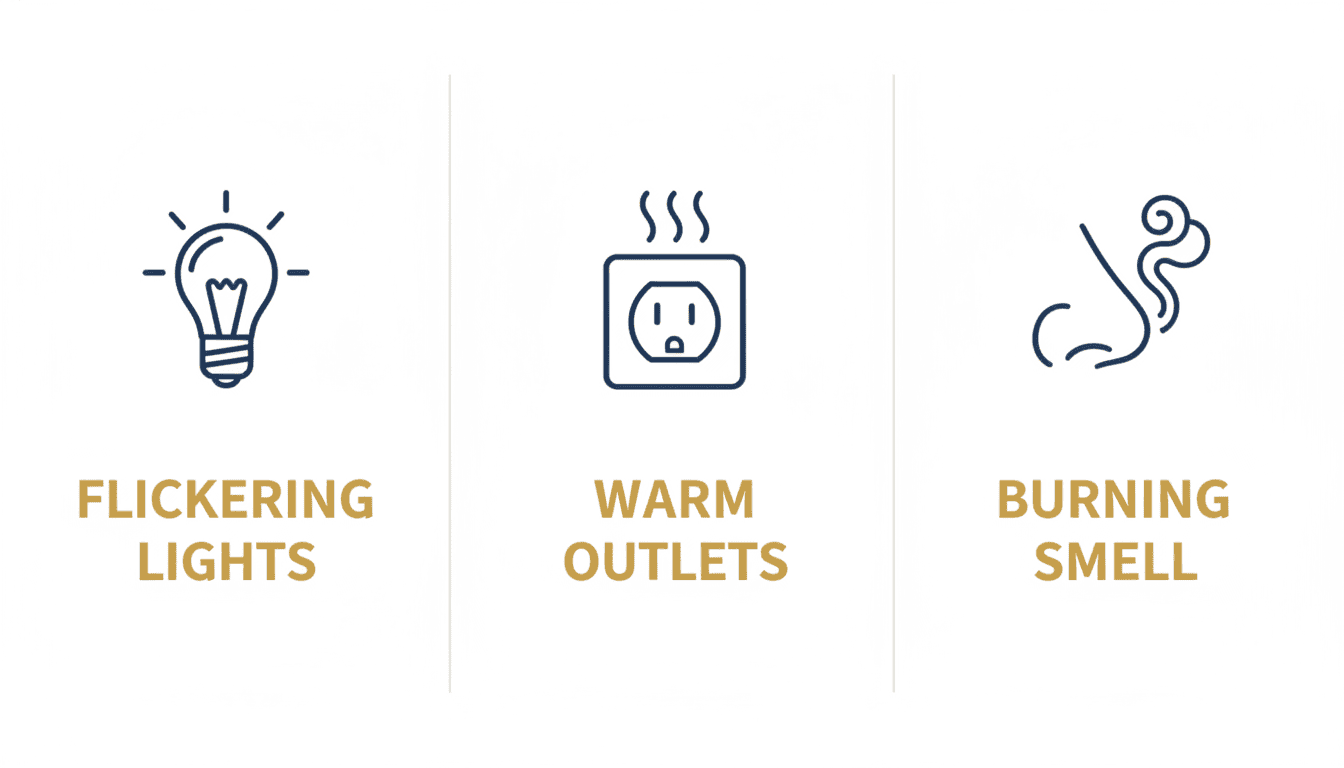
Important: aluminum connections can degrade silently — the absence of symptoms doesn’t mean the absence of risk. A visual check by a licensed electrician (we use thermal imaging to spot overheating connections invisible to the eye) settles it definitively.
Aluminum Wiring and Home Insurance in Ontario
For most homeowners, insurance is where aluminum wiring turns from a footnote into a deadline.
What Ontario insurers actually do
- Many insurers surcharge 15–30% on premiums for homes with un-remediated aluminum wiring
- Some refuse new policies outright until the wiring is professionally addressed
- Most will ask for proof of remediation — typically an ESA Certificate of Inspection or a licensed electrician’s letter — before offering standard rates
Buying or selling a 1960s–70s home?
- Home inspectors flag it every time — it’s a standard checklist item
- Insurers commonly give buyers a short window after closing to remediate and provide documentation
- Sellers who pigtail before listing remove the single most common insurance objection — and keep deals from wobbling during conditions week
The document that fixes it
After remediation by a Licensed Electrical Contractor, the work is inspected and you receive ESA documentation — the certificate your insurer needs to restore standard rates.
For a typical home, the math is friendly: a $2,000–$4,500 pigtailing job often erases a recurring 15–30% premium surcharge. The fix can quietly pay for itself within a few years — and the fire-risk reduction comes free.
Tip: call your broker before your renewal, not after. Showing up with ESA paperwork in hand beats explaining a remediation plan after a non-renewal notice.
Pigtailing vs. Full Replacement: Costs and When Each Makes Sense
Here’s the good news most homeowners don’t expect: you probably don’t need to rewire the whole house.
Option 1 — Copper pigtailing (the standard fix)
Pigtailing aluminum wiring means a licensed electrician opens every outlet, switch, and fixture connection, and joins a short copper lead to the aluminum conductor using an approved connector (AlumiConn is the common choice). The copper end then connects to the device.
- Cost: $2,000 – $4,500 for a typical 3-bedroom Ontario home
- Time: usually 1–2 days
- Result: every connection point becomes copper-to-device; the aluminum stays safely in the walls
- Insurance: accepted by most Ontario insurers with ESA documentation
- CO/ALR-rated devices are used where connections stay aluminum-direct
Option 2 — Full replacement
The cost to replace aluminum wiring entirely — new copper throughout — runs $8,000–$15,000+, depending on size and wall access.
When it’s worth it:
- You’re already doing a major renovation with walls open
- The wiring shows widespread damage or amateur modifications
- You’re upgrading capacity anyway (adding an EV charger, finishing a basement, or moving to a 200-amp panel)
One non-negotiable: this is not DIY territory. Aluminum terminations are exactly where the fire risk lives — Ontario requires this work to be done by a Licensed Electrical Contractor with ESA notification, and your insurance documentation depends on it.
Frequently Asked Questions
Is aluminum wiring safe?
Properly terminated and maintained aluminum wiring is considered acceptable under the Ontario Electrical Safety Code. The risk concentrates at aging connection points — which is why remediation targets terminations rather than the wire runs themselves.
Do I have to remove aluminum wiring to sell my house?
No. There’s no law requiring removal. But your buyer’s insurer will almost certainly require remediation documentation, so pigtailing before listing usually makes the sale smoother and protects your price.
Can I just replace the outlets myself?
No — and this one matters. Standard devices aren’t rated for aluminum, and DIY connections on aluminum circuits are precisely how house fires start. In Ontario this work belongs to a Licensed Electrical Contractor, and DIY work won’t produce the ESA documentation your insurer needs.
How do I know if the previous owner already fixed it?
Look for paperwork: an ESA Certificate of Inspection or an electrician’s remediation letter. No paperwork? A licensed electrician can open a few devices and check for copper pigtails in about an hour.
Does aluminum wiring affect EV charger installation?
It’s a factor, yes. An EV charger adds significant continuous load, so we assess panel capacity and wiring condition first. Often a charger install is the sensible moment to remediate aluminum connections and upgrade the panel in one visit.
Conclusion
Aluminum wiring isn’t a defect — it’s a 50-year-old system that needs its connections brought up to modern standards. The homes built across the GTA in the 1960s and 70s are solid, valuable properties; their wiring just needs one professional visit to match.
The path is straightforward:
- Confirm it — check your panel markings, or have a licensed electrician verify in minutes
- Remediate it — copper pigtailing ($2,000–$4,500) satisfies insurers for most homes; save full replacement for renovations
- Document it — the ESA paperwork is what restores standard insurance rates and protects resale
Think your home might have aluminum wiring? Padi Electric is a fully licensed, insured, ESA-certified electrical contractor serving Aurora and the GTA for over 10 years — with thermal imaging diagnostics to spot failing connections before they become failures.
We’ll inspect honestly, quote transparently — no hidden fees — and handle the ESA paperwork your insurer wants.
Get your free quote today — call +1 (416) 900-6667 or book online for a preliminary estimate within 30 minutes.
Quality. Safety. Reliability. Every time.