
Key Takeaways
Understanding the distinctions between commercial and residential electrical services is essential for making the right, compliant, and cost-effective choices for your Ontario property. These key insights will help you quickly identify what matters most—whether you’re a homeowner, builder, or business owner looking for reliable, licensed electrical work.
- Commercial and residential electrical systems differ sharply—commercial sites use 208/480V three-phase power and demand 2-4 times the capacity of a typical home; matching your project with the right system is required by law.
- Safety and code compliance are non-negotiable—Ontario Electrical Safety Code applies everywhere, but commercial projects face stricter inspections, emergency power mandates, and ongoing documentation.
- Installation methods and materials reflect building use—homes rely on plastic-sheathed cable and simple panels, while commercial spaces demand metal conduit, modular access, and complex subpanels.
- Only certified electricians can perform the right job—residential work requires a 309A license, but commercial and industrial sites need 442A-certified pros with specialized high-voltage training and deeper compliance oversight.
- Your budget, timeline, and risk profile change dramatically—commercial electrical work often costs 10x more than residential, with project management, frequent inspections, and extended schedules as the norm for businesses.
- Choosing the wrong specialist increases liability—Downtime in commercial properties is costly and risky; for homes, trusted, code-compliant repairs protect both safety and long-term value.
- Emerging trends demand future-ready solutions—Expect rapid growth in EV charger installations, smart building automation, and green retrofits; working with an up-to-date, learning-focused team positions your property for long-term success.
For the safest, most reliable results, always choose a licensed, Ontario-compliant electrician who specializes in your property type—explore the full article for guides, checklists, and expert recommendations tailored to your next electrical project.
Introduction
Commercial vs Residential Electrical Services Compared sets the foundation for understanding how electrical needs vary between homes and businesses. Picture your busiest day—a new restaurant preparing for opening night, lights, ovens, and security systems all humming. Suddenly, a circuit fails. Is your electrician ready for this complexity, or is their expertise more suited to home light switches and doorbells? The stakes—and solutions—couldn’t be more different.
Whether you’re managing a Toronto apartment upgrade or overseeing a multi-story office build, the difference between commercial and residential electrical services is about more than just bigger wires or brighter bulbs. It’s about safety, compliance, and specialized knowledge that protect your investment and reputation.
For Ontario property owners, builders, and managers, knowing these distinctions isn’t technical trivia—it’s how you avoid costly delays, inspection failures, or unexpected service calls.
Here’s what you’ll discover in the sections ahead:
-
What truly sets residential and commercial electrical work apart—from voltages to compliance, and why it matters for your project
-
Which expertise and credentials you must check before hiring—because not every electrician holds the right license for your site
-
How codes, costs, and scheduling compare for homes versus businesses, so you budget and plan with no surprises
-
Emerging trends like smart controls and EV charging reshaping what “future-ready” means across Ontario
In every project—from a family home panel upgrade to a retail plaza’s emergency power overhaul—there’s one truth: matching your needs with the right service is non-negotiable for getting it done safely and legally, the first time.
Ready to pinpoint exactly what your property requires and unlock the long-term benefits? Start by understanding how commercial vs residential electrical services are compared—because that knowledge sets the current for everything that follows.
Defining Commercial and Residential Electrical Services
Commercial vs Residential Electrical Services Compared are designed to meet fundamentally different needs and standards.
If you own a home, you’re looking at systems built for everyday living—safely powering your family’s appliances, lighting, and devices.
Business owners, property managers, and contractors work with electrical systems engineered for higher demands, complex equipment, and tighter regulations. Ontario’s landscape means every property must meet strict safety codes—making the right distinction more than just technical, but legal.
Primary Use Cases: Where the Differences Begin
-
Residential electrical services focus on:
-
Single-family homes
-
Townhouses
-
Condos and apartments
-
-
Commercial electrical services handle:
-
Office towers and retail spaces
-
Restaurants, schools, and hospitals
-
Warehouses, factories, and industrial complexes
-
Picture this: a commercial electrician wiring a new Toronto office with three-phase power to support elevators and server rooms, compared to a residential technician installing a panel upgrade in a family home—the standards and stakes couldn’t be more different.
Primary Use Cases: Where the Differences Begin
- Residential electrical services focus on:
- Single-family homes
- Townhouses
- Condos and apartments
- Commercial electrical services handle:
- Office towers and retail spaces
- Restaurants, schools, and hospitals
- Warehouses, factories, and industrial complexes
Picture this: a commercial electrician wiring a new Toronto office with three-phase power to support elevators and server rooms, compared to a residential technician installing a panel upgrade in a family home—the standards and stakes couldn’t be more different.
Core Mission: Safety, Reliability, Compliance
While both service types share the mission of safety, reliability, and compliance, their priorities shift based on usage:
- Residential focus is on everyday safety and simple, user-friendly solutions.
- Commercial priorities add power redundancy, emergency systems, and large-scale capacity.
Ontario projects must comply with the Ontario Electrical Safety Code, but commercial sites face stricter inspections, frequent documentation, and requirements for backup power and fire safety that don’t exist in typical homes.
Why the Distinction Matters in Ontario
Choosing the correct service isn’t just best practice—it’s the law.
- Inspections and permits: Commercial projects may need ongoing regulatory checks.
- Risk and liability: Industrial-scale equipment carries higher safety risks and insurance standards.
- Expertise required: Not all electricians hold the certifications needed for high-voltage, code-intensive work found in commercial settings.
As a busy property owner or manager, knowing these distinctions means no missed steps, safer projects, and fewer surprises when booking electrical work in Ontario.
Understanding whether your property is considered residential or commercial sets the standard for your project’s safety, efficiency, and long-term compliance—a must-have for anyone who wants electrical work done right, the first time.
Core Differences in Systems and Requirements
Voltage, Power Load, and System Complexity
When it comes to power, commercial electrical systems operate on an entirely different scale from residential setups.
In a typical Ontario home, you’ll find 120/240V single-phase power, designed for lighter loads like kitchen appliances, lighting, or HVAC.
By contrast, businesses and institutions depend on 208/480V three-phase power, essential for larger facilities running equipment such as:
- Industrial-sized HVAC units
- Elevators and escalators
- Commercial-grade lighting grids
To put it clearly, commercial projects often require 2-4 times the load capacity of a detached home.
“Picture this: A downtown Toronto office may rely on a power distribution system robust enough to charge an entire fleet of electric vehicles, while a house mainly needs to run a stove and a TV.”
Wiring, Components, and Installation Methods
The wiring you see behind your home’s drywall is very different from what powers a shopping mall or hospital.
Residential jobs use plastic-sheathed cables (like Romex) and smaller-gauge wires, all neatly concealed for aesthetics and safety.
Commercial environments require:
- Metal conduit (EMT) and thicker wires for toughness and compliance
- Exposed, modular layouts allowing for frequent upgrades and easier access
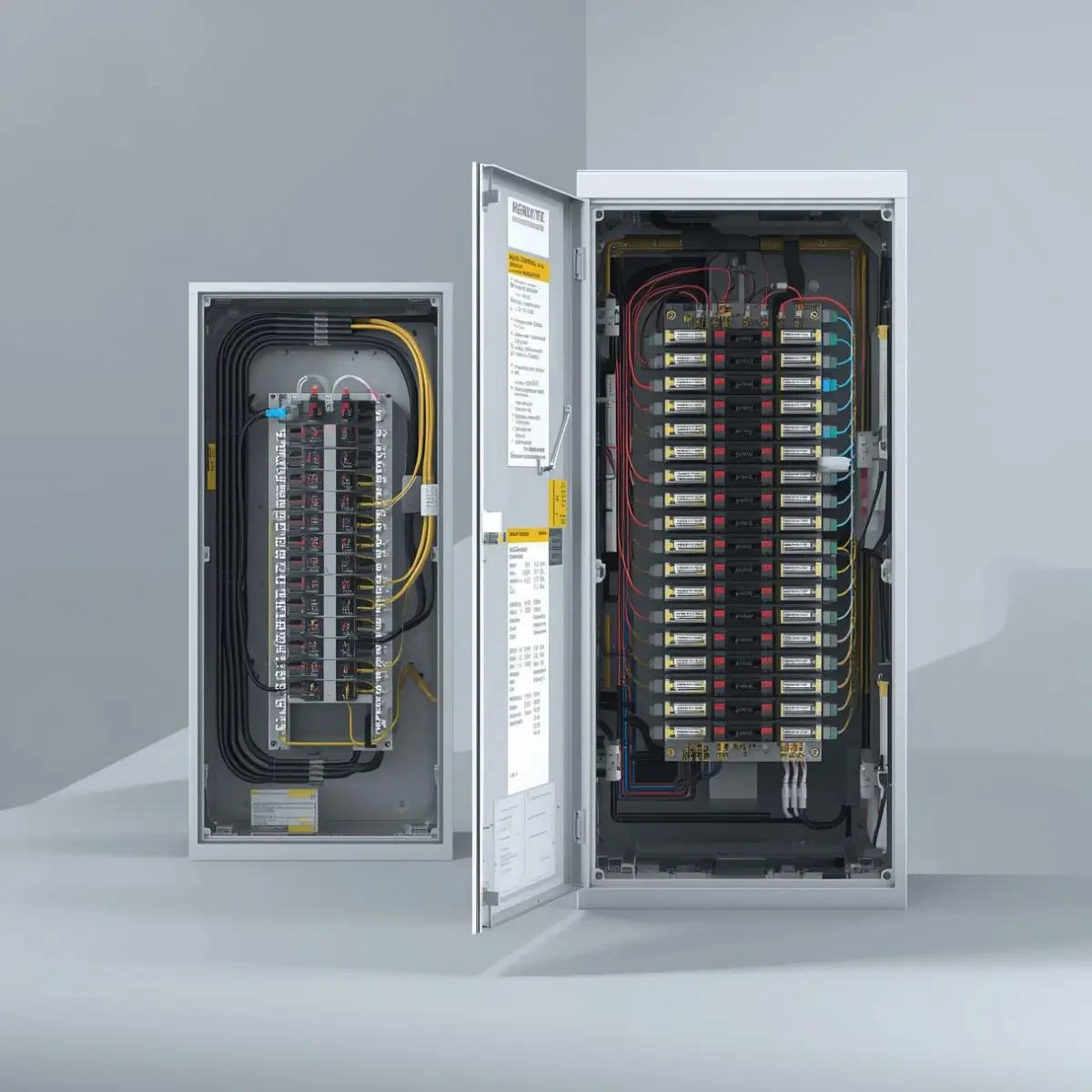
- Complex panel systems with multiple subpanels and dedicated raceways
Installation for homes focuses on simplicity—fewer circuits, smaller panels, and standard outlets. In a commercial space, you’ll spot rows of control panels, specialized surge protection, and advanced automation controls for lighting and security.
“Every visible conduit and labelled subpanel in a commercial facility helps technicians stay one step ahead of breakdowns and safety risks.”
Code Compliance and Safety Standards
Regulations draw a sharp line between these service types.
Residential projects follow local building codes, prioritizing household safety and straightforward inspection.
Commercial electrical work must meet:
- Ontario Electrical Safety Code
- NEC/NFPA standards
- Stringent documentation and ongoing inspection schedules
You’ll also find mandatory safety systems only in commercial properties:
- Emergency backup power
- Fire alarms and suppression systems
- Egress lighting for power failures
“Commercial code requirements don’t just add paperwork—they directly impact a facility’s safety and legal compliance every single day.”
Ontario property owners should remember: the difference between commercial and residential electrical is more than size—it’s about safety, complexity, and the expertise behind every connection and panel.
Matching your project with the right system and professional isn’t just smart—it’s required by law for the protection of people and property.
Scope of Services and Delivery Models
Types of Work Performed
The scope of electrical work varies dramatically between commercial and residential settings.
Most residential electrical services focus on:
- Wiring repairs for homes, apartments, and condos
- Light fixture installations and ceiling fans
- Breaker panel upgrades and surge protection
- Troubleshooting outlets and basic safety inspections
In contrast, commercial electrical projects often include:
- Major facility renovations and power system retrofits
- Ongoing energy management (from lighting controls to HVAC)
- Installing and maintaining emergency backup systems
- Comprehensive, scheduled inspections and compliance reporting
Picture this: a home requiring a panel upgrade versus a healthcare facility updating its entire emergency power system—a real-world example from a recent Ontario project where panel work took hours, while the facility overhaul spanned weeks and required 24/7 scheduling.
Routine maintenance also differs:
- Residential: annual or as-needed safety checks
- Commercial: quarterly or even monthly, with proactive repairs
“What seems routine in a condo is a 10-step operation in a warehouse or retail plaza.”
—
Expertise, Certifications, and Provider Requirements
Not all electricians are certified equally. Ontario requires:
- Residential electricians to hold a 309A license
- Commercial/industrial electricians to possess a 442A license, with added training for high-voltage systems and advanced equipment
“Commercial work demands a deeper level of compliance and specialty skills—think three-phase power, complex relay panels, and building-wide integration.”
Risk and liability oversight is critical:
- Up-to-date insurance and WSIB registration protect you as a client
- Look for electrical contractors who provide documented work, clear job estimates, and proof of compliance with the Ontario Electrical Safety Code
- Commercial work, by law, involves more paperwork, safety protocols, and ongoing inspections—a legal safety net for large properties and tenants
Every reputable provider will confidently share their certifications and documentation.
—
Selecting the Right Service Model
Choosing a commercial or residential specialist impacts safety, code compliance, and your long-term costs.
Memorable takeaway: “When downtime costs you thousands, specialized commercial care is non-negotiable. For your home’s safety, it’s always about trusted, code-compliant work.”
Knowing the difference means knowing you’re covered—from a simple light switch to a multi-story building retrofit.
Cost, Scale, and Project Management: What to Expect
Budgeting and Price Factors
When comparing commercial vs residential electrical costs, five factors drive every estimate:
- Materials: Commercial projects require larger gauge wiring, metal conduits, subpanels, and specialty hardware, while residential jobs use more basic, consumer-grade materials.
- Labour: Experienced commercial electricians command higher hourly rates due to the complexity and risk involved with high-voltage or multi-panel systems.
- Risk and Compliance: Commercial sites face stricter safety codes, inspection fees, and insurance requirements than residential homes.
- Design Complexity: Expect greater engineering and layout costs for multi-zone lighting, emergency backup, and power redundancy in offices or factories.
- Inspection Frequency: For Ontario businesses, recurring inspections and documentation add recurring costs—unlike most homes, which may see periodic checks only during upgrades.
Typical residential electrical work (panel upgrade, rewiring, outlets) in Ontario ranges from $500 to $8,000+, depending on home and project size.
By contrast, commercial projects can span $5,000 to $250,000+—imagine a multi-floor office retrofitting with backup generators, or a retail space installing fire and emergency lighting throughout.
“Commercial electrical budgets can be tenfold those of a home renovation—because safety, system capacity, and compliance can’t be shortcuts.”
Scheduling, Timelines, and Coordination
The timeline for residential electrical jobs is usually measured in days, with minimal outside coordination—most upgrades are complete within a week.
In a commercial setting, picture this: technicians mapping conduit runs above ceiling tiles, synchronizing with HVAC installs, and pausing for city inspections. Days become weeks or months, especially when:
- Multiple trades (plumbing, security, lighting) are present
- Building permits or ESA approvals add required lead time
- Emergency systems or after-hours work are necessary to minimize business disruption
Project scale is the difference-maker: a 3-bedroom home panel upgrade is straightforward, but a 50,000-square-foot medical clinic rewiring may require phased schedules and coordination meetings with property managers.
“Project management is as critical as technical skill—especially with dozens of trades working together.”
Commercial projects require detailed timelines, ongoing communication, and site meetings that homeowners rarely face.
Navigating Your Next Electrical Project
If you’re planning electrical work in Ontario, start with a clear scope and budget—and always ask about code compliance, inspection schedules, and coordination steps.
Recognizing these cost, scale, and project management differences means you’ll hire the right team, avoid delays, and ensure a safe, compliant result—no matter the size.
Choosing the Right Electrical Service for Your Needs
Assessing Project Requirements
Choosing between commercial and residential electrical services starts with understanding your building’s demands and Ontario’s safety standards.
Picture this: You’re managing a retail renovation with specialized lighting needs, or updating your home wiring—each project calls for the right expertise.
Here’s how to identify which service you need:
- Residential Electricians are ideal when you need:
- Wiring repairs and fixture upgrades in single-family homes or condos
- Electrical panel updates for appliances and home office setups
- General troubleshooting and code compliance in private dwellings
- Commercial Electricians excel when you face:
- Office or retail build-outs requiring high-capacity circuits
- Installation of emergency power, egress lighting, or advanced controls
- Large-scale repairs or upgrades in schools, factories, or multi-unit facilities
Safety and compliance should never be compromised: Ontario’s Electrical Safety Code applies to both, but commercial projects have stricter inspections, documentation, and life safety requirements.
A surprising fact: Commercial systems often run on 208/480V three-phase power—far beyond typical home needs.
If you’re ever unsure, always request a site assessment—qualified providers will walk you through code needs, load calculations, and projected costs from day one.
Partnering with Qualified and Compliant Providers
Ontario law requires that all electrical work be performed by ESA-licensed electricians—don’t risk fines or unsafe installations.
Verify your electrician meets these standards:
- Holds a valid ECRA/ESA license number (ask to see it)
- Provides transparent, written estimates with itemized material and labour costs
- Offers detailed documentation of all work completed, including inspection sign-offs
- Carries adequate insurance and WSIB coverage to protect everyone on-site
For complex projects, request references and check if the provider has experience with similar building types and local codes.
“The right electrician protects not just your property, but your reputation as a builder or property manager.”
When you see real site photos, itemized job descriptions, and ongoing communication, you’ve found a provider who values transparency and accountability.
Choosing wisely now means fewer headaches, safer buildings, and peace of mind you can see—whether it’s a family home or a bustling business. Whenever in doubt, prioritize compliance, experience, and certified expertise for every Ontario electrical project.
Future Trends and Innovations in Electrical Services
Smarter Codes and Greener Homes & Businesses
Ontario’s electrical industry is evolving fast, driven by stricter safety codes and the province’s push for sustainability.
The latest Ontario Electrical Safety Code updates put a spotlight on energy-efficient wiring, insulation, and devices—changes that impact both homes and commercial spaces.
Key upgrades you’ll notice:
- Mandatory arc-fault and ground-fault protection in more circuits (especially in homes)
- Demand for “net-zero” buildings, with wiring ready for solar, EV charging, and battery storage
- Tougher inspection and documentation standards for all major renovations, especially commercial projects
“Ontario’s next wave of electrical innovation is happening inside your walls, not just behind your screens.”
Smart System Integration & Building Automation
Picture this: walking into a commercial tower where lights, security, and HVAC adjust instantly based on occupancy sensors—every system talking to each other, maximizing energy savings.
Emerging trends every property owner should know:
- Smart panels, remote monitoring, and “grid-aware” controls in new builds
- Commercial automation platforms that let facility managers optimize usage and prevent downtime
- In homes, voice-activated lighting and app-controlled climate control becoming standard in renovations
Clients are asking: “Is my building future-proofed for smart tech and remote diagnostics?”
EV Charging and Renewable Power: The New Must-Haves
More than 100,000 electric vehicles now cruise Ontario’s roads, pushing demand for EV charger installation in homes, offices, and parking garages.
Meanwhile:
- Solar-ready circuits and energy management panels are now standard upgrades in many commercial projects
- “Green” retrofits are accelerating, with grants and incentives making LED lighting, solar, and storage more accessible
- Owners expect electricians to know not just installation, but return-on-investment and rebate opportunities
A modern business or home without EV charging or renewable infrastructure? That’s old news in Ontario’s fast-moving market.
Lifelong Learning for Electricians
As codes, tools, and tech advance, today’s electricians need ongoing certification and safety training to stay compliant.
Providers like Padi Electric prioritize:
- Regular upskilling on new code updates, smart device platforms, and automation controls
- WSIB coverage and safety certifications tailored to high-complexity installations
“The most in-demand electricians are those who never stop learning—because Ontario’s standards never stay still.”
Across Ontario, code-driven upgrades, smarter automation, and high-efficiency solutions are redefining what “state-of-the-art” looks like for both residential and commercial clients. The best investment is working with a provider who’s ahead of the curve—so your property is set for today, and ready for what’s next.
Frequently Asked Questions: Commercial vs Residential Electrical Services
What’s the biggest difference between commercial and residential electrical work in Ontario?
Commercial electrical services handle higher voltages (often 208/480V, three-phase) and serve complex buildings like offices, warehouses, or schools.
Residential electrical work sticks to 120/240V, single-phase for homes and apartments.
Picture this: updating wiring in your kitchen versus powering multiple floors in a hospital—scale, safety, and code compliance shift dramatically.
How do emergency electrical repairs differ between commercial and residential settings?
- Commercial: Emergency repairs are often urgent, involving large-scale outages or life safety systems—think power loss in a retail plaza, or a failing fire panel at a medical clinic.
- Residential: Emergencies usually mean isolated power loss, faulty outlets, or shorted appliances in your home.
In commercial work, downtime impacts hundreds of people and legal compliance.
What about code requirements and inspection routines?
- Commercial properties must follow the Ontario Electrical Safety Code (OESC), maintain detailed documentation, and undergo regular, rigorous inspections.
- Homes face less frequent, simpler inspections, but still require strict adherence to household safety standards.
Even small differences matter: Missing one inspection can delay reopening an entire business.
How do energy efficiency upgrades work differently?
- Commercial upgrades might include LED retrofits in office towers, energy management systems, and EV charging stations—big investments with real return.
- Homeowners may focus on efficient lighting, programmable thermostats, or solar panel integration.
Commercial clients often access better rebates due to scale and impact.
Who should I call: a commercial or residential electrician?
- If you’re responsible for a home, condo, or small rental, a residential specialist fits.
- For offices, stores, factories, or any multi-unit building, only a licensed commercial electrician is equipped—they’re trained for higher voltage, compliance, and liability management.
Always ask for proof of licensing, project references, and insurance.
—
When in doubt, pick a provider with experience in your type of property—the right expertise guarantees safer, longer-lasting results. True peace of mind is making sure your electrician’s work keeps every light on and every standard met.
FAQ
-
What is the difference between commercial vs residential electrical services compared?
Commercial vs residential electrical services compared differ mainly in power load, wiring complexity, compliance requirements, and intended use. Residential systems typically handle 120/240V single-phase loads, while commercial sites require 208/480V three-phase power to operate high-demand equipment like elevators, industrial HVAC, and emergency systems. -
Why is it important to hire licensed electricians for commercial vs residential electrical services compared?
Hiring certified electricians ensures compliance with Ontario Electrical Safety Code regulations. Commercial vs residential electrical services compared require different licenses—309A for residential work and 442A for commercial high-voltage projects. Using the wrong specialist can lead to costly mistakes and legal issues. -
How do costs differ in commercial vs residential electrical services compared?
Commercial vs residential electrical services compared vary significantly in cost. Residential jobs are simpler and smaller in scope, while commercial projects involve higher-capacity equipment, extended schedules, and frequent inspections, sometimes costing up to 10x more. -
What emerging trends impact commercial vs residential electrical services compared?
The demand for EV chargers, smart building automation, and green retrofits is increasing. Commercial vs residential electrical services compared must adapt to these innovations to future-proof Ontario properties while ensuring safety and efficiency. -
Can the same electrician handle both commercial vs residential electrical services compared?
Not always. While some electricians are cross-certified, commercial vs residential electrical services compared often require specialized training. Residential work focuses on basic systems, whereas commercial work involves complex high-voltage installations and stricter compliance protocols.
Conclusion
Commercial vs Residential Electrical Services Compared is the key to keeping Ontario’s homes, businesses, and communities running safely. Choosing the right electrical expertise every time ensures your project meets code, operates efficiently, and provides long-term reliability.
At padi electric, we prioritize Ontario-compliant electrical solutions tailored to residential and commercial properties. By understanding the distinctions and partnering with licensed professionals like padi electric, you protect your investment, minimize downtime, and secure peace of mind for years to come.
—
Key Takeaways to Put into Action:
- Always match your project type with the right licensed electrician—residential or commercial—so your system is safe, compliant, and future-ready.
- Prioritize code compliance and safety documentation to avoid costly delays and legal risk on every job.
- Review your property’s electrical needs before reaching out so you can request a clear, itemized estimate and knowledgeable recommendations.
- Vet contractors for up-to-date certifications, real industry references, and WSIB insurance coverage.
- Ask about smart technology upgrades and future-proof solutions—whether you’re wiring a home, office, or multi-use space.
—
Your Next Steps:
- Schedule a site assessment with a fully licensed Ontario electrician who specializes in your type of property.
- Request written proof of ECRA/ESA licensing before any work begins.
- Download our safety checklist or book a free project consultation to map out your electrical upgrade.
- Explore our guides on choosing a contractor, electrical safety, and innovation trends to maximize your investment.
—
Safe, reliable electrical work is never an accident—it’s the result of informed choices, expert skills, and consistent compliance.
Powering Ontario the right way starts with you—choose safety, demand transparency, and partner with those who treat your project with the highest standard of care.
When it comes to your property, settling for anything less than certified excellence isn’t just a risk—it’s a missed opportunity to power your success.