

Understanding residential electrical repair Services is vital for Ontario homeowners looking to keep their properties safe, compliant, and future-ready. These fast facts deliver practical guidance on safeguarding your home, saving money, and choosing the right professionals—so you can scan and act with confidence.
- Immediate attention to electrical issues—like flickering lights or dead outlets—is critical for preventing hazards and keeping insurance valid.
- Licensed, insured electricians are legally required in Ontario for all but minor tasks, guaranteeing code compliance and long-term safety with every repair.
- Electrical repairs fall into three categories: component-level (replacing outlets or switches), circuit-level (rewiring specific areas), and system-level (panel upgrades or full-house rewiring), each with its own process and permit needs.
- Transparent, itemized estimates protect you from surprise costs—expect to pay $150-$350 for minor fixes and up to $10,000+ for major rewiring, depending on scope and safety upgrades.
- Timely inspections and preventive maintenance can cut electrical repair expenses by up to 40% and dramatically reduce your fire risk, especially in homes over 20 years old.
- DIY repairs are limited to basic swaps (outlets, light switches) and only on modern wiring—never attempt work on panels, aluminum wiring, or after any signs of overheating.
- Vetting your electrician matters: always check for an ECRA/ESA license number, insurance, detailed references, and clear warranty terms to ensure quality and accountability.
- Every repair is a gateway to future-proofing your home—use service visits to plan for technology upgrades like EV chargers, surge protection, or smart home systems.
Armed with these essentials, you’re ready to make informed decisions and keep your Ontario home safe, reliable, and resilient—dive into the full article for in-depth guidance and next steps.
Ontario Homeowners, Here’s What Every Electrical Warning Sign Really Means
You flip on a kitchen light and it flickers—or worse, nothing happens at all. Then you spot a warm outlet and that faint, unsettling smell of burnt plastic. More than 1 in 4 Ontario homes will face an urgent electrical issue this year, and quick, expert attention isn’t just about convenience—it’s about protecting your family, property, and peace of mind.
Electrical problems don’t play favorites. Whether you’re a homeowner, property manager, or renovation pro, you’ve likely wondered: Is this a quick fix, or a potential fire hazard? Knowing the warning signs and understanding how professional repairs work is your best defense against unexpected outages, shock risk, or costly insurance headaches.
What exactly happens when you call in a licensed electrician? Here’s what you can expect—and why the right approach matters:
- Complete transparency at every step: from pinpointing symptoms to clear cost estimates.
- Repairs that meet Ontario’s strict safety codes, keeping your insurance valid.
- Long-term benefits—like increased property value, fewer emergencies, and true peace of mind.
If you’ve ever hesitated before tackling a dead outlet or tripped breaker yourself, you’re not alone. But did you know that unauthorized electrical repairs can void your home insurance and put compliance at risk? In a province where safety and documentation are everything, trusting a skilled, licensed professional is the smart move.
What should you watch for, and when is it time to call a pro? How do you spot the early warnings—in time to prevent a bigger emergency?
In the following guide, you’ll get a practical look at:
- The most common causes of electrical problems in Ontario homes
- What really happens during a professional repair (step by step)
- How to protect your investment with safe, code-compliant solutions—and avoid DIY mistakes that cause more harm than good
- Cost expectations, simple prevention strategies, and insider tips for choosing the right electrician
Safe homes don’t happen by accident—they’re powered by the right knowledge and the right team. Ready to see how expert electrical repair transforms risk into reliability? Everything you need to know starts here.
Understanding Residential Electrical Repair Services
Residential electrical repair is corrective work performed on your home’s existing wiring, devices, or panels, as opposed to installing something completely new or upgrading for more power.
Picture this: You notice a flickering light, a dead outlet, or an outlet that feels warm—each sign shouting that your system needs immediate, expert attention to prevent hazards like shock or fires.
Why Do Ontario Homes Need Repairs?
In Ontario, repairs crop up for three big reasons:
- Aging infrastructure: Many homes still use wiring or panels installed decades ago.
- Safety code updates: Today’s standards are stricter; what was safe in 1980 may no longer pass inspection.
- Increased load demands: Modern appliances, EV chargers, and smart tech expose old circuits to more stress—leading to frequent breaker trips or outages.
A burned outlet, tripping breaker, or mystery odor are never “wait and see” problems—prompt repair protects lives and insurance coverage.
Three Levels of Repair: What’s the Difference?
Electrical repairs break down into three main categories:
- Component-level: Swapping out failed outlets, light switches, fixtures, or individual breakers—quick, localized fixes.
- Circuit-level: Repairing or rewiring the branches that power a room; includes work inside walls/ceilings, correcting shorts, overloads, or failed splices.
- System-level: Large-scope jobs—main panel repairs or upgrades, fixing service entrances, or full-house rewiring and grounding.
For example, replacing a dead GFCI outlet is a component fix; repairing old aluminum wiring in multiple rooms moves up to circuit-level; a full panel replacement is system-level and typically requires inspection.
Safety First: Code Compliance & Licensed Pros Only
Ontario’s Electrical Safety Code (OESC) makes it illegal—and risky—to attempt major repairs without a licensed, insured electrical contractor.
Here’s what responsible homeowners do:
- Hire licensed pros: Always verify your electrician’s license and insurance.
- Demand code compliance: Every repair, big or small, must meet OESC standards for insurance to remain valid.
- Get documentation: Ask for a written warranty and details on what was fixed.
A single code violation can void your home insurance and put your family at risk—professional repairs are your front-line defense.
Repairs, Maintenance, and Home Safety
Timely repairs aren’t just about fixing what’s broken—they’re an investment in long-term safety, property value, and peace of mind.
- Routine electrical inspections catch early symptoms and save money on major system failures.
- Up-to-date repairs protect against fire, shock, and surprise code fines—especially when listing your home for sale.
If you spot odd smells, buzzing, or a dead outlet, treat repair as urgent. The right electrician does more than patch problems: they safeguard your home for years to come.
Remember: “A safe home is a powered home.” (Great for sharing!). Every repair brings your system up to code, keeping your family—and Ontario—safe and connected.
Typical Repair Workflow: From Symptom to Solution
Symptom Identification & Initial Assessment
Spotting the first signs of electrical problems can prevent serious safety risks and unexpected outages.
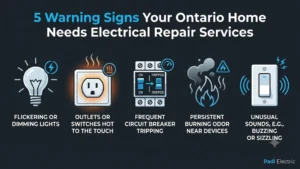
Watch for these common warning signs:
- Flickering or dimming lights
- Dead outlets or switches
- Circuit breakers that trip repeatedly
- Burning smells, buzzing, or hot device covers
If you notice any of these, document what you see and when it happens—snap pics, jot down details, and note which appliances are involved.
Quick action means safer homes: don’t delay when electrical symptoms appear. Letting problems linger increases both cost and danger.
“A burning smell from an outlet or breaker means ‘call an electrician,’ not ‘wait and see.’”
—
Diagnostic Inspection & Testing
Licensed electricians use a mix of visual inspections and professional tools to pinpoint issues fast.
Expect tools like:
- Multimeters for voltage and continuity checks
- Non-contact voltage testers for quick live/dead indication
- Clamp meters to measure actual circuit load
- Thermal cameras to spot overheating behind walls or in panels
A typical diagnostic exam includes:
- Inspecting panels, devices, and visible wiring for signs of overheating, wear, or loose connections
- Testing for root causes such as short circuits, ground faults, equipment failure, or overloading
Advanced tools and experience make it possible to find hidden problems that DIY efforts often miss.
“Most Ontario homeowners are surprised by what a thermal camera can reveal in just one panel scan.”
—
Estimating, Permitting & Homeowner Authorization
Before repairs go ahead, you’ll get a clear, itemized estimate spelling out code-compliant options, material choices, and timelines.
Permits are mandatory in Ontario for:
- Panel replacements or service upgrades
- Major rewiring
- Adding new circuits
Your electrician will:
- Handle all required permit applications
- Communicate with municipal safety authorities
- Explain any red tape in plain, jargon-free language
“A real professional won’t lift a screwdriver until you’ve approved the price and plan—Ontario law insists on transparency.”
—
Repair Execution & Safety Protocols
The best electricians work safe and by the book, every time.
You’ll see protocols like:
- Lockout/tagout of circuits or full panel isolation for safety
- Personal protective equipment (PPE) on every job
- Meticulous documentation and clearly labeled work
Key milestones include:
- Swapping out faulty outlets or fixtures (component-level)
- Replacing wiring runs or junction repairs (circuit-level)
- Full panel upgrades, complete with new surge and ground protection (system-level)
Quality control means only approved parts, techniques, and code-compliant practices make the cut.
—
Completion, Testing & Final Inspection
Any finished repair includes a battery of tests to confirm function and safety:
- GFCI/AFCI device checks
- Polarity and load assessments
- Visual inspection for code violations
For larger or permitted work, the Authority Having Jurisdiction (AHJ) will visit to give the final signoff per Ontario’s Electrical Safety Code.
You’ll receive:
- Clear documentation of repairs performed
- Details on warranties and ongoing maintenance advice to keep your system safe
“Picture this: the lights stay on, breakers stay cool, and you get peace of mind because your home measures up to every legal and safety standard.”
—
Knowing exactly how a licensed contractor moves from symptom to solution helps Ontario homeowners protect both their budgets and their families. Prompt action, transparent processes, and certified quality are the backbone of electrical safety.
Key Types of Electrical Repair and Their Procedures
Breaker, Fuse, and Circuit Issues
Frequent breaker trips or blown fuses? That’s often your home’s way of shouting for help.
These symptoms point to:
- Overloaded circuits—too many devices drawing power at once
- Short circuits—wires touching where they shouldn’t, risking fire
- Ground faults—unintended paths to ground, common in kitchens and bathrooms
Qualified electricians use load tests, multimeters, and thermal imaging to pinpoint the issue quickly.
Typical remedies include:
- Load redistribution (moving appliances to different circuits)
- Breaker replacement with properly-rated models
- Wiring repair where insulation is cracked, damaged, or loose
- Panel upgrades if your home’s electrical needs have outgrown your current setup
“One tripped breaker can signal an electrical hazard—address it before it becomes a trend.”
Unsafe or Outdated Wiring Systems
In Ontario, many homes still contain aluminum wiring or even knob-and-tube, both of which are major safety concerns.
Risk indicators:
- Burning odors from outlets or walls
- Flickering lights despite new bulbs
- Visible wire damage or nuisance shocks from appliances
For localized issues:
- Replace damaged wire runs and secure junction boxes
- Use only approved connections for aluminum wiring or transition to copper
Planning a renovation? Whole-home rewiring may be needed to meet code and insurer requirements—this is a key long-term safety investment.
“Old wiring isn’t just inefficient—it’s the #1 cause of hidden home electrical fires.”
Outlet, Switch, and Receptacle Failures
Dead outlets or discoloration around switches should never be ignored.
Common signs:
- Loose or warm outlets
- Switches that crackle or fail to work
- Arcing—tiny sparks visible when plugging in devices
Professional repair will:
- Test for proper grounding, polarity, and GFCI protection
- Upgrade to tamper-resistant or AFCI outlets where required by code
- Recommend a full circuit inspection if issues are recurring
“If you see smoke or scorch marks, shut off power and call a licensed electrician right away.”
Lighting and Ceiling Fan Malfunctions
Persistent flickering, buzzing, or a wobbly fan could reveal deeper wiring or compatibility problems.
Standard repairs include:
- Replacing faulty fixtures with code-compliant, LED-compatible options
- Checking for loose box mountings or improper dimmer installs
- Verifying fan support boxes and hardware comply with safety standards
“A five-minute flicker can sometimes hide a five-thousand-dollar fix—don’t ignore the signs.”
Panel and Service Equipment Troubles
If your main breaker trips, the panel buzzes, or you notice corrosion, urgent attention is needed.
Critical steps:
- Inspect for rust, loose connections, or missing labeling
- Prioritize replacement of failing breakers or outdated panels
- Ensure grounding and bonding meet Ontario’s strict safety requirements
All panel work must be performed by licensed, insured professionals—DIY is not just risky, it’s illegal without proper credentials.
Recognizing these key warning signs and acting promptly can protect your home and family while ensuring long-term system reliability. When in doubt, always choose a licensed Ontario electrician for safe, code-compliant repairs—peace of mind is one upgrade you can’t put off.
Repair Costs: What to Expect and How Costs are Determined
Factors Affecting Residential Electrical Repair Costs
Understanding the true cost of electrical repairs starts with the type of work involved. Fixing a single outlet costs far less than upgrading a main service panel or rewiring a home.
Several factors can influence your final bill:
- Component complexity:
- Outlet or switch replacement (quick, localized)
- Circuit repairs (more diagnostic and wiring needed)
- Panel/service entrance work (requires permits, high-skill labor)
- Labor rates and materials: Labour averages $80-$150 per hour in Ontario, and quality parts matter for code compliance and longevity.
- Permit and inspection fees: Required for bigger jobs—budget an extra $100-$300 for panel work or rewiring permits.
- Code upgrades & parts sourcing: Modern safety upgrades, like GFCI/AFCI devices, can add to the material tally.
Ontario pricing trends:
Quick fixes (like an outlet swap) may run $150-$350, while system-level repairs (major rewiring, panel upgrades) can climb into the $2,000–$10,000 range.
“A prompt response to a simple issue often keeps big costs at bay.”
—
Typical Price Ranges
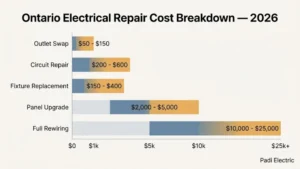
Expect these average Ontario price ranges in 2026:
- Outlet/switch replacement: $150–$350
- Minor circuit repair: $200–$600
- Lighting fixture replacement: $175–$450
- Panel upgrade: $2,000–$4,000
- Whole-house rewiring: $8,000–$15,000+ for a standard two-storey home
Bundling jobs—like upgrading multiple outlets during a single visit—often reduces per-item costs.
Smart homeowners request transparent, written estimates that spell out all parts, labor, code work, and possible contingencies. This clarity protects you from surprise overruns.
“Think of a good estimate as your insurance against sticker shock.”
| Repair Type | Typical Cost Range | Permit Required? | Licensed Pro Required? |
|---|---|---|---|
| Outlet / Switch Replacement | $150 – $350 | No | Recommended |
| Minor Circuit Repair | $200 – $600 | Sometimes | Yes |
| Lighting Fixture Replacement | $175 – $450 | No | Recommended |
| Panel Upgrade | $2,000 – $4,000 | Yes | Yes |
| Whole-Home Rewiring | $8,000 – $15,000+ | Yes | Yes |
Cost-Saving Tips for Homeowners
A few strategies can keep your repair budget under control:
- Act early on symptoms: Prompt reporting of flickering lights or popping breakers stops bigger issues (and bills) before they start.
- Schedule annual maintenance: Regular inspections catch aging components before they fail, especially in homes 20+ years old.
- Avoid risky DIY: Improper repairs can result in damage, insurance headaches, and repeat service calls—costing more in the long run.
Visualize peace of mind: picture a licensed electrician methodically testing, repairing, and explaining your home’s systems, with every action documented for your records.
“In electrical work, safety mistakes cost more than money—they can put your family at risk.”
—
Biggest takeaway? Transparent pricing and early intervention aren’t just smart—they’re the fastest path to safe, reliable power without breaking the bank.
The Fine Line: When DIY Works—and When To Call a Pro
Safe, Low-Risk Homeowner Repairs (If Permitted)
In Ontario, homeowners can safely handle a few basic electrical tasks—provided safety protocols are strictly followed.
Commonly permitted DIY repairs:
- Resetting breakers or GFCI outlets after a trip, if there’s no burning smell or visible damage
- Swapping out a standard light switch or outlet on an existing circuit, if the wiring is modern and copper (not aluminum)
- Replacing a light fixture with a like-for-like model, using compatible bulbs and adhering to installation instructions
Before you start, always:
- Shut off power at the correct breaker and verify with a non-contact voltage tester
- Wear PPE: insulated gloves, safety glasses, and rubber-soled shoes
- Follow manufacturer’s installation guides and never improvise with wire connections
Every DIY move must stay within your personal expertise and local regulations. If you spot aluminum wiring, two-prong outlets, or see scorch marks—stop and call a professional immediately.
Risks and Consequences of DIY Beyond Limits
Tackling electrical work without proper authority or experience puts your safety, insurance, and compliance at risk.
Potential consequences include:
- Severe electric shock or even fatal injury
- Electrical fires caused by improper wiring or connections
- Voided home insurance due to unpermitted or uncertified repairs
- Risk of municipal fines in Ontario for unlicensed or unpermitted work
Legally, Ontario requires a licensed electrician for:
- Any work involving the main panel or service entrance
- New circuit installations, whole-house rewiring, or panel upgrades
- Repairs that touch aluminum or knob-and-tube wiring
- Electrical work related to home sales, insurance claims, or major renovations
A single missed detail—like a poorly grounded outlet or overloaded circuit—can have long-term consequences that far outweigh the initial savings of a DIY fix. As one local inspector says: “If you’re guessing, you’re risking everything.”
Knowing When to Call the Pros
Picture this: You smell burning near a panel or see a flicker every time you plug in your vacuum. That’s your cue to reach for the phone, not a screwdriver.
Licensed electricians bring:
- Safe, code-compliant repairs verified by inspection
- Workmanship warranties and insurance coverage
- In-depth troubleshooting tools (like thermal cameras) unavailable to DIYers
Homeowners in Ontario should remember: “If you’re getting in over your head, a call to a pro is always cheaper than an emergency call after a mistake.”
There are times DIY makes sense, but any sign of overheating, abnormal noise, or hidden wiring demands expert attention. Your safety and insurance protection depend on doing it by the book—and knowing when to bring in Ontario’s licensed professionals.
Choosing and Vetting an Electrical Repair Specialist
Credentials, Licensing, and Regulatory Compliance
Hiring a reputable electrical contractor in Ontario always starts with verifying their licensing and insurance.
Look for proof of:
- Master electrician license or ECRA/ESA registration (must display ECRA/ESA number on vehicles, websites, and estimates)
- Active liability insurance and WSIB coverage for worker and property protection
Request and check at least two real project references from recent residential clients in your city—don’t settle for generic testimonials.
A trustworthy pro should have a local reputation for precision, code compliance, and safety on every job.
“Ontario law requires licensed contractors for most electrical work—protect your family and your investment by checking credentials with the Electrical Safety Authority.”
Assessing Quality, Transparency, and Customer Focus
Premium electricians prioritize transparency and detailed communication from day one.
Look for professionals who provide:
- Written, itemized estimates (explains parts, labour, possible upgrades or code corrections)
- Documented project scope and warranty details up front
- Clear, friendly answers to technical and safety questions, not jargon or sales talk
A genuinely safety-first attitude is visible—watch for proper personal protective equipment, clean worksites, and a habit of discussing both code and long-term maintenance.
Scan recent online reviews on Google, HomeStars, or Houzz, looking for stories about reliability, communication, and quick response to urgent issues.
As one customer put it: “You want an electrician who leaves your home safer than they found it—and explains what they did, in plain English.”
Questions to Ask Before Hiring
Before approval, always ask:
- What’s covered in the estimate, and what might cost extra?
- Who handles permits and schedules required inspections?
- Which electrical code or standards guide this work?
- What’s your process for emergency repairs or after-hours issues?
- Can you share references for similar completed repairs in my area?
Every quality-focused specialist will welcome these questions and answer confidently with specifics.
“These questions don’t just start a good job—they protect you from surprises down the line.”
When you choose an Ontario electrician, focus on proven credentials, transparent practices, and strong local reviews.
The right repair partner prioritizes your safety, guides you through code and permit steps, and leaves a clear record of top-tier work—giving you peace of mind for years to come.
Preventive Inspections and Maintenance: Protecting Your Investment
Why Routine Electrical Inspections Matter
Regular electrical inspections aren’t just a safety checkbox—they’re your home’s early warning system.
Up to 15% of Ontario house fires are caused by electrical faults that could have been detected early through inspections.
Benefits of scheduling regular inspections:
- Catch hidden hazards: Detect loose wires, overheating, or code violations before they become emergencies.
- Safeguard your investment: Well-maintained systems last longer and reduce costly repairs by up to 40%.
- Lower fire and shock risk: Professionally inspected wiring and equipment cut chances of electrical incidents dramatically.
Picture this: A quick inspection reveals a main panel starting to rust—fixing it today is a fraction of the cost of dealing with a major outage or fire next month.
What’s Included in Preventive Maintenance?
A thorough preventive maintenance plan is an investment that pays dividends in safety, reliability, and peace of mind.
Key tasks your electrician should perform annually or biannually:
- Inspect main panels, subpanels, and circuit breakers for signs of wear or overheating.
- Test all GFCI and AFCI devices—70% of electrical injuries at home could be prevented with these working properly.
- Examine all visible wiring, junction boxes, and device connections for aging, corrosion, or rodent damage.
- Assess circuits for new load demands—think renovations, EV chargers, and modern kitchen appliances.
- Update or install whole-home surge protection to guard against power spikes.
Visual moment: A licensed technician, gloves on, carefully checking your panel with a thermal camera, ensuring nothing overheats—this is how real peace of mind looks.
When to Book Professional Maintenance
If your home is over 20 years old, has been through a renovation or flood, or has history of flickering lights or blown fuses, a professional checkup is urgent.
Schedule maintenance when:
- Buying or selling a home
- Adding major appliances or an EV charger
- After a storm, flood, or rodent issue
- If previous inspections found issues, or insurance requires it
Ongoing professional maintenance is more than a checklist—it protects your compliance, keeps insurance valid, and supports your home’s long-term value.
Regular, expert maintenance transforms small issues into quick fixes—not expensive disasters. Your best investment in electrical safety is a well-timed inspection, so don’t wait for a problem to spark action.
Emergency Electrical Repairs: What Every Homeowner Should Know
Spotting Electrical Emergencies—Act Fast, Stay Safe
Electrical emergencies don’t wait for office hours—and they demand immediate action.
Recognize these urgent danger signs in your home:
- Burning smells coming from outlets, switches, or the panel
- Live arcing (sparks or visible flashes near wiring or devices)
- Water exposure to any electrical system (after a flood or leak)
- Smoke or charring at panels, outlets, or light fixtures
If you notice any of these, treat it as a severe safety hazard—most Ontario home fires stem from electrical failures or misuse.
Immediate steps you must take:
- Shut off power at the main breaker if it’s safe to do so—smoke or sparks can escalate in seconds.
- Evacuate everyone from affected areas and close doors behind you.
- Call 911 for fire or smoke—or contact a licensed emergency electrician for urgent electrical hazards.
“If you smell burning or see sparks, seconds matter—never try to fix it yourself.”
What Emergency Electricians Do—Rapid Response, Lasting Safety
Licensed Ontario electricians offer 24/7 emergency repair services designed for real-life crises—not just business hours.
During an emergency visit, expect:
- Fast on-site safety assessment using diagnostic tools (thermal imaging, voltage testing)
- Immediate repairs to isolate hazards—such as disconnecting unsafe circuits, replacing dangerous breakers, or securing fire-risk equipment
- Transparent communication and clear, step-by-step explanations before any work starts
After repairs, your contractor will:
- Provide detailed repair documentation for insurance claims
- Schedule or arrange an Authority Having Jurisdiction (AHJ) inspection if required by law
- Recommend future upgrades (like GFCI/AFCI protection) to prevent repeats
Picture this: a certified pro in electric blue arrives with advanced equipment, restoring power—and peace of mind—safely.
Preventing the Next Emergency—Education Is Power
Leading causes of electrical emergencies in Ontario homes include:
- Outdated or overloaded panels (many pre-1980 homes aren’t built for modern loads)
- Unaddressed warning signs: flickering, hot devices, repeated breaker trips
- DIY attempts on major wiring, panel work, or after water damage
Prevention tips:
- Schedule annual inspections with a licensed professional
- Upgrade older wiring and add AFCI/GFCI protection where needed
- Never ignore tripping breakers—80% of fire-related losses start with early warning signs
“The smartest homeowners focus on prevention, not just repair.”
Emergencies can strike any time—knowing the warning signs and reacting quickly saves lives and property. Invest in regular maintenance and choose only licensed Ontario electricians for peace of mind and code compliance.
Linking Home Repairs to the Larger Electrical System: Safety, Code Compliance, and Future Upgrades
Residential electrical repairs are about much more than fixing a single problem—they’re key to your home’s overall safety and future readiness.
A faulty outlet or tripped breaker often signals deeper issues, such as outdated wiring or overloaded circuits, that could place your entire home at risk.
Every repair is a chance to assess the health of your electrical system, revealing hidden hazards and compliance gaps you might not notice on your own.
How Electrical Repairs Tie Into Home Safety and Code Compliance
Licensed electricians follow strict Ontario codes for every job—not only to fix today’s issue, but to keep your system safe for the long haul.
When repairs are needed, professionals often check for:
- Age and condition of panels, breakers, and wiring
- Missing modern safety features (GFCI, AFCI, adequate grounding)
- Code updates that may affect your fixtures or circuits
A 2023 industry survey showed that 40% of Ontario home repairs also uncovered code deficiencies that needed urgent attention—making proper compliance a must for every homeowner.
Connecting Repairs With Upgrades and Future Technology
Each repair visit is a window to plan for tomorrow’s needs. If you’re thinking of adding:
- Smart home lighting, thermostats, or security
- An EV charging station
- Backup generators or battery storage
- New kitchen appliances or other high-power equipment
Now is the time to ask your contractor about wiring, panel capacity, and future-proofing steps to avoid duplicate work and costs down the line.
Ontario’s new builds and major renovations often include EV-ready circuits and full surge protection to meet evolving standards and lifestyle needs.
Maximizing Reliability and Value for Ontarians
A well-executed repair does more than restore power. It builds trust, ensures your insurance stays valid, and makes resale smoother.
Smart homeowners:
- Request documentation of any repair or upgrade
- Ask about warranties and future inspection schedules
- Keep records to show code compliance for insurance and real estate purposes
“Fixing a single outlet can be the start of a whole-home safety transformation.”
Picture this: A simple panel repair today can turn into a safer, smarter home ready for tomorrow’s tech.
In Ontario, the right repair strategy makes your electrical system safer, more reliable, and resilient—while setting the stage for everything your home will need in the future.
Your Next Step Toward a Safer, Smarter Ontario Home Starts Now
When it comes to electrical issues at home, taking timely, professional action is the difference between lasting safety and serious risk. Reliable repairs go far beyond a quick fix—they elevate your home’s security, compliance, and future-readiness.
You have real power to protect your family, boost your property value, and enjoy true peace of mind—all by making smart, informed choices about your electrical system.
—
Put safety, quality, and compliance into practice right now:
- Act immediately on warning signs like flickering lights, dead outlets, or burning smells—don’t wait for a bigger issue
- Always choose a licensed Ontario electrician for any repair beyond a basic bulb swap, and verify their ECRA/ESA credentials
- Request clear, detailed estimates and warranties so you know exactly what work is being done and why
- Schedule preventive inspections—especially if your home is 20+ years old or you’re planning renovations
- Document every repair and upgrade so your insurance and resale value are protected
—
Take charge of your electrical safety journey by booking a professional inspection or consultation if it’s been over a year since your last checkup, or if you’re noticing any symptoms described here.
Reach out to trusted Ontario specialists now—because prevention is always more affordable than emergency repairs.
—
A safe, powered home starts with every decision you make today. Choose licensed expertise and proactive care, and your home will run brighter, safer, and smarter for years to come.
“Powering Ontario, the right way, starts with you.”
FAQ
1. What are the most common residential electrical repair services Ontario homeowners need?
The most requested residential electrical repair services include outlet and switch replacements, breaker resets or upgrades, circuit fault repairs, panel inspections, and rewiring for aging or aluminum wiring systems. Flickering lights, dead outlets, and tripping breakers are the top triggers for service calls across Ontario.
2. How much do residential electrical repair services cost in Ontario?
Costs for residential electrical repair services in Ontario typically range from $150–$350 for minor component fixes like outlet or switch swaps, up to $2,000–$10,000+ for panel upgrades or whole-home rewiring. Labour runs $80–$150/hour, and permit fees of $100–$300 may apply to larger jobs.
3. Do I need a licensed electrician for residential electrical repair services in Ontario?
Yes. Ontario’s Electrical Safety Code requires a licensed, ECRA/ESA-registered electrician for all but the most basic tasks. Unlicensed residential electrical repair services can void your home insurance, result in municipal fines, and create serious safety hazards for your family.
4. How long do residential electrical repair services typically take to complete?
Simple residential electrical repair services — like replacing an outlet or resetting a GFCI — can be completed in under an hour. Circuit-level repairs may take a half to full day, while system-level work such as panel upgrades or whole-home rewiring can span one to three days depending on scope and permit requirements.
5. Can preventive maintenance reduce the need for residential electrical repair services?
Absolutely. Scheduling annual or biannual inspections as part of proactive residential electrical repair services can cut repair costs by up to 40% and dramatically lower fire risk — especially in homes over 20 years old. Catching loose connections, aging breakers, or code deficiencies early prevents far more expensive emergencies later.

Written by Roozbeh Nahreini
Roozbeh Nahreini is the founder and owner of Padi Electric Inc., an ESA-certified electrical contractor serving Aurora and the Greater Toronto Area. With 10+ years of hands-on electrical expertise and a team combining 50+ years of field experience, Roozbeh specializes in residential and commercial electrical solutions—from panel upgrades and EV charger installation to smart home integration and advanced diagnostics. His commitment to transparent pricing, code-compliant workmanship, and 24/7 emergency response has established Padi Electric as a trusted neighborhood contractor across Aurora, Richmond Hill, Newmarket, Vaughan, and the GTA.