
Practices for home electrical maintenance start with one truth every Ontario homeowner should know in 2026: staying proactive is essential for safety, compliance, and long-term peace of mind. Mastering these best practices protects your family, home, and investment while keeping you up to date with the latest provincial safety standards.
- Regular professional inspections are non-negotiable—book a licensed electrician every 1–2 years for homes over 30 years old or after major upgrades for ongoing code compliance and fire prevention.
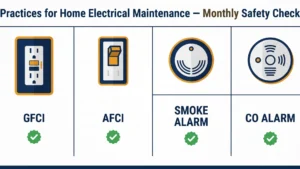
- Test GFCIs and AFCIs monthly using the built-in “TEST” buttons—replace any device that doesn’t trip or reset instantly to guarantee shock and fire protection.
- Install whole-home surge protection at your main panel to shield costly appliances and smart devices—one surge can cause thousands in damage, but protection runs just $350–$800.
- Upgrade your service panel before adding big loads like EV chargers or heat pumps—200A service future-proofs your home and supports modern living, with upgrades averaging $2,000–$5,000.
- Watch for early warning signs—discolored outlets, warm plates, buzzing or burning smells, and frequent breaker trips signal urgent risks—act immediately and call a pro.
- Limit DIY to safe, legal basics: changing bulbs, faceplates, and visual checks; leave wiring, new circuits, and panels to licensed electricians to avoid voided insurance and code violations.
- Keep a detailed maintenance log—track inspections, incidents, and upgrades to streamline insurance, sales, and troubleshooting, and demonstrate due diligence for your property.
Proactively following these steps will help you power your Ontario home the right way—explore the full article for deeper insights and expert recommendations tailored to your property.
Practices for Home Electrical Maintenance — What Every Ontario Homeowner Must Know Before It’s Too Late
Picture this: A single, missed electrical inspection leads to a hidden wiring fault—resulting in an insurance claim denied and a repair bill that could top $50,000.
Over 1,500 Ontario homes experience preventable electrical fires or major hazards each year—most caused by invisible issues that routine maintenance could catch.
If you’re a homeowner, property manager, or builder, these numbers hit close to home. With more families upgrading to EV chargers, smart appliances, and home offices, today’s electrical demands are higher—and so are the stakes for keeping every system safe, efficient, and up to code.
Knowing how to protect your investment isn’t just about avoiding disaster. A proactive electrical maintenance plan offers:
- Peace of mind that your family and property are protected
- Smooth real estate transactions and hassle-free insurance claims
- Maximum efficiency from every circuit, panel, and device you rely on
- Confidence that your home meets every 2026 safety standard—no guesswork, just compliance
And it’s not just the “big stuff” that matters. Reliable homes are built on small habits—testing alarms, catching early warning signs, and calling licensed electricians when problems demand expert hands.
Inside, you’ll find a practical, step-by-step guide to everything from scheduling professional inspections to upgrading panels and keeping meticulous records that pay off for years.
You’ll also discover which warning signs require fast action, how to future-proof your home for new technology, and the simple, everyday behaviors that dramatically reduce risk.
Ready to cut through confusion, keep your family safe, and power your home the right way?
Your electrical maintenance blueprint starts now—with the one schedule every Ontario homeowner can’t afford to miss.
Establishing a Home Electrical Maintenance Schedule
Keeping your home’s electrical system safe isn’t optional—it’s a must-do maintenance task that prevents fires and keeps everything running. Every homeowner in Ontario, especially in houses over 30 years old, should build a schedule around regular electrical checkups.
| Home Type | Inspection Frequency | Key Focus Areas |
|---|---|---|
| 30+ year-old homes | Every 1–2 years | Panel corrosion, wiring wear, code compliance |
| Renovated homes | After every major upgrade | Circuit and panel changes |
| High-demand households | More frequent checks | EV chargers, heat pumps, large appliances |
| New builds | Every 3–5 years | Breaker condition, surge protection |
Why Maintenance Matters
Electrical faults cause tens of thousands of fires each year and over $1 billion in property damage across North America. Most of these incidents are preventable through routine professional inspections. Beyond safety, keeping systems in top shape improves efficiency and guarantees code compliance, which is critical if you’re insuring, renovating, or planning to sell.
Inspection Frequency by Home Age & Use
How often you need an inspection depends on your home:
- 30+ year-old homes: Schedule an inspection every 1-2 years—these systems face age- and wear-related risks.
- Renovated homes: Inspect after major upgrades, especially if circuits or the panel are touched.
- High-demand households: More frequent checks if you’re running EV chargers, heat pumps, or lots of big appliances.
Tip: “An annual inspection can turn small headaches into quick fixes, instead of expensive emergencies.”
What a Licensed Electrician Covers
A typical professional inspection includes:
- Detailed look at your main panel—checking for corrosion, loose connections, overheating, and label accuracy.
- Examination of wiring, junction boxes, and all accessible outlets and switches for damage or degradation.
- Testing GFCIs, AFCIs, and breakers to ensure proper operation and protection.
- Verifying strong grounding and bonding, essential for both safety and code.
Homeowners should never open panels or work on live electrical components—leave that to the pros.
Common Issues Found During Inspections
Licensed electricians often spot:
- Scorched or discolored outlets (an early sign of overheating and fire risk).
- Worn insulation or cracked wiring—especially in attics and basements.
- Bad labels or missing panel details, which can prevent a quick shutoff in an emergency.
- Non-compliant DIY fixes or outdated equipment like two-prong outlets or aluminum wiring.
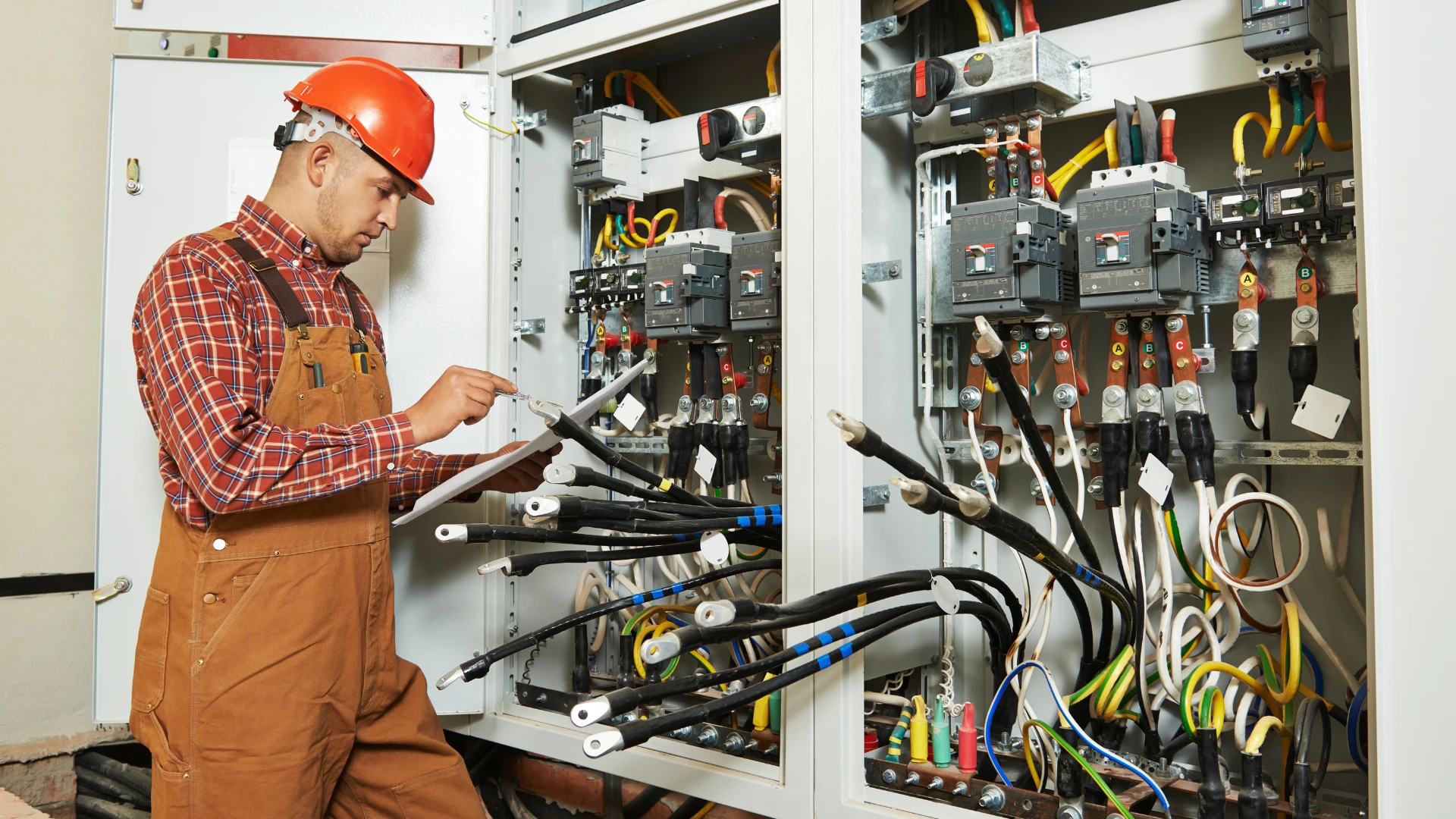
Picture this: An electrician carefully opens your panel, scans for anything loose or corroded, and ensures all breakers are accurately labeled—every step designed to “power your home, the right way.”
An up-to-date inspection schedule protects your home, investment, and peace of mind—and keeps you ahead of costly surprises. Set a calendar reminder now for your next licensed electrical checkup.
Essential Testing and Upkeep of Home Safety Devices
GFCI and AFCI Protection
GFCIs (Ground-Fault Circuit Interrupters) and AFCIs (Arc-Fault Circuit Interrupters) save lives—full stop.
GFCIs instantly shut off power if they detect a shock hazard; AFCIs trip when detecting dangerous arcing that can start fires.
Ontario and the 2026 Electrical Safety Code require:
- GFCIs: Anywhere water and electricity mix—kitchens, bathrooms, laundry rooms, garages, basements, and outdoor outlets
- AFCIs: Required in most finished living spaces—bedrooms, living rooms, hallways, dining rooms
To test your GFCIs/AFCIs:
- Press the “TEST” button: The outlet or breaker should snap off immediately.
- Press “RESET”: Power should return—if not, the device has failed.
Replace any device that:
- Does not trip instantly on “TEST”
- Fails to reset
- Feels warm, buzzes, or shows any sign of visible wear
One working safety device can stop a lifetime’s worth of regret.
—
Surge Protection
Whole-home surge protectors are now standard for new builds and renos in 2026.
Unlike plug-in strips, these panel-mounted devices protect everything hard-wired—fridges, freezers, washers, HVAC, and smart home systems.
Surge protection is critical if you:
- Own high-value electronics or home automation systems
- Have frequent brownouts or grid fluctuations
- Run major appliances or EV chargers from the main panel
To upgrade:
- A licensed electrician installs a surge protector directly in your panel—average cost in Ontario: $350-$800, covering all circuits.
A single power surge can destroy appliances worth thousands—protection pays for itself.
—
Smoke and Carbon Monoxide Alarms
Coordinated protection means linking smoke and CO alarms with your electrical system.
Essential checklist:
- Test alarms monthly (push the test button; they should ring loudly)
- Replace batteries at least once a year, unless using sealed 10-year models
- Replace units entirely every 7-10 years (check the manufacture date)
When alarms are hardwired, they can trigger all at once—increasing safety, especially at night.
—
A few minutes each season testing safety devices could prevent a tragedy. Build a routine: GFCI, AFCI, surge protection, and alarm checks are as vital as locking your front door. Early action keeps your family safe and your home protected under Ontario’s 2026 safety code—powering Ontario, the right way.
Identifying and Addressing Early Warning Signs of Electrical Issues
Staying alert to early electrical warning signs keeps your home and family safe—most hazards are silent until disaster strikes.
Recognize the most common clues before they lead to fires or costly repairs:
- Discoloration or scorch marks on outlets or switches
- Devices or plates that feel warm or hot to touch
- Buzzing, sizzling, or crackling sounds from outlets, switches, or your main panel
- The smell of burning plastic or “fishy” odors near electrical features
- Frequent breaker tripping or blown fuses—especially on the same circuit
- Lights that flicker or dim when large appliances run
- Outlets that are loose, won’t hold plugs, or show visible cracks
One in three residential fires starts with faulty wiring or overloaded equipment—most are preventable when these signs are caught early.
—
When Nuisance Tripping Becomes a Red Flag
It’s normal for a breaker to trip now and then, but frequent or persistent tripping signals deeper trouble.
Here’s how to tell the difference:
- Routine nuisance trips:
- Often caused by plugging too many devices into one outlet (hair dryers, space heaters, kettles).
- Typically stops if you unplug appliances and reset the breaker.
- Serious danger signs:
- Breakers trip immediately after resetting.
- Tripping happens even when you only use one device.
- Accompanied by heat, noise, or odd smells.
“If your breaker trips twice in a week, it’s time to consult an electrician—not just your handyman.”
—
What To Do When You Notice a Warning Sign
Act fast and don’t gamble with house safety:
- Turn off and unplug any devices in the affected outlet or circuit.
- Do not use the outlet, switch, or appliance until checked.
- Call a licensed electrician immediately if you:
- See burn marks or smell smoke
- Hear sizzling, crackling, or popping
- Feel warmth on any electrical plate
- Never ignore, tape over, or “live with” these symptoms—damage and fire risk escalates quickly.
- Overloaded circuits, loose wire connections, and worn internal components are top causes behind these warning signals.
Real-World Examples: Why Action Matters
Picture this:
A homeowner ignores a faint burning smell for weeks—until a hidden junction box catches fire overnight.
Or, a plug that “just won’t stay in” sparks in the wall, leading to a costly electrical panel replacement.
“A $150 electrician visit today can save you from a $50,000 home fire tomorrow.”
—
Spotting trouble early is your shield against major damage.
If in doubt, trust your senses—heat, odor, noise, and changes in color are not normal.
When you act at the first sign, you make Ontario’s safest homes possible.
Service Panel Health, Load Assessment, and Planning for New Electrical Demands
Evaluating Service Panel & Capacity
Your main electrical service panel is the heart of your home’s power system—it shapes what’s possible for comfort, efficiency, and safety.
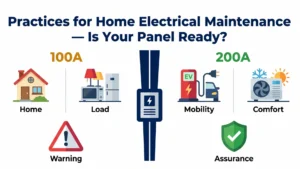
Older homes in Ontario often have 100A service—once the norm, but now undersized for today’s realities like EV charging, induction cooking, or whole-home heat pumps.
Here’s what to check immediately:
- Do you have major new loads?
- Adding an EV charger, modern HVAC, or induction range is a trigger to review if your panel is up to the task.
- Picture this: Plugging in your car and watching the house lights dim—that’s a sign your system may be overloaded.
- Key panel benchmarks:
- 100A service: Suits small homes with minimal upgrades, but quickly feels cramped.
- 200A service: Today’s standard for renovations or new builds—future-proofs the home, slashes nuisance tripping, and supports large upgrades.
- Typical cost to upgrade: $2,000–$5,000 in Ontario, depending on panel placement and rewiring needed.
- Electrician assessment covers:
- Panel age: Panels over 40 years old may risk fire or insurance refusal.
- Brand/model: Certain brands (e.g., Federal Pacific, Zinsco/Stab-Lok) are now flagged for safety issues.
- Condition: Look for corrosion, hot spots, aluminum wiring, or improper labeling.
“If you’re planning a renovation or adding an EV, code now expects you to bring your service up to a safe, modern standard.”
—
Breakers, Surge Devices, and Emergency Readiness
Regular checks and clear labeling turn your panel from a mystery box into your home’s frontline defender.
- Schedule breaker and surge device inspections every 3–5 years, or sooner if you see flickering lights, repeated tripping, or smell burning.
- Label every breaker with plain language (“Kitchen outlets,” “Main bedroom,” etc.)—this helps first responders and family shut off circuits fast in an emergency.
Here’s what to inspect or replace regularly:
- Breakers: Replace if they’re loose, overheating, or tripping with no cause.
- Surge protection devices: Install or upgrade to whole-home protection—especially with more electronics. Surge repairs are now a best practice, and code-required in many 2026 builds.
- Main panel labeling: Ensure every circuit is identified. In an emergency, wasted seconds matter.
“A well-labeled panel and up-to-date surge protection could save your home and appliances in a split second.”
—
Pro Tips for Future-Proofing
- Upgrade your service before you buy that EV or heat pump—this prevents pricey rush jobs and keeps everything compliant.
- Keep inspection records (dates, upgrades, issues found)—you’ll thank yourself at resale or for insurance claims.
A modern, well-maintained electrical panel is peace of mind. The right capacity, working breakers, and full surge protection let you power your life safely—not just today, but for every upgrade ahead.
Everyday Habits for Safe Electrical Use
Keeping your home’s electrical system safe isn’t just about the big upgrades—it’s shaped by the everyday choices you make. Let’s break down the habits that protect your home, your devices, and your family in 2026.
Prevent Circuit Overloads, Room by Room
Plugging too many high-wattage appliances into one outlet is a common mistake—think two space heaters in a single living room circuit, or toaster plus microwave in the kitchen.
- Limit high-wattage appliances (space heaters, hair dryers, air fryers) to one per outlet/circuit.
- Distribute heavy load appliances (window A/C, electric kettles) across different rooms or times.
- In home offices and media rooms, avoid running all monitors, computers, and chargers on one strip.
Picture this: If the lights flicker every time you microwave dinner, that’s a clear sign to rethink plug placement.
Smart Use of Power Strips & Extension Cords
Power strips and extension cords are for convenience, not permanence. In 2026, standards are tougher than ever for these products.
- Only use surge-protected power strips for sensitive electronics (TVs, computer gear).
- Never “daisy chain” cords or strips—this creates real fire risk.
- Extension cords are short-term solutions: never run them under rugs, through doorways, or where they’ll get pinched.
If you find yourself relying on extension cords week after week, it’s time for a permanent outlet upgrade.
Guard Cords, Plugs & Outlets from Damage
Flexible cords and old outlets can quietly become hazards.
- Replace any cord that shows fraying, melted spots, or exposed conductors immediately.
- Don’t tug on cords to unplug; always grip the plug body.
- Move furniture when vacuuming to avoid crushing cords under heavy legs.
A scorched mark or fishy smell at an outlet means “call a licensed electrician—now.”
Water + Electricity: Manage the Risk
Bathrooms, kitchens, and patios are ground zero for shock hazards.
- Plug only GFCI-protected devices into outlets near sinks, showers, or outdoors.
- Keep all plugs and cords away from wet surfaces—never plug in devices with wet hands.
- For garden tools, choose weather-rated extension cords and disconnect them before cleaning up spills or puddles.
Fact: 70% of home electrical deaths are linked to improper use of appliances near water sources.
Know When to Add Outlets or Circuits
If your family is always fighting over outlets—or if power strips are a permanent fixture—it’s a sign to invest.
- Add new outlets in living areas, bedrooms, and kitchens to prevent risky overloading.
- Upgrading or expanding circuits is especially important if you’ve added a heat pump, EV charger, or home office.
“Safe homes are designed around how you actually live—not how things were built decades ago.”
Building strong electrical habits is about noticing risks before they cause trouble, and planning for safety as your power needs grow. Simple changes and quick checks can make a big difference in protecting your home from the everyday hazards you can’t always see.
When Major Upgrades or Full/Partial Rewiring Are Needed
Spotting the right moment for a major electrical upgrade is crucial for both safety and functionality. If your home was built before 1990 or still features its original wiring, it’s time to double-check for outdated or unsafe systems.
Key Red Flags for Outdated Electrical Systems
Look for these clear indicators that your wiring may be putting your home at risk:
- Outlets with only two prongs or loose, discolored faceplates
- Frequent tripping of breakers or fuses
- Warm, buzzing, or sparking outlets
- Wires with cloth insulation, visible cracking, or fading
- Aluminum branch-circuit wiring (common from 1965–1976)
- Existence of knob-and-tube wiring (older than 1950), which lacks modern grounding
A “picture this” moment: An older outlet that sparks when plugging in a vacuum—this isn’t just an inconvenience; it’s a warning light.
Ontario’s Common Wiring Types—and Their Risks
In many Ontario homes, you’re likely to encounter:
- Aluminum wiring: Prone to loose connections and increased fire hazard
- Knob-and-tube wiring: No grounding, undersized for modern loads
- Cloth-insulated wiring: Becomes brittle and unsafe as it ages
Homes with these materials are statistically more likely to experience electrical fires or insurance issues.
What’s New for 2026? Smarter, Safer Electrical Systems
Upgrading now brings advantages that go beyond simple safety:
- 2026 wiring standards require improved insulation and arc- or ground-fault protection
- Installing new, tamper-resistant or child-safe outlets boosts protection
- Adding smart controls and surge protection as part of a backup system is the new norm
- Reliable LED fixtures are designed for energy efficiency and overheating prevention
“An ounce of prevention can eliminate the need for costly emergency repairs later.”
How Professional Rewiring Works—Step by Step
Get ready for a structured, low-stress experience:
- Licensed electrician inspects and creates a condition report confirming scope and safety needs
- Power is safely shut down, and old wiring is carefully removed or bypassed
- New circuits, receptacles, and safety devices are installed—each process is checked for code compliance
- Final safety inspection and labeling
- Walls are patched, painted, and clean-up is completed
Expect 2–5 days of disruption for a full rewire, while a partial rewire or outlet upgrade often takes less than a day.
Why Reports and Upgrades Matter for Real Estate & Renos
- Condition reports are now standard for real estate sales and large renovations—insurers and inspectors demand them
- Any renovation may require code upgrades for all affected circuits
- Lack of compliance can delay sales, lower property value, or create insurance claim denials
“Peace of mind starts with proactive upgrades, not after-the-fact fixes.”
If your home shows these red flags or you’re planning a big renovation, a quick check and condition report can reveal exactly what needs updating—making your property safer and more valuable for years to come.
Safe DIY Practices and Knowing Your Limits
Know What’s Legal—And What’s Safe
In Ontario, homeowners are legally limited in what electrical work they can perform themselves.
Tasks like installing new circuits, replacing wiring, or opening a main service panel are restricted to licensed electricians under the Ontario Electrical Safety Code.
You may:
- Replace light bulbs and faceplates
- Swap out standard switches or outlets (if you’re confident, follow all safety steps)
- Conduct basic visual inspections without removing covers, looking for scorch marks, loose plugs, or damaged cords
Never extend beyond these boundaries—even a small mistake can put your safety and insurance coverage at risk.
“If you’d hesitate to post it online, don’t do it on your own wiring.”
Your Must-Follow Steps for Any DIY Small Job
Whenever you’re replacing a light switch, faceplate, or bulb:
- Shut off power at the breaker (not just at the switch—double check!)
- Use a voltage tester to confirm power is truly off before touching wires or terminals.
- Work only in dry conditions; never tackle electrical projects if the area is wet.
- Always use insulated tools and, for added safety, PPE like insulated gloves and safety glasses.
If at any moment you feel unsure, pause and call a pro—even a texted photo can save you from an expensive mistake.
The Real Risks: What Happens If You Cross the DIY Line
Electrical work done without permits or a licensed electrician can lead to:
- Voided insurance policies if something goes wrong
- Fines or forced rework, especially if selling your home or after an incident
- Failing to meet code—Ontario law requires safe, inspected work
- Hidden hazards like overheated connections, arcing, or shock/fires
“DIY electrical shortcuts are a leading cause of household fire claims—insurance companies know what to look for.”
Quick Visual Checks and When to Step Back
- Look for loose outlets, faceplates, frayed cords, or scorch marks.
- Test GFCIs monthly using the test/reset buttons, noting if they fail to reset.
- If you see flickering lights, hear buzzing, or feel warmth on covers—call a licensed electrician immediately.
“Picture this: You turn on a light and hear a snap. That’s not normal—stop, check, call a pro.”
Setting personal limits on DIY electrical work is the best way to keep your home safe and your insurance valid. Even small jobs demand respect for electricity—when in doubt, trust a licensed Ontario electrician to keep your project safe, compliant, and stress-free.
Record Keeping and Creating a Personalized Electrical Maintenance Checklist
Keeping detailed, up-to-date records is one of the most overlooked habits for safety and compliance in Ontario homes.
Solid record keeping not only helps you spot patterns before they become hazards, but also makes insurance claims, resale, and renovations far smoother.
“A single, up-to-date maintenance log can add significant value—and peace of mind—for homeowners.”
What Electrical Maintenance Records Should You Keep?
Focus on entries that tell your home’s electrical story over time:
- Inspection dates and outcomes (annual/biannual safety checks, panel reviews)
- Work performed: repairs, panel/service upgrades, new outlets, lighting replacement, professional surge/GFCI/AFCI installations
- Significant incidents: breaker trips, burning smells, warm or damaged outlets, or anything prompting a quick call to your electrician
- Lists of major appliances added (EV chargers, heat pumps, induction ranges) with install dates
A few minutes after every check or project can save hours—and thousands of dollars—in the future.
Sample Annual Electrical Maintenance Checklist
Building a simple, repeatable routine helps reinforce safe habits:
Test and inspect:
- GFCI and AFCI devices—hit “TEST” monthly, record outcomes
- All smoke and CO alarms—press “TEST,” check for replacements needed
- Outlets and switches—look for warmth, discoloration, loose plugs, or buzzing sounds
- Extension cords, power strips—replace if worn; note permanent use as a warning sign
- Check visible wiring for wear, especially in basements, attics, and exterior outlets
For older homes (30+ years), add:
- Ensure all upgrades are recorded after every change
- Schedule professional inspections yearly or after any major load additions
Why Good Records Matter: Safety, Insurance, and Future-Proofing
Proper documentation helps you:
- Demonstrate due diligence to insurers and realtors
- Show compliance with Ontario codes during a sale or renovation
- Speed up troubleshooting when issues arise—no guesswork, just facts
“Picture this: a quick scan of your log instantly reveals the cause of a persistent breaker trip—an electrician’s dream scenario.”
Tailoring Your Plan
Every home is unique—update your checklist after:
- Adding big-ticket appliances or finishing renovations
- Changing local code (consult your electrician for latest 2026 standards)
- Detecting any warning sign or after a service call
With a proactive, personalized checklist and easy-to-read maintenance log, you take real control over your home’s safety and value—and make every inspection or upgrade count.
Practices for Home Electrical Maintenance — Your Clearest Path to a Safer, Code-Compliant Home
Protecting your home with smart electrical maintenance isn’t just about compliance—it’s your most practical investment in safety, reliability, and long-term value. When you take charge today, you shield your property from preventable surprises and make daily life smoother for everyone under your roof.
Each habit you build—each device you test and record you keep—moves your home closer to modern standards and peace of mind.
—
Power up your routine with these essentials:
- Commit to a maintenance schedule: Book annual inspections with a licensed Ontario electrician, especially if your home is over 30 years old or undergoing upgrades.
- Test GFCIs, AFCIs, and alarms monthly: Early detection can stop hazards before they start.
- Upgrade surge protection and service panels: Stay ahead of major appliance changes or renovations—future-proof and code-ready.
- Watch for warning signs: Don’t ignore scorch marks, buzzing sounds, or persistent breaker trips—call a pro at the first sign.
- Document every check, fix, and upgrade: Your maintenance log is the first line of defense for insurance, resale, and renovations.
—
Ready to act?
- Set a calendar reminder for your next electrical inspection and device test—today, not tomorrow.
- Walk through your home right now—look for loose outlets, outdated extension cords, or anything that seems “off.”
- Update your maintenance records after every inspection or project, building a safety story for your home’s future.
—
Every step you take today builds a safer tomorrow for your family and your investment.
A well-maintained electrical system is more than wires and breakers—it’s confidence, comfort, and the promise of powering Ontario, the right way.
Take action now—and be the reason your home stays safe, always.
FAQ
What are the most important practices for home electrical maintenance?
Practices for home electrical maintenance include scheduling professional inspections every 1–2 years for homes over 30 years old, testing GFCIs and AFCIs monthly, and installing whole-home surge protection. Watching for early warning signs like discolored outlets, buzzing sounds, or frequent breaker trips is also essential to prevent fires and costly repairs.
How often should I follow professional practices for home electrical maintenance?
Practices for home electrical maintenance recommend inspections every 1–2 years for older homes, immediately after major renovations, and more frequently for high-demand households running EV chargers or heat pumps. Breaker and surge device inspections should occur every 3–5 years to catch issues before they escalate into safety hazards.
What practices for home electrical maintenance can I safely do myself?
Practices for home electrical maintenance limit homeowners to safe, legal basics such as replacing light bulbs, faceplates, and standard switches, plus conducting visual inspections for scorch marks or loose plugs. Installing new circuits, replacing wiring, or opening a main service panel must always be left to a licensed electrician under Ontario’s Electrical Safety Code.
How much do upgrades cost when following practices for home electrical maintenance?
Practices for home electrical maintenance often include service panel upgrades averaging $2,000–$5,000 in Ontario, especially when adding EV chargers or heat pumps. Whole-home surge protection typically costs $350–$800, while a $150 electrician visit can prevent damage that may otherwise cost $50,000 or more in fire-related repairs.
Why is record keeping part of essential practices for home electrical maintenance?
Practices for home electrical maintenance should always include a detailed maintenance log tracking inspection dates, repairs, and major appliance additions. This documentation demonstrates due diligence to insurers and realtors, speeds up troubleshooting, and supports smoother real estate transactions or insurance claims down the road.

Written by Roozbeh Nahreini
Roozbeh Nahreini is the founder and owner of Padi Electric Inc., an ESA-certified electrical contractor serving Aurora and the Greater Toronto Area. With 10+ years of hands-on electrical expertise and a team combining 50+ years of field experience, Roozbeh specializes in residential and commercial electrical solutions—from panel upgrades and EV charger installation to smart home integration and advanced diagnostics. His commitment to transparent pricing, code-compliant workmanship, and 24/7 emergency response has established Padi Electric as a trusted neighborhood contractor across Aurora, Richmond Hill, Newmarket, Vaughan, and the GTA.